As an Amazon Associate, we earn from qualifying purchases. Some links on this site are affiliate links at no extra cost to you. Our recommendations are based on thorough research and editorial judgment.


When Should You Seek Professional Swing Analysis Services?

Golfers should consider professional swing analysis services when they face persistent swing inconsistencies or performance plateaus. Key indicators include frequent mis-hits despite practice, noticeable balance issues at impact, or chronic physical discomfort linked to mechanics. With professional assessments, data-driven insights can illuminate areas needing improvement. These services often utilize high-definition video and analytics to create personalized plans. Players can optimize their game by addressing common faults through expert guidance. More insights await on optimizing your swing.
Key Takeaways
- Seek professional analysis if you experience noticeable balance issues during impact that affect shot consistency.
- Consult an expert when you face swing timing problems resulting in frequent mis-hits despite regular practice.
- If you feel persistent physical discomfort linked to your swing mechanics, professional evaluation is essential for injury prevention.
- Performance plateaus signal incorrect swing habits; professional guidance can help identify and correct these issues.
- Changes in equipment that affect your swing mechanics warrant a professional assessment to ensure proper adjustments.
Recognizing Persistent Inconsistencies in Your Swing
You may be interested


Recognizing these issues is essential for performance improvement. Key areas to focus on include:
- Grip and Hand Position: Small variations can drastically alter wrist angles and clubface positioning, leading to inconsistent ball flight. Consistency in grip is critical.
- Setup and Alignment: Inconsistent stances disrupt ball trajectory. Maintaining a square clubface at address enhances shot predictability.
- Timing and Tempo: Fluctuations in swing speed can result in erratic shot outcomes. Monitoring tempo fosters repeatability.
Golfers should consider swing analysis when noticing these inconsistencies. Tools and drills are available to help identify and correct these common issues, ultimately supporting a more reliable, consistent swing and an enjoyable golfing experience. Regular practice with training aids can significantly enhance swing mechanics.
Understanding Performance Plateaus

Performance plateaus present a frustrating challenge for many golfers seeking improvement. Recognizing plateau symptoms is essential, as they often manifest in stable scoring averages despite continued practice efforts. Key points include:
- Grooving Inconsistency: Reinforcing errors can stagnate progress.
- Targeted Adjustments: A performance evaluation may reveal a need for increased focus on specific skills.
- Data-Driven Practices: Analytics can identify hidden weaknesses, providing insights beyond repetitive practice.
To conquer plateaus, golfers should emphasize measurable outcomes, like greens in regulation and reduced major mistakes. Understanding metrics helps track stagnant performance trends, indicating the need for intervention. By approaching practice through data analysis and targeted improvements, golfers can break through barriers and enhance their overall game, leading to more satisfying scoring achievements. Utilizing tools like real-time data analysis can greatly assist in pinpointing areas for improvement.
Identifying Common Swing Faults

Improving a golfer’s game requires more than just practice; it often necessitates the identification of swing faults that hinder progress. Common swing faults include:
- Swing Plane Issues: An over-the-top path can cause slices, while an excessively flat swing leads to hooks.
- Grip Pressure: Improper grip leads to unpredictable clubface control.
- Body Posture: A poor setup can restrict spinal rotation, affecting efficiency.
- Weight Transfer: Insufficient transfer during the downswing may result in fat or topped shots.
- Wrist Faults: A cupped lead wrist at impact often leads to weak strikes.
- Timing Issues: Mistimed sequences disrupt the kinetic chain, reducing power.
Identifying these faults assists in seeking targeted improvement through professional analysis. Utilizing swing training aids can also help address these issues effectively, enhancing overall performance.
The Importance of Objective Evaluation
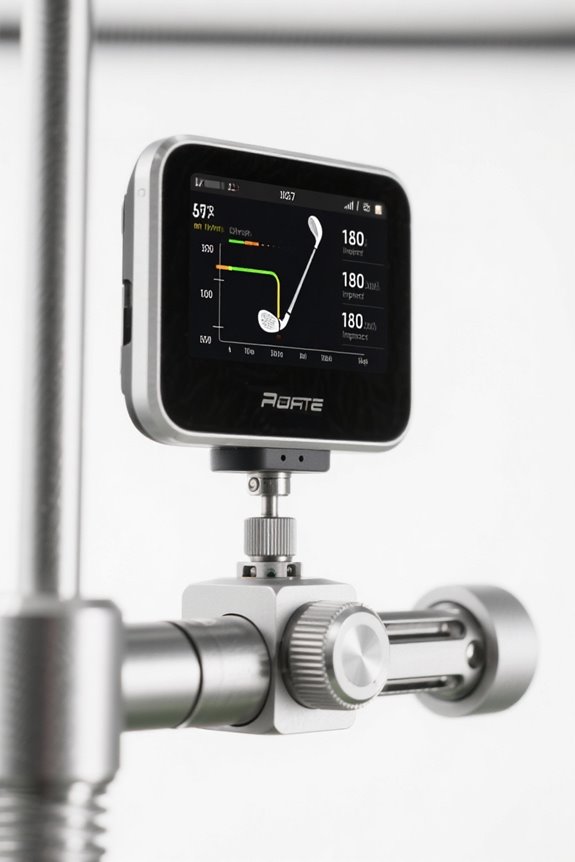
When golfers rely solely on their subjective impressions of swing performance, they may overlook vital aspects that impact their game. Objective evaluations of swing mechanics provide essential insights that subjective feelings cannot capture. Key benefits include:
- Quantifiable Metrics: Objective data offers specific metrics, reducing guesswork. For instance, swing kinetics can reveal mechanical inefficiencies.
- Standardized Measurements: This helps establish baselines to track progress and set realistic goals.
- Injury Prevention: Analysis identifies risky biomechanics that could lead to injuries. With 15%-36% of golfers experiencing lower back pain, proactive adjustments are important.
- Focused Training Plans: Data-driven feedback systems personalize coaching strategies, enhancing effectiveness. Additionally, understanding club size specifications can help further tailor swing techniques to enhance performance.
Investing in objective evaluation translates to measurable improvement, fostering a strong sense of community and growth among dedicated golfers.
Benefits of High-Definition Video Capture

High-definition video capture revolutionizes the way golfers analyze their swing mechanics, providing unparalleled clarity and detail. This advanced technology offers significant benefits:
- Visual Clarity: HD video captures every phase of the swing, revealing club position, body posture, and weight transfer with exceptional detail.
- Enhanced Feedback: Slow-motion and freeze-frame features allow golfers to dissect their mechanics, pinpointing faults often missed by the naked eye.
- Accurate Measurement: Coupled with swing metrics, HD video delivers precise data on ball speed, swing path, and timing, facilitating objective performance analysis.
- Progress Tracking: Consistent HD recordings help monitor swing evolution, ensuring that players can visualize improvements over time. Additionally, incorporating advanced features like real-time data output can further enhance the analysis process.
Comparing Your Swing to Professional Standards
Understanding how one’s swing compares to professional standards can greatly influence a golfer’s development and performance.
- Pressure Distribution at Impact: Pros maintain 70% pressure on the lead foot during impact, maximizing shot quality.
- Max Vertical Pressure Ratio: Their acceleration generates up to four times more vertical pressure compared to change, enhancing clubhead speed.
- Rotational Velocity Sequence: The hips initiate rotation, producing torque that adds power.
- Clubhead Speed Metrics: Professionals achieve considerably higher speeds, impacting shot distance.
Utilizing biomechanical analysis for these swing comparisons allows golfers to identify specific areas needing improvement. Additionally, leveraging advanced 3D Doppler radar technology in launch monitors can provide accurate insights into swing mechanics.
Utilizing Motion Capture Technology
How effectively can golfers enhance their skills using motion capture technology? This advanced system provides a precise approach to motion analysis, benefiting players of all levels. Key features include:
- Accurate Measurements: Joint movement and club mechanics assessed with 0.2 mm precision.
- Comprehensive Data: Biomechanical insights on angles, balance, and posture facilitate swing optimization.
- Real-Time Feedback: Immediate analysis allows for on-the-spot coaching adjustments.
Utilizing methods such as passive optical systems or markerless software guarantees a tailored experience without extensive setup. Players can visualize swing paths and improve efficiency, lowering the risk of injury through data-driven enhancements. Ultimately, adopting motion capture technology empowers golfers to track their progress, enhancing skills through measurable and actionable insights. Additionally, training aids such as putting alignment mats can further support skill development by providing immediate feedback on performance.
Analyzing Shot Dispersion and Ball Flight Data
Precision in shot dispersion is essential for golfers aiming to elevate their game. Analyzing shot dispersion and ball flight data provides valuable insights into performance. Key points include:
- Understanding Shot Dispersion: This refers to the variation of golf shots around a target, influencing overall accuracy and scoring.
- Professional vs. Average Players: Professionals’ dispersion typically remains under 15 yards with a 7-iron, while average golfers may experience up to 40-45 yards.
- Launch Monitors: Devices like SkyTrak and GCQuad measure shot dispersion, revealing both width and depth data that helps players identify consistent miss patterns.
- Strategic Insights: Knowing dispersion aids in targeted shot selection, minimizing risks, and improving course management, ultimately fostering more consistent performances on the course. Additionally, using advanced tracking technology from launch monitors can enhance your understanding of shot dispersion and ball flight characteristics.
The Value of Expert Assessment
The value of expert assessment in golf cannot be overstated, as it plays an essential role in enhancing player performance. Professional evaluations utilize advanced technology to provide valuable, objective insights, vital for understanding a golfer’s strengths and weaknesses.
- Over 13,000 swings were analyzed, revealing key body positions correlated with skill level.
- Professional assessments offer feedback that transcends simple observations, addressing subtle mechanical issues.
- Golfers using expert analysis typically improve by an average of seven strokes within a year, markedly boosting value perception.
- Real-time feedback allows for immediate corrections and detailed breakdowns tailored to individual needs.
- Engaging with golf stats trackers can further augment the benefits of professional swing analysis by providing ongoing performance data.
Engaging in expert assessments not only supports measurable improvement but also creates a community atmosphere, encouraging golfers to belong to a framework of continual growth.
Crafting Personalized Improvement Plans
Crafting personalized improvement plans empowers golfers to systematically enhance their skills. These plans begin with a thorough skill level assessment that identifies areas needing focus:
- Skill Evaluation: Use self-assessment combined with statistical tracking to pinpoint weaknesses.
- Goal Setting: Establish SMART objectives, ensuring goals are Specific, Measurable, Achievable, Relevant, and Time-bound.
- Practice Schedule: Design a structured routine that balances driving, short game, and putting.
- Personalized Drills: Select drills targeting specific issues, such as grip or alignment, for effective practice.
- Individualized Feedback: Incorporate regular assessments and adapt plans based on progress metrics. Additionally, consider utilizing user feedback from experienced golfers to refine your practice strategies and enhance your performance.
The Role of Mental Game and Course Strategy
While physical skills are essential in golf, the mental game and course strategy often determine a player’s success on the course. Effective mental resilience helps golfers recover quickly from setbacks, improving their overall performance. Key aspects include:
- Stress Management: Reducing average putts per round by nearly 10% through mental training highlights its significance.
- Emotional Control: Maintaining composure after poor shots prevents performance decline and enhances concentration.
- Cognitive Tools: Utilizing strategies like mindfulness minimizes overthinking and boosts focus.
- Course Management: Proper shot planning involves psychological preparation to handle unexpected challenges.
Managing emotional states effectively enhances tactical options and shot execution. The integration of mental practices with technical skills fosters consistent performance, making it a crucial element of serious golfers’ training regimens.
Setting Specific Skill Goals
Setting specific skill goals is essential for golfers aiming to enhance their performance on the course. By establishing clear and measurable targets, golfers can boost focus and motivation. Key components of skill goal-setting include:
- Lowering Handicap: Aim to reduce by a specific number of strokes.
- Consistency: Target at least 80% accuracy in ball striking.
- Putting Goals: Maintain an average of fewer than 30 putts per round.
- Driving Distance: Increase distance by a measurable 15 yards.
Such skill assessments promote goal alignment and enable golfers to track progress objectively. Studies show that setting measurable outcomes can accelerate improvement by 40%, making performance goals indispensable for serious participants in the game. This structured approach fosters camaraderie and shared aspirations within the golfing community.
Using Data Analytics for Performance Optimization
Performance optimization in golf has entered a new era, thanks to the integration of data analytics. Players can now harness various technologies to enhance their performance through:
- Shot Analytics: Data measures swing parameters like club path and speed, identifying inefficiencies.
- Motion Capture: Tools like GOLFTEC’s OPTIMOTION provide real-time feedback, allowing for rapid error correction.
- Course Strategy: Analyzing historical performance and environmental factors aids in precise shot selection.
- Equipment Customization: Data-driven insights align club specifications with individual swing dynamics, promoting better performance.
With effective data visualization, actionable insights become accessible, empowering golfers to make informed adjustments. Continuous tracking fosters growth, enhancing consistency and ultimately elevating overall performance. Embracing these analytics creates a shared path towards improvement and belonging in the golfing community.
Urgency Signs for Seeking Professional Help
Recognizing the right moment to seek professional swing analysis is essential for golfers at any level. Several urgency signs indicate when it’s time to get help:
- Balance Issues: Noticeable loss of balance or hanging back during impact reveals underlying faults.
- Swing Timing Problems: Frequent mis-hits despite practice suggest mechanical breakdowns affecting consistency.
- Physical Discomfort: Persistent lower back or joint pain linked to swing mechanics should prompt evaluation.
- Performance Plateaus: Inability to improve distance or accuracy, despite effort, indicates incorrect swing habits.
- Equipment Changes: New clubs leading to adjustments in swing path or mechanics warrant professional assessment.
Failure to address these signs can lead to compounding issues that diminish overall enjoyment and performance on the course.
Transitioning to New Equipment and Its Challenges
Shifting to new golf equipment can present a range of challenges that players must navigate effectively. Players face significant financial investment, as new sets can exceed $2,500. This high cost limits changes, particularly for casual golfers.
Key challenges include:
- Equipment Adaptation: Adjustments to swing mechanics due to different club weights and balances may disrupt performance.
- Technological Learning Curve: AI features in new clubs require players to grasp new feedback systems, complicating adaptation.
- Market Pressures: Rapid product cycles foster a sense of urgency, driving players to continuously upgrade.
Ultimately, understanding these challenges can help players make informed decisions about equipment changes and seek professional swing analysis when necessary.
Frequently Asked Questions
How Much Does Professional Swing Analysis Typically Cost?
Professional swing analysis typically involves varying swing analysis fees, with pricing structures ranging from $14.99 for app-based reviews to $1,800 for extensive packages, accommodating both casual and dedicated golfers seeking improvement and membership benefits.
How Long Does a Swing Analysis Session Usually Last?
A typical swing analysis session lasts between 30 and 40 minutes. Session expectations include a thorough assessment, data review, and personalized feedback, ensuring golfers feel supported in their journey towards improvement and mastery of their swing.
Can I Bring My Own Coach to a Swing Analysis Session?
Yes, participants can often bring their own coach to swing analysis sessions. However, session limitations apply, including prior notification and potential fees, emphasizing the importance of coach involvement in enhancing instruction and player development outcomes.
What Should I Wear During a Swing Analysis Appointment?
For a swing analysis appointment, wearing comfortable swing attire that allows full movement is essential. Appropriate footwear such as golf shoes or supportive athletic shoes enhances stability, ensuring focus remains on perfecting the swing technique.
How Often Should I Seek Professional Swing Analysis?
Seeking professional swing analysis should occur regularly, with beginners benefiting from frequent sessions, intermediates reviewing every few weeks, and advanced players focusing on key milestones. Consistent analysis aids in tracking improvement milestones and maximizing frequency benefits within practice.