As an Amazon Associate, we earn from qualifying purchases. Some links on this site are affiliate links at no extra cost to you. Our recommendations are based on thorough research and editorial judgment.

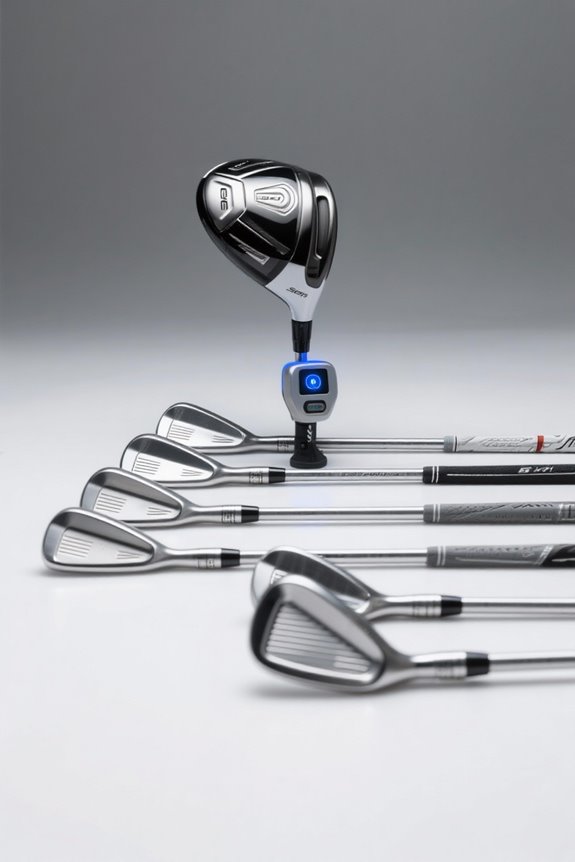
Understanding Swing Analytics: A Beginner’s Complete Guide

Swing analytics involves the detailed examination of swing mechanics in sports like baseball and golf. It uses advanced technology, such as motion sensors and high-speed cameras, to capture essential metrics, including attack angle and swing speed. This analysis helps athletes identify weaknesses, refine techniques, and enhance power. For example, a swing speed increase of 1 mph can add 3 yards to driving distance. Athletes can gain actionable insights to boost their performance. Further exploration reveals even more valuable information.
Key Takeaways
- Swing analytics focuses on analyzing the mechanics of swings in sports like baseball and golf to enhance performance and consistency.
- Key metrics include spin rate, angle of attack, and smash factor, which provide insights into swing efficiency and effectiveness.
- Advanced technology, such as motion sensors and high-speed cameras, enables detailed analysis and real-time feedback for athletes.
- Understanding biomechanical phases—such as setup, backswing, and follow-through—is crucial for refining swing techniques and improving accuracy.
- Tools like AI applications and mobile apps facilitate performance tracking and help tailor training techniques based on individual needs.
What Is Swing Analytics?
You may be interested


Swing analytics represents a thorough study of the mechanics and biomechanics of an athlete’s swing in various sports, especially baseball and golf. This analysis focuses on several key areas:
- Swing Path: The angle of the swing prior to ball contact.
- Attack Angle: The vertical movement of the bat or club upon impact.
- Hip Movement: Key metrics include hip rotation and shoulder position.
Historically, swing evolution showcases how techniques have transformed. Today’s swing style comparisons leverage advanced technology like motion sensors and high-speed cameras, leading to precise feedback. By understanding these metrics, athletes gain valuable insights. Using data-driven methods allows players to refine their swings effectively, promoting improvement through objective measures. This bridge between past styles and current techniques fosters a sense of belonging within the sporting community. Additionally, incorporating tools like swing tempo trainers can further enhance understanding and execution of swing mechanics.
Importance of Swing Analytics in Sports

Understanding the influence of swing analytics in sports, particularly in baseball and golf, reveals its significant role in enhancing athlete performance. The swing analytics benefits extend beyond innovation, offering concrete improvements:
- Performance Consistency: Data highlights weaknesses, allowing targeted corrections for refined mechanics.
- Power Enhancement: Biomechanical analysis boosts swing effectiveness, directly increasing hitting power.
- Customized Training: Tailored techniques based on analytics align with individual styles, maximizing strengths.
- Informed Decisions: Athletes leverage detailed data to benchmark performance against peers, identifying improvement areas.
- Skill Development: Analytics-driven drills focus on critical skill enhancements, leading to tangible gains. Additionally, utilizing tools like instant feedback mechanisms helps golfers identify swing mistakes in real time.
Key Metrics in Swing Analytics

Key metrics play an essential role in analyzing swings in sports, especially in golf and baseball. Understanding these metrics can foster a sense of community among players aiming for improvement.
- Spin Rate: Indicates backspin levels. Ideal spin optimization techniques help manage control and distance.
- Angle of Attack: Varied angles impact launch height, distance, and spin. Positive angles increase carry with drivers; negative angles enhance iron performance.
- Smash Factor: This ratio reflects energy transfer efficiency. A smash factor above 1.4 (for drivers) signifies solid contact.
- Club Path and Face Angle: These determine shot shape and accuracy. A clean interaction leads to desirable trajectories.
- Launch Metrics: Ball speed, launch angle, and swing low point together contribute to consistent striking.
Embracing these metrics can lead to community growth and better performance. Additionally, focusing on swing consistency can significantly improve overall playing ability.
Recommended Products

Hit the golf ball further, straighter and more consistently

TOUR LEVEL SHOT TRACK ACCURACY — Doppler radar & dual camera setup ensure reliable data on every shot to help you improve faster.

Measures » Carry/Total Distance » Smash Factor » Launch Angle » Swing Speed » Apex (Max Height) » Ball Speed
The Role of Technology in Swing Analysis

In a world where sports performance hinges on precision, technology revolutionizes swing analysis. Various advancements enhance the training process, providing valuable swing feedback to golfers at all levels. Key innovations include:
- Wearable sensor technology: Devices like deWiz deliver real-time biofeedback through vibrations, aiding correction of swing tempo and sequencing.
- Motion capture systems: Tools such as OPTIMOTION utilize dual-camera 3D analysis without markers, capturing detailed movement metrics.
- High-speed video integration: Combines video capture with sensor data for thorough biomechanics evaluation.
These technologies foster efficient communication between coaches and athletes, empowering players to identify swing flaws instantly. With continuous improvements, swing analysis tools make professional insights accessible, supporting personal growth and refined techniques for a broad audience. Furthermore, tools like the Blast Golf Swing Analyzer provide instant feedback and video playback, enhancing the learning experience.
Recommended Products

Advanced Doppler Radar Technology: Equipped with high-precision Doppler radar sensors for real-time, accurate tracking of both ball and club performance.

SETUP INSTRUCTIONS: Refer to the user manual for setup, app download, and Bluetooth pairing, and watch the video below for assistance. For troubleshooting, check the tutorials in our Phigolf app.

ZERO ANNUAL FEES + ENVIRONMENTAL SENSORS: Enjoy a smart app with zero subscription required! One-time download, lifetime use, and all features are fully accessible. Built-in temperature, humidity, and barometric pressure modules automatically adjust your shot data to real-time conditions. This provides true-to-life accuracy for both indoor and outdoor training with absolutely no hidden fees.
Understanding the Golf Swing

The golf swing is a complex sequence of movements fundamental to executing an effective shot.
- Backswing Essentials: This movement starts the swing by pulling the club away from the target. Key aspects include:
- Straight lead arm for width.
- Trunk rotational movement for weight transfer, promoting balance and power.
- Maintaining a posture that allows the body to coil effectively.
- Weight Transfer: Effective golf swings involve shifting weight from the back foot to the front. This rotation not only enhances power but also guarantees shot accuracy. Incorporating precision-engineered club faces can further improve ball speed and enhance shot-making capabilities.
Practicing the backswing essentials and stabilizing weight transfer helps golfers develop consistency. Together, these elements build a strong foundation for improved performance on the course, allowing players to connect with others sharing this passion.
Analyzing Swing Mechanics
Analyzing the mechanics of a golf swing reveals a structured approach that enhances both power and control. Understanding swing dynamics begins with recognizing the six biomechanical phases: set-up, backswing, shift, downswing, impact, and follow-through.
Key insights include:
- Kinematic Sequence: Hips initiate the downswing, maximizing biomechanical efficiency.
- Timing: Proper shift timing at the top of the backswing is vital for a smooth swing.
- Lead Arm Position: Stabilizing the clubface at impact is fundamental for accuracy.
Proper sequencing guarantees that the golfer generates power without sacrificing control. Using modern analytics, like 3D motion analysis, helps identify inefficiencies in mechanics, enabling players to refine their swing and improve overall performance. Additionally, incorporating tools like swing speed measurement can further enhance practice sessions and track improvements. Consistent practice reveals the importance of these elements in achieving excellence on the course.
The Impact of Grip and Posture on Performance
Grip and posture serve as foundational elements that greatly influence a golfer’s performance on the course.
- Grip Strength: Increased grip strength correlates with better swing speed and distance, enhancing overall performance consistency.
- Grip Pressure: Ideal grip pressure is essential; too much pressure hampers swing fluidity, while too little leads to loss of club control.
- Grip Position: Adjusting grip position affects clubface control and ball flight, considerably impacting accuracy.
- Posture Adjustments: Proper posture maximizes muscle engagement and swing efficiency, ensuring smoother changes throughout the swing.
- Grip Condition: Regularly replacing grips boosts tactile security, making swings more efficient.
Understanding these elements can help golfers become more confident and consistent in their game. Additionally, using golf alignment sticks can further enhance your swing precision and posture, leading to improved performance.
Tracking Swing Speed and Its Significance
Understanding swing speed is an essential component in enhancing a golfer’s overall performance on the course. Accurate measurement methods are fundamental for this assessment. Key options include:
- Launch Monitors: Using radar or high-speed cameras, these devices provide precise swing speed data along with metrics like ball speed.
- Swing Speed Radars: Affordable and portable, these devices measure clubhead speed without needing to hit a ball.
- Smartphone Apps: Utilizing sensors, these apps offer convenient, cost-effective swing speed estimations.
- Indirect Methods: When electronic devices are unavailable, players can estimate swing speed by analyzing shot distances in relation to club data.
Tracking swing speed is essential, as it informs equipment choices, highlights areas for improvement, and encourages measurable training progress. Additionally, utilizing launch monitors can provide comprehensive data that enhances understanding of swing mechanics.
Recommended Products

SKYTRAK ST MAX Launch Monitor – Delivers tour-level accuracy with dual Doppler radar, photometric cameras, and GOLFTEC Speed Training to help you build speed and distance - plus dual ports so you can charge and play without interruption.

GOLFTEC Speed Training Exclusive to ST MAX - The only launch monitor with built-in GOLFTEC Speed Training — giving you guided drills, personalized swing insights, and a proven path to more distance. Used by over 10 million lessons worldwide, GOLFTEC's methodology is now built directly into your practice.

Tour-Level Accuracy Anywhere You Practice: The SKYTRAK ST+ Launch Monitor combines dual Doppler radar with an advanced photometric camera to deliver precise ball and club data indoors or outdoors, so every swing is measured with confidence and consistency.
Utilizing Launch Monitors for In-depth Analysis
Harnessing the capabilities of launch monitors can greatly elevate a golfer’s performance analysis. These devices come equipped with various launch monitor features that enhance understanding of swing mechanics. Utilizing radar-based systems, players can measure critical parameters such as ball speed, launch angle, and spin rate, resulting in data accuracy essential for improvement.
Key benefits include:
- Identifying mis-hits by analyzing impact location
- Tracking club path to diagnose shot tendencies
- Adjusting club specifications for ideal performance
Professionals and amateurs alike utilize these technologies. This engagement with data fosters an inclusive community dedicated to collective improvement. The application of launch monitor insights leads to refined skills and a deeper connection to the game, making it an indispensable tool for today’s golfer. Additionally, advanced tracking technology, such as Doppler radar technology, ensures reliable data collection across various conditions.
Recommended Products

Camera-Based Measurement: The Launch Pro i features a proprietary three-camera imaging system with infrared that measures performance at impact for Tour-level accuracy—eliminating the guesswork common with radar-based launch monitors that rely on algorithms.

NEXT-GEN SIGPRO SUPER SOFTY DESIGN: The 4' x 9' SIGPRO Super Softy Golf Mat features upgraded engineering, premium materials, and a redesigned hitting zone for a more realistic fairway-like feel. Ideal for home simulators, commercial golf bays, and indoor practice setups.

Launch Monitor + GPS in One Device: The Approach G82 golf GPS devices combine an integrated launch monitor with a premium GPS handheld, letting you practice smarter at the range and play more confidently on the course.
Common Swing Analysis Techniques
Effective swing analysis is pivotal in helping golfers refine their skills and improve performance on the course. Several common techniques enhance this process:
- Swing Visualization Techniques: Using lines to monitor head movement, posture, and swing plane assists in maintaining mechanical consistency.
- Video Playback Techniques: Slow-motion analysis provides detailed breakdowns of swing phases, exposing common faults, such as improper grip or excessive sway.
- Angle and Plane Checks: Evaluating club shaft angle and elbow gap reinforces proper swing width and extension, optimizing power transfer.
- Drill Integration Methods: Combining identified flaws with targeted drills fosters immediate corrections, ensuring skill development.
Additionally, incorporating tools like the Swing Recording Accessories can significantly enhance the analysis process. Understanding these analysis methods leads to better outcomes on the course, fostering a sense of community among golfers aiming for improvement.
Advanced Metrics Explained
Advanced metrics play an essential role in enhancing swing analytics for golfers and players across sports. Understanding these advanced techniques leads to better performance through precise data interpretation. Key elements include:
- Spin Rate: Influences ball height and distance. High spin increases lift, potentially reducing distance.
- Spin Axis: Indicates orientation at impact, affecting ball curvature. Aim for a range of -2 to 2 degrees for straight shots.
- Attack Angle: Affects efficiency; a slightly positive angle optimizes distance.
- Swing Speed: Drives ball speed. Higher speeds enhance power, contributing to better performance.
Interpreting Swing Data for Improvement
Understanding swing data is integral to improving performance for golfers and athletes alike. Swing data interpretation allows players to identify key areas for enhancement. The following metrics provide valuable insights:
- Tempo and Rhythm: A 3:1 tempo ratio promotes consistency.
- Club Path: Keeping the club path near zero aids in hitting straight shots, while deviations can cause slices or hooks.
- Face Angle: This controls 85% of ball direction and impacts shot curvature.
- Spin Rate: Affects height and stability, particularly in windy conditions.
Tools and Platforms for Swing Analysis
Golfers and coaches increasingly leverage a variety of tools and platforms for swing analysis to enhance performance and refine techniques. These resources include:
- AI applications like SportBox 3D Golf, which provide data-driven feedback on swing mechanics.
- Sensor technology found in devices such as deWiz Golf, which offers real-time biofeedback for swing tempo and sequencing.
- Mobile accessibility through applications like V1 Golf, enabling visual analysis and easy swing comparisons.
Data visualization aids in understanding performance metrics, while effective feedback systems support coaching integration. Technologies like Blast Golf enhance short game skills, fostering player engagement. With these tools, golfers can meticulously analyze their swings, promoting targeted improvements and a strong sense of belonging to the golfing community.
Recommended Products

[Real-Time Tracking with Dimple & Club Optix] High-speed cameras and infrared sensors provide near-zero latency. Dimple Optix reads any dimple pattern. Club Optix delivers real-time visuals of your club at impact.

PORTABLE LAUNCH MONITOR AND SIMULATOR: The FlightScope Mevo Gen2 uses patented FlightScope Fusion Tracking technology to provide golfers with swing data using 3D Doppler tracking radar technology for the most accurate and consistent data from every shot - indoors and outdoors with GPS overview and Shot Tracer. Includes an exclusive E6 Connect simulation bundle with 8 world-renowned golf courses. Take this portable simulator to the range or set it up at home

BUNDLE INCLUDES: FlightScope Mevo Gen2 Golf Launch Monitor and Simulator, Signature Series Power Bundle, and Signature Gift Wrap
Tips for Beginners in Swing Analytics
For those new to swing analytics, grasping the fundamentals can greatly enhance performance. Beginners often encounter common mistakes that can hinder swing consistency. To develop a solid foundation, consider the following tips:
- Establish Proper Setup: Focus on grip, stance, and posture; they are essential for a consistent swing.
- Break Down Your Swing: Analyze individual components like takeaway and impact to isolate improvement areas.
- Practice Incrementally: Concentrate on one or two swing elements at a time, avoiding overwhelm.
- Utilize Available Tools: Leverage slow-motion recordings and wearable technology for real-time feedback.
- Incorporate Drills: Tailor drills to address specific weaknesses identified through data analysis.
Frequently Asked Questions
How Can Swing Analytics Benefit Other Sports Beyond Golf?
Swing analytics enhance performance in basketball shooting and tennis serves, providing insights into mechanics and timing. While traditionally associated with golf, these tools empower athletes across disciplines to achieve consistency and precision in their techniques.
Are There Any Risks of Overanalyzing a Golfer’s Swing?
Overanalyzing a golfer’s swing can lead to swing inefficiency and analysis paralysis. This mental burden disrupts natural rhythms, decreases confidence, and increases the risk of injury, ultimately compromising overall performance on the course.
Can Swing Analytics Improve Mental Aspects of Golf Performance?
Swing analytics can enhance mental performance by providing valuable performance tracking insights. This knowledge fosters confidence building among golfers, enabling them to visualize improvements and embrace challenges within a supportive community, ultimately transforming their game experience.
How Often Should One Analyze Their Swing Using Technology?
Analyzing one’s swing frequency varies based on skill level. Beginners may analyze weekly, while intermediates opt for monthly checks, and professionals assess after each session. Utilizing diverse analysis methods enhances understanding and fosters a sense of community in improvement.
What Budget Should a Beginner Allocate for Swing Analysis Tools?
A beginner should allocate a budget of $5,000 to $10,000 for swing analysis tools, including low-cost options like TradingView and Webull. This approach balances tool recommendations and proper risk management for aspiring traders.