As an Amazon Associate, we earn from qualifying purchases. Some links on this site are affiliate links at no extra cost to you. Our recommendations are based on thorough research and editorial judgment.

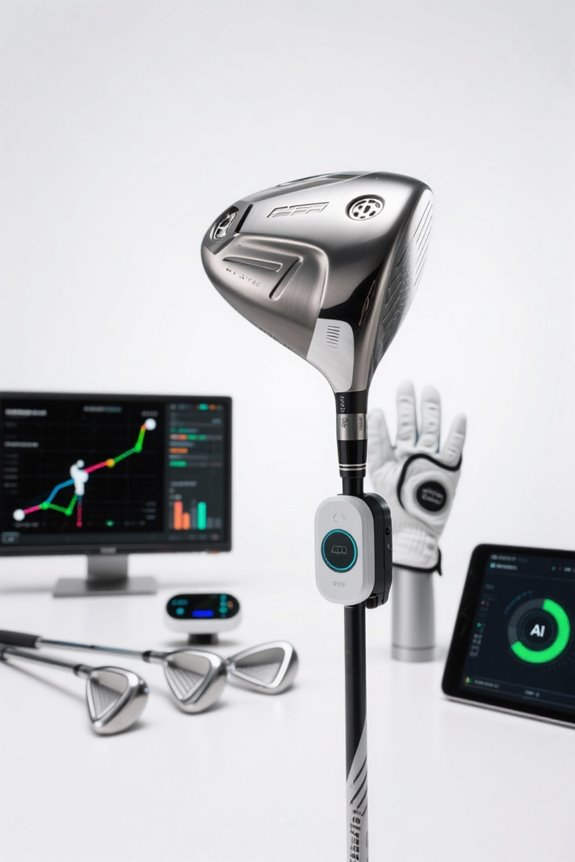
Is AI-Powered Swing Analysis The Future Of Golf Training?

AI-powered swing analysis is transforming golf training. It provides precise, data-driven insights that enhance player performance. In 2023, over 6 million Americans used virtual training via simulators. These tools utilize AI for real-time feedback and analysis, focusing on key metrics like swing speed and launch angle. With many apps costing under $100 annually, accessibility is increasing. Also, 35% of casual golfers engage with swing analyzer apps monthly. The future promises even more integration and innovation in training. More insights await.
Key Takeaways
- AI-powered swing analysis offers real-time feedback, enabling golfers to make immediate adjustments for rapid skill enhancement during practice sessions.
- Advanced algorithms and machine learning techniques allow for precise diagnostics of swing issues, improving overall performance and personalized training support.
- Affordable mobile apps and devices democratize access to swing analysis tools, encouraging wider adoption and participation across diverse demographics.
- Professional endorsements from notable golfers highlight the effectiveness and relevance of AI technologies in modern training approaches.
- Data-driven insights from AI systems motivate players through performance tracking, setting benchmarks aligned with proven outcomes for tangible skill development.
The Current Landscape of Golf Training
You may be interested


The current landscape of golf training reflects a dynamic blend of traditional practices and advanced technological innovations, allowing golfers to enhance their skills more effectively than ever.
- In 2023, over 6 million Americans utilized virtual training through golf simulators, showcasing widespread acceptance.
- These simulators employ sensors and AI to analyze swing metrics with precision, offering real-time feedback on performance.
- Engaging graphics replicate real-world courses, making indoor practice immersive.
- Golfers can track progress with customizable metrics, focusing on key areas to improve, like putting.
- Data-driven approaches emphasize targeted practice, where analytics guide training efforts, leading to measurable outcomes.
- The integration of tools like launch monitors allows for advanced metrics that further enhance training efficiency.
This fusion of technology and technique not only makes practice more accessible but also fosters a sense of community among aspiring players seeking to refine their games.
Understanding AI Technologies in Swing Analysis

Understanding the technologies powering swing analysis reveals how innovation shapes golf training. AI-driven solutions leverage machine learning and predictive modeling to enhance performance metrics. Key features of these technologies include:
- Data Processing: AI algorithms analyze extensive swing data, covering stance, swing path, and ball speed.
- Error Detection: Machine learning identifies subtle patterns, leading to improved diagnostic precision.
- Motion Tracking: Advanced skeletal tracking captures 3D movements at high frame rates, enabling smooth swing reconstructions.
- Accessibility: Markerless tracking eliminates the need for sensors, using mobile cameras for analysis.
These advancements create a user-friendly experience, allowing golfers to access insights without expensive equipment. As AI technologies continue to evolve, they promise greater accuracy and personalized support in the pursuit of golf excellence. Additionally, incorporating features like 120fps frame rates can significantly enhance the clarity of swing analysis, providing more detailed feedback for improvement.
Recommended Products

[Built-In Display & 8-Hour Battery – Train Anywhere] View key data instantly on MINI’s display—no PC needed. Use iPad for 3D visuals outdoors or PC for full simulation indoors. Seeing your data clearly, even outdoors, builds confidence and motivates focused practice.

BUNDLE INCLUDES: Full Swing KIT Golf Launch Monitor, Signature Series Power Bundle, and Signature Gift Wrap

[Real-Time Tracking with Dimple & Club Optix] High-speed cameras and infrared sensors provide near-zero latency. Dimple Optix reads any dimple pattern. Club Optix delivers real-time visuals of your club at impact.
Benefits of Real-Time Feedback for Golfers

Real-time feedback provides golfers with essential tools for immediate improvement, fundamentally transforming practice sessions. This technology offers various benefits:
- Immediate Adjustment Capability: Golfers can make real-time corrections, enhancing skill development rapidly.
- Longitudinal Performance Tracking: Continuous data collection motivates athletes by benchmarking against previous performances.
- Enhanced Precision: Visual feedback allows side-by-side swing comparisons, clarifying areas needing attention.
- Personalized Training Efficiency: AI-generated practice plans highlight individual strengths and weaknesses for better focus during sessions.
- Simulation of Diverse Conditions: Instant feedback during simulated scenarios prepares golfers for real-world challenges. Additionally, using tools like golf stats trackers can further refine skills and analyze performance effectively.
Recommended Products

What's Included: Enjoy indoor golf simulation with the included Optishot 2, software, USB cable, adjustable rubber tees, and two foam practice golf balls.

Advanced Golf Launch Monitor – The Rapsodo MLM2PRO golf launch monitor delivers pro-level accuracy, measuring 13 core golf metrics, including spin rate, spin axis, and swing speed, making it a golf training aid

Measures » Carry/Total Distance » Smash Factor » Launch Angle » Swing Speed » Apex (Max Height) » Ball Speed
How AI Enhances Swing Mechanics Understanding
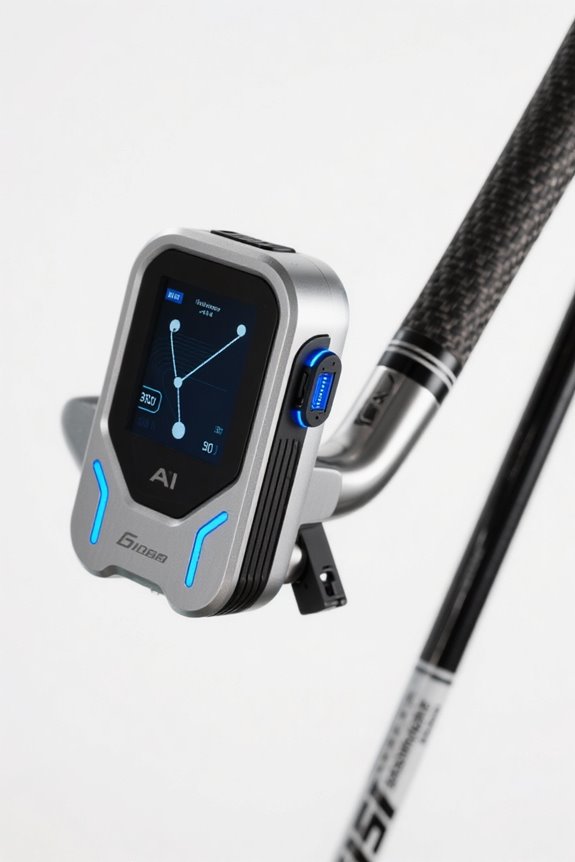
Advancements in AI technology are reshaping how golfers comprehend and refine their swing mechanics. These systems employ advanced 3D motion capture to analyze swings, offering precise biomechanical analysis. Key features include:
- Comprehensive Metrics: AI measures swing path, clubface angle, and body positions in real-time.
- Multifaceted Problem Identification: The technology detects multiple swing flaws simultaneously, pinpointing root causes effectively.
- Quantitative Insights: Data on joint angles, rotation speeds, and weight shifts are essential for optimizing technique.
- Performance Comparison: Continuous analysis against tour-level data helps amateurs align their skills with professional standards. Additionally, Doppler radar technology is increasingly integrated into these AI systems, enhancing measurement precision in swing performance.
User Experience Improvements With AI Tools

As golfers endeavor to enhance their skills, AI tools markedly improve user experience through tailored feedback and real-time analysis. These innovations foster user engagement and bolster learning retention in various ways:
- Instant Feedback: Immediate scoring and performance analytics confirm correct adjustments, enabling faster learning.
- Personalization: AI adapts coaching strategies to individual strengths, ensuring each golfer receives guidance tailored to their needs.
- Visual Learning: Graphical feedback simplifies complex data, making it easier to grasp swing mechanics.
- Integration with Wearables: Continuous tracking provides a holistic view of performance, enhancing practice efficiency.
- Gamification: Engaging elements like progress badges and leaderboards motivate users to persist in their training.
These advancements create a supportive environment, inviting golfers to improve together. Furthermore, the integration of advanced analytics can significantly enhance the precision of performance tracking, allowing for more effective training outcomes.
The Role of Data in Skill Development
Data plays an essential role in skill development for golfers, providing objective insights that can greatly enhance performance. Through data analytics, athletes can access critical performance metrics, such as:
- Club head speed: Average PGA pros exceed 110 mph, impacting driving distance.
- Launch angle: Ideal for drivers ranges roughly around 12 degrees for amateurs.
- Skill tracking: Allows tracking incremental improvements in swing speed and distance.
Setting training benchmarks based on statistical averages helps golfers align their practice with proven outcomes. Data-driven swing diagnostics integrate multiple metrics to identify areas for growth, ensuring targeted training. With quantified improvements, golfers can measure progress, motivating them to refine their skills continuously. Such insights foster a community that thrives on shared performance milestones and success. Additionally, utilizing tools like golf handicap trackers can further enhance a golfer’s understanding of their performance trends and areas for improvement.
Achieving Performance Goals With Personalization
Achieving performance goals in golf requires a personalized approach that considers individual skills and weaknesses. AI-powered tools offer:
- Personalized Planning: Tailored training plans address specific areas, from swing mechanics to putting techniques.
- Goal Achievement: Players set custom performance goals aligned with their capabilities.
- Tailored Coaching: Coaches benefit from AI insights, allowing for focused and effective interventions.
- Progress Tracking: Visualizations illustrate development trends, maintaining motivation.
- Feedback Loops: Continuous data-driven recommendations encourage iterative practice improvements.
- Mobile Accessibility: Players can access their personalized plans anytime, enhancing their engagement.
- These innovations complement traditional training approaches, such as utilizing advanced metrics to improve overall performance.
Through these features, golfers not only refine their skills but also foster a sense of belonging in a supportive, data-driven community.
Recommended Products

BUNDLE INCLUDES: Full Swing KIT Golf Launch Monitor, and Signature Series Power Bundle

Hit the golf ball further, straighter and more consistently

Save $$ when buying the Arccos Smart Sensors Bundle contaning Arccos Smart Sensors Gen 4 model 80014 & Arccos Link Pro model 70050
Accessibility Challenges in the AI Golf Market
Accessibility challenges in the AI golf market hinder potential advancements in player training and performance. Key issues include:
- Demographic Disparities: Limited access to AI tools predominately affects underserved communities, reinforcing unequal opportunities.
- Gender Inclusivity: A lack of focus on female users in design may discourage participation, minimizing diversity in the sport.
- Space Optimization: Many AI systems require ample space, posing difficulties for urban golfers or those in smaller living conditions, reducing usability.
- User Education: A steep learning curve complicates effective engagement with technology. Less tech-savvy players may struggle to derive value from complex interfaces and data.
Addressing these challenges is essential to creating an inclusive and effective AI golf training environment that welcomes all golfers. Furthermore, the integration of A.I.-driven insights could greatly enhance user engagement by simplifying performance analysis.
Cost Considerations for Amateur Golfers
Cost considerations play an essential role in the adoption of AI-powered swing analysis among amateur golfers.
- Affordable Alternatives: Traditional swing analyzers can exceed $20,000, but apps like SwingFix offer solutions for under $100 per year.
- Subscription Models: Many apps utilize subscription models, providing cost-effective access to advanced features. These options include monthly and annual subscriptions, often with guarantees to mitigate financial risks.
- Direct Savings: By delivering instant feedback and drills, golfers can reduce the need for in-person lessons, lowering overall training costs.
- Entry Prices: Some apps even provide basic analysis for as little as $2, democratizing access to quality training tools for casual golfers.
The Impact of Mobile Apps and Wearables
How have mobile apps and wearable devices transformed golf training for amateur golfers? The rise of mobile technology has redefined swing analysis:
- Increased Adoption: Over 35% of casual golfers use swing analyzer apps monthly, up from 20% in 2020.
- Immediate Feedback: Apps track swing speed and body movements in seconds, enhancing swing rhythm effectively.
- Usability: Free or low-cost options attract beginners, making advanced analysis accessible.
- Performance Boost: Regular users improve accuracy by around 20% faster than non-users.
- Wearable Devices: Sensors like HackMotion focus on wrist biomechanics, enabling real-time feedback on body movement quality.
- Comprehensive Metrics: Many applications and devices provide insights on accuracy metrics, ensuring users can effectively evaluate their performance and areas for improvement.
However, users must consider data privacy. As technology evolves, it offers both support and concerns, reshaping the future of golf training for everyone.
Recommended Products

Golf Swing Analyzer for Home or Business
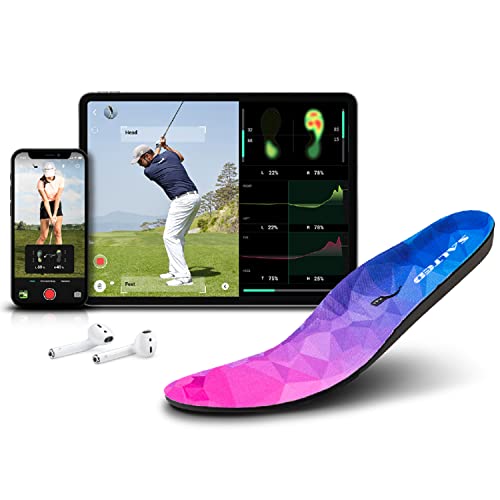
SALTED SMART INSOLES: It is a personalized smart golf coaching solution that will improve your driving distance. It analyzes weight shift during a swing and explains the optimal personal swing balance.

SETUP INSTRUCTIONS: Refer to the user manual for setup, app download, and Bluetooth pairing, and watch the video below for assistance. For troubleshooting, check the tutorials in our Phigolf app.
Innovations and Trends Shaping the Future
As mobile apps and wearable devices enhance golf training for amateurs, innovative technologies are redefining the sport’s future. Key trends shaping this evolution include:
- AI-Powered Swing Analysis: Machine learning detects flaws in real-time, improving swing consistency and providing personalized feedback.
- Performance Analytics: Systems gather data on swing path, speed, and impact, enabling tailored training routines that speed up skill enhancement.
- Smart Equipment: AI optimizes club designs and micro-adjustments, benefiting players by compensating for typical swing faults.
- AI-Driven Simulators: These offer detailed swing analysis and adapt practice plans to individual progress, making training more efficient. Moreover, advanced radar systems provide precise data analysis, enhancing the effectiveness of these training tools.
Collectively, these innovations guarantee golfers at all levels can achieve their full potential in a supportive, technology-driven environment.
Integration With Other Sports Technologies
Integrating golf training with advancements in sports technology presents a significant opportunity for enhancement. This seamless integration enables golfers to utilize sophisticated tools like AI-powered launch monitors and biomechanics systems. For instance:
- Launch Monitors: Tools such as Trackman assess swing data, identifying strengths and weaknesses with precision.
- Biomechanics Systems: These technologies provide real-time feedback on posture and motion, facilitating predictive optimization.
Mobile AI apps also deliver immediate, professional-grade swing analysis, acting as intelligent caddies to enhance on-course decision-making. Players can receive personalized practice plans based on continuous performance tracking, ensuring their training aligns with individual learning needs. By embracing this convergence of sports technology, golfers can achieve unparalleled advancements, creating a community focused on collective improvement and success. This evolving landscape encourages participation from all skill levels, fostering a vibrant golf culture.
Professional Endorsements and Market Adoption
Driving innovation in golf training, professional endorsements have become pivotal in the acceptance and adoption of AI-powered swing analysis technologies. Prominent figures like PGA Tour Champion K.J. Choi and US Open Champion Bryson DeChambeau champion tools like XView AI and Sportsbox AI, illustrating strong market trends.
Key endorsements:
- K.J. Choi labels XView AI as essential in his training and victories.
- Young golfer Alexa Phung praises remote coaching capabilities.
- Coach Pete Buchanan emphasizes real-time insights for effective teaching.
Market penetration is enhanced by affordable subscription models, such as $120 annually. Coaches also benefit by automating data annotation, optimizing personalized instruction. As consumer demand surges for innovative training, AI applications are positioned to bridge technology and aspiring golfers, fostering community and skill enhancement.
Envisioning the Future of Golf Training
The landscape of golf training is evolving rapidly, influenced heavily by advancements in artificial intelligence. Future technologies promise to transform how players enhance their skills.
- Precision Analysis: AI swing analyzers offer real-time feedback, pinpointing flaws that may go unnoticed by traditional coaching.
- Personalized Training: Customized improvement plans based on individual swing data enable focused practice on weaknesses.
- Wearable Integration: Smart devices contribute biometric data, enhancing overall performance tracking and technique evaluation.
- User Engagement: Gamification in AI-driven apps fosters motivation and competition among players.
Frequently Asked Questions
Can AI Swing Analysis Improve My Golf Game Without a Coach?
AI swing analysis can greatly enhance an individual’s golf game by providing precise feedback on swing mechanics and enabling data-driven practice routines, fostering improvement and confidence in a community of independent learners aspiring for excellence.
What Are the Common Pitfalls Using AI in Golf Training?
Overreliance on AI in golf training can lead to misconceptions, compromising data accuracy. Common pitfalls include sensor limitations, environmental variables, lack of customization, and disregard for the nuanced understanding human coaches provide, which are essential for effective learning.
How Often Should I Use AI Analysis for Optimal Results?
Frequency recommendations suggest beginner golfers engage in AI analysis 2–3 times weekly, ensuring training consistency. Intermediate players may opt for 1–2 times weekly, while advanced golfers benefit from biweekly sessions to achieve targeted improvements efficiently.
Which AI Swing Analysis Tools Are Best for Beginners?
For beginners, Eye Swing and SportBox 3D offer intuitive user interfaces and essential features, providing instant feedback and detailed analytics. These tools foster a sense of community among learners, enhancing their golf journey through accessible technology.
Are There Privacy Concerns With AI Golf Apps?
Privacy concerns with AI golf apps arise from inadequate data security and unclear user consent. Users may unknowingly expose personal information, leading to potential misuse, while awareness of privacy risks remains limited within the golfing community.