As an Amazon Associate, we earn from qualifying purchases. Some links on this site are affiliate links at no extra cost to you. Our recommendations are based on thorough research and editorial judgment.

How Do 3D Swing Analytics Compare To 2D Analysis?

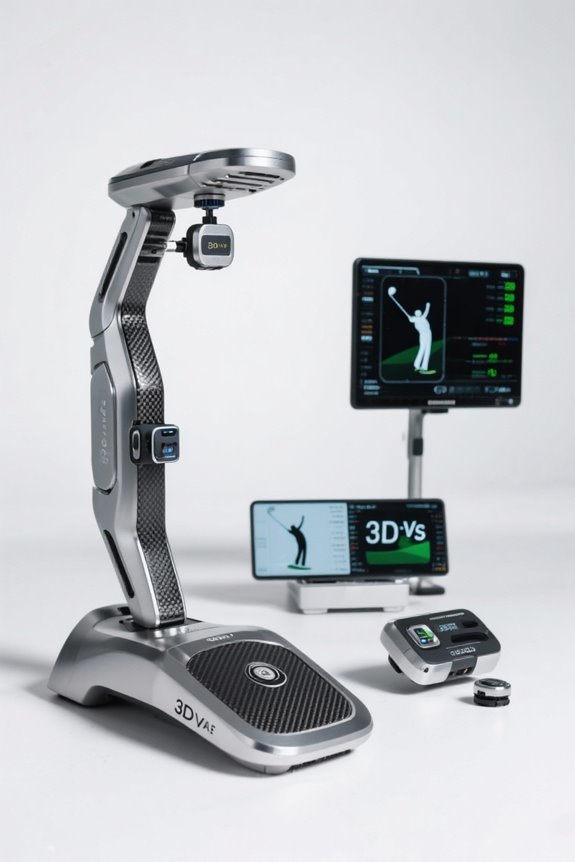
3D swing analytics outshine 2D analysis in several key areas:
- Precision: 3D analysis achieves kinematic accuracy up to 0.2 millimeters.
- Comprehensive Data: It captures movements across all axes, unlike 2D, which is confined to a single plane.
- Better Insights: Coaches receive real-time feedback through dynamic visualizations, enhancing personalized strategies.
You may be interested


Despite higher costs and complexity, 3D methods facilitate deeper biomechanical understanding. Exploring further reveals even more about the evolving landscape of swing analysis in golf.
Key Takeaways
- 3D analysis provides kinematic precision up to 0.2 millimeters, while 2D analysis is limited by its single-plane evaluation.
- 3D captures movements across all axes enhancing understanding of trunk rotation and club trajectories, unlike the potential overestimations in 2D.
- Coaches can leverage 3D’s dynamic visualizations for real-time feedback, improving personalized coaching strategies compared to static 2D insights.
- While 3D analysis requires complex calibration and higher costs, its detailed insights can significantly elevate a golfer’s performance.
- Accessibility and cost often favor 2D analysis, as traditional lessons with 2D insights are typically cheaper than advanced 3D methods.
Accuracy and Dimensionality Differences
When evaluating swing analytics, the differences in accuracy and dimensionality between 3D and 2D analysis are paramount.
- Accuracy Metrics: 3D analysis delivers kinematic precision up to 0.2 millimeters, surpassing 2D’s limitations.
- Dimensionality Challenges: 2D is confined to a single plane, hindering analysis of swing complex movements.
- Measurement Reliability: Both methods show high intra-class correlations (ICC > 0.92), yet 3D maintains greater consistency for intricate variables.
- Multi-Planar Analysis: 3D captures movements across all axes, enriching understanding of trunk rotation and club trajectories.
- Analytical Limitations: 2D struggles with off-plane kinematics, often overestimating angles like trunk axial rotation.
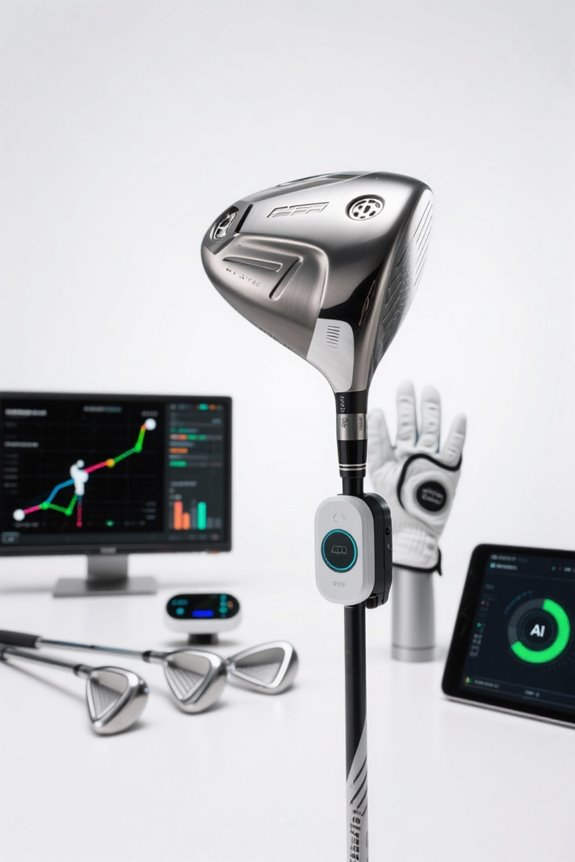
- Advanced Tracking Technology: Furthermore, the integration of advanced tracking technology in 3D monitors enhances the ability to assess real-time swing dynamics effectively.
Recommended Products

Hit the golf ball further, straighter and more consistently

Pro-Grade Accuracy with Prometrics Engine: The SC4 Pro golf launch monitor and golf shot tracker delivers precise ball and club head data, tracking from swing to impact to ball flight, offering unmatched real-time accuracy for both indoor and outdoor practice.

Golf Swing Analyzer for Home or Business
Technology and Data Collection Approaches

Frequently, technology plays a crucial role in the effectiveness of swing analysis, particularly when comparing 2D and 3D methods.
- 2D Analysis: Utilizes high-speed cameras for planar motion analysis, focusing on swing angles and timing. Software often includes video augmentation but lacks depth in biomechanics. Interfaces are simple, relying on frame-by-frame analysis.
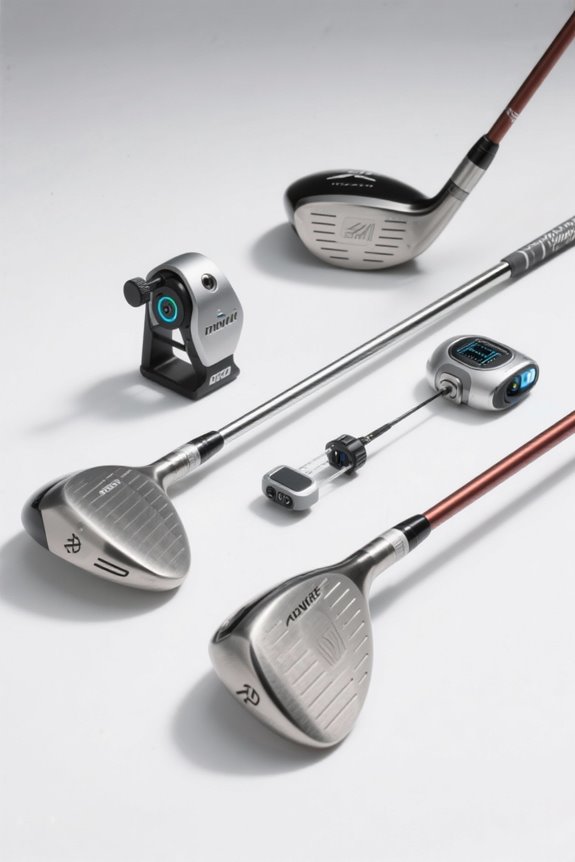
- 3D Analysis: Involves multiple motion-capture systems allowing for extensive data integration and motion reconstruction. This provides a detailed biomechanical assessment through metrics like X-factor and pelvis sway. Advanced software offers kinematic visualization and immediate feedback, enhancing users’ understanding. Additionally, portable tools can streamline practice and data collection for both analysis types.
The complexity of sensor calibration and data processing in 3D creates a more informative but resource-intensive analysis technique compared to the accessibility of 2D systems.
Recommended Products

[Built-In Display & 8-Hour Battery – Train Anywhere] View key data instantly on MINI’s display—no PC needed. Use iPad for 3D visuals outdoors or PC for full simulation indoors. Seeing your data clearly, even outdoors, builds confidence and motivates focused practice.

[Real-Time Tracking with Dimple & Club Optix] High-speed cameras and infrared sensors provide near-zero latency. Dimple Optix reads any dimple pattern. Club Optix delivers real-time visuals of your club at impact.

PORTABLE LAUNCH MONITOR AND SIMULATOR: The FlightScope Mevo Gen2 uses patented FlightScope Fusion Tracking technology to provide golfers with swing data using 3D Doppler tracking radar technology for the most accurate and consistent data from every shot - indoors and outdoors with GPS overview and Shot Tracer. Includes an exclusive E6 Connect simulation bundle with 8 world-renowned golf courses. Take this portable simulator to the range or set it up at home
Practical Benefits for Golfers and Coaches

The shift from 2D to 3D swing analytics presents notable practical benefits for golfers and their coaches, greatly enhancing performance evaluation and development.
- Enhanced Accuracy: 3D analytics more accurately measure trunk kinematics, correcting potential 7° errors found in 2D analysis.
- Personalized Insights: Coaches can customize strategies based on unique swing patterns, using precise metrics like angular velocity and alpha torque to objectively track athlete performance.
- Visualization Tools: 3D avatars provide dynamic swing visualizations, allowing real-time comparisons for impactful feedback.
- Injury Prevention: Identifying abnormal joint motions reduces injury risk, reinforcing safe practice habits.
- Stylish Accessories: Incorporating tools like golf scorecard holders enhances organization on the course, supporting a focused and efficient game.
These advantages collectively facilitate deeper understanding, supporting golfers’ growth while equipping coaches with effective, data-driven tools to enhance overall training outcomes.
Recommended Products

Advanced Doppler Radar Technology: Equipped with high-precision Doppler radar sensors for real-time, accurate tracking of both ball and club performance.

Practice with purpose with this lightweight and portable 3D Doppler radar launch monitor.

SETUP INSTRUCTIONS: Refer to the user manual for setup, app download, and Bluetooth pairing, and watch the video below for assistance. For troubleshooting, check the tutorials in our Phigolf app.
Statistical and Analytical Insights

Statistical and analytical insights derived from 3D swing analytics provide golfers and coaches with critical performance data that enhances understanding of effective swing mechanics. The precision of 3D motion capture allows for parameter quantification across multiple dimensions, revealing the following key points:
- Significant variable correlations exist between hand trajectory and clubhead speed, both linked to skill level.
- Kinematic variability, such as lateral bending and axial rotation, is accurately represented, unlike 2D analysis.
- Mechanical efficiency measurements through 3D analysis illustrate the importance of energy transfer in different swing styles.
- Data variability is effectively addressed, offering insights into individualized mechanics.
These insights demonstrate how 3D analytics drive improvements in swing performance by facilitating targeted coaching interventions. Furthermore, the use of swing plane trainers has been shown to enhance muscle memory and improve overall swing mechanics, complementing the findings of 3D analysis.
Limitations and Challenges
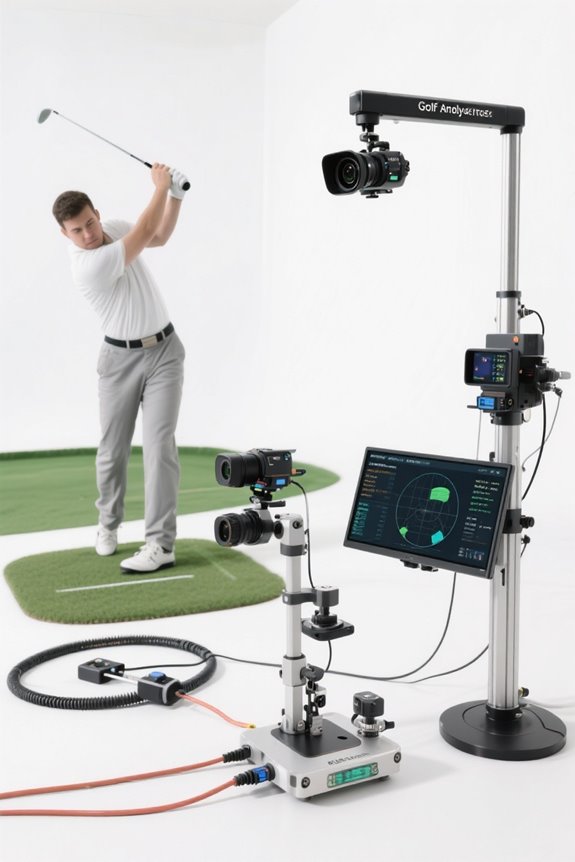
While 3D swing analytics offer valuable insights for golfers, they also present several limitations and challenges.
- Sensor Drift: Inertial sensors may exhibit drift errors, causing trajectory inaccuracies of 30–60 cm. As swings involve rapid movements, these errors can accumulate over time.
- Equipment Compatibility: Many systems struggle with specific club materials, as electromagnetic sensors face distortion near metal. Wireless sensors, although more versatile, cannot attach to metal clubs directly.
- Data Processing: Advanced algorithms are necessary for accurate data extraction, increasing complexity and cost.
- Measurement Limitations: Often, only rotational biomechanics are captured, neglecting important linear displacements. This can weaken feedback needed for improving technique.
Additionally, the durability of the equipment used in these systems can impact their reliability and effectiveness over time, particularly if they are exposed to harsh weather conditions.
Application and Integration Trends
Emerging trends in the application and integration of 3D swing analytics illustrate a significant shift in how golfers approach performance improvement.
- User Ecosystems: Cloud-based platforms allow seamless access to swing data, enhancing user engagement and continuous learning.
- Coaching Efficiency: With real-time auto swing capture, coaches can analyze data instantly, improving lesson effectiveness.
- Equipment Integration: The combination of 2D and 3D analysis in software solutions reduces entry barriers, making advanced technologies accessible.
- Performance Tracking: Enhanced data visualization tools track kinematic factors, promoting personalized training enhancements.
- User Engagement: Side-by-side comparisons against pro models motivate learners, fostering skill refinement. Additionally, the incorporation of launch monitor features enhances the accuracy of swing analysis, providing golfers with valuable insights for improvement.
Recommended Products

BUNDLE INCLUDES: FlightScope Mevo Gen2 Golf Launch Monitor and Simulator, Signature Series Power Bundle, and Signature Gift Wrap

ZERO ANNUAL FEES + ENVIRONMENTAL SENSORS: Enjoy a smart app with zero subscription required! One-time download, lifetime use, and all features are fully accessible. Built-in temperature, humidity, and barometric pressure modules automatically adjust your shot data to real-time conditions. This provides true-to-life accuracy for both indoor and outdoor training with absolutely no hidden fees.

High Speed & High Definition: Equipped with a high-quality Aptina AR0144 sensor, this USB camera delivers smooth 90fps at 1200P (1920×1200). Enjoy sharp, clear images even when capturing fast-moving scenes.
Comparing Kinematic Details
The comparison of kinematic details between 3D swing analytics and traditional 2D methods reveals critical discrepancies that impact performance assessment.
- Measurement Precision: 3D captures joint motion across X, Y, and Z axes, while 2D relies on flat planes. This leads to potentially significant variances; for example, 2D trunk flexion can overestimate angles by approximately 7°.
- Kinematic Variability: Individual swings exhibit pronounced differences in 3D, highlighting unique biomechanical patterns that 2D averages.
- Analytical Depth: 3D methods deliver richer datasets, allowing precise analysis of power output and movement timing.
- Data Richness: Recording complex motions enhances understanding of body dynamics, revealing metrics not visible through 2D analysis. Additionally, the use of high-quality materials in swing weight scales is crucial for achieving accurate measurements and improving overall performance.
This thorough insight fosters informed coaching and improved player development.
Cost and Accessibility Factors
Cost and accessibility factors play a critical role in determining whether golfers choose 3D swing analysis or stick with 2D methods.
- Pricing Structures: 3D evaluations generally range from $150 to over $300, while 2D analysis is often included in traditional lessons, costing less overall.
- Budget Considerations: Subscription-based 3D apps are available for about $15.99 monthly, offering an affordable at-home option.
- Regional Variations: In places like Bangkok, traditional lessons with 2D analysis can be offered at lower prices.
- Service Offerings: Extensive 3D packages can exceed $1,300, highlighting higher investments in advanced analytics compared to standalone 2D lessons.
Additionally, understanding optimal driver selection can significantly enhance performance for senior golfers, further emphasizing the importance of tailored analytics in improving their game.
These factors reflect current market trends and consumer preferences, influencing golfers’ decisions based on affordability and availability of lesson options.
Recommended Products

Please consult our user manual for setup instructions, including app download and Bluetooth pairing (Watch the video below for guidance). If you encounter any setup difficulties, our Phigolf app provides troubleshooting tutorials for assistance.

Measures: Swing Speed, Ball Speed, Carry/Total Distance, Smash Factor, Launch Angle, Apex, Spin (Spin Numbers Available in My Swing Caddie App)
Future of Swing Analysis in Golf
As golfers weigh the cost and accessibility of swing analysis options, the future of this technology appears promising, driven by considerable advancements in several key areas.
- AI and Machine Learning: Emerging technologies enable data personalization through detailed biomechanical analysis, improving coaching efficiency. Continuous learning from user data enhances accuracy and recommendations.
- VR and AR Applications: These innovations create immersive experiences and real-time feedback, considerably enhancing skill acquisition and engagement for both amateurs and professionals.
- Wearable Technologies: Devices monitor key swing metrics, offering real-time insights for immediate corrections and tailored coaching programs.
- Data-Driven Coaching: The swing analysis market is expanding, with AI-driven diagnostics transforming practice methods by focusing on personalized improvement. The integration of moisture management in golf apparel can enhance comfort, allowing golfers to focus better on their performance.
This evolution promises to make golf more accessible and effective for everyone.
Frequently Asked Questions
How Does 3D Analysis Affect Swing Consistency Over Time?
3D analysis greatly impacts swing consistency over time by enhancing data reliability and enabling precise monitoring of swing repetition. This multidimensional perspective allows for targeted training enhancements, leading to improved performance and deeper understanding of individual biomechanics.
Can Beginners Effectively Use 3D Swing Analysis?
Beginners can effectively use 3D swing analysis despite challenges, as software accessibility enhances their learning experience. Real-time feedback and user-friendly interfaces foster confidence, allowing them to improve independently while feeling part of a supportive community.
What Skills Are Essential for Interpreting 3D Data?
Essential skills for interpreting 3D data include proficiency in data visualization and statistical analysis, enabling one to meaningfully engage with complex information. This fosters understanding and facilitates valuable insights into performance improvement for all skill levels.
How Can 3D Analysis Improve Club Fitting Processes?
3D analysis enhances club fitting by providing detailed kinetic feedback and swing speed metrics. This data allows for more personalized adjustments to club specifications, fostering a sense of community among golfers aiming for peak performance and injury prevention.
What Impact Does Environmental Lighting Have on Data Accuracy?
Environmental lighting greatly affects data reliability, as ideal lighting conditions enhance sensor performance and accuracy. Inconsistent lighting can lead to misreadings and errors, emphasizing the importance of a well-controlled environment for accurate data capture.