As an Amazon Associate, we earn from qualifying purchases. Some links on this site are affiliate links at no extra cost to you. Our recommendations are based on thorough research and editorial judgment.


Are Biomechanical Swing Reports Worth The Investment?

Biomechanical swing reports provide golfers with essential insights to enhance their performance and prevent injuries. These reports analyze swing mechanics with up to 90% peak muscle activity activation. They help identify specific strengths and weaknesses, facilitating customized training. Studies reveal an 11% performance gap between professionals and amateurs, highlighting the potential benefits of improved technique. However, variability in individual strength and swing patterns can impact results. Understanding these reports can guide effective application for golfers of all skill levels, so further insights await.
Key Takeaways
- Biomechanical swing reports provide quantified feedback, helping golfers to adjust swing mechanics effectively for improved performance.
- Personalized insights enable players to identify strengths and weaknesses, leading to targeted training and measurable gains.
- Evidence shows that proper biomechanics can significantly reduce the risk of common golf injuries, enhancing overall longevity in the sport.
- Advanced technologies, such as motion capture and AI analysis, offer professional-grade feedback that promotes consistent improvement across skill levels.
- Potential limitations, like variability in methodologies and individual differences, suggest the need for personalized analysis to maximize the benefits of the reports.
Understanding Biomechanics in Golf
You may be interested


In order to effectively understand the biomechanics of golf, one must grasp the intricate motions involved in a golf swing.
- Swing Mechanics
- This involves analyzing body movements during the swing.
- Approximately 80-90% of peak muscle activity is engaged, varying with skill level.
- Kinematic Sequence
- The swing operates through distinct phases: set-up, backswing, shift, downswing, impact, and follow-through.
- Each phase has specific joint movements and muscle engagements.
- Proper sequencing is vital for achieving maximum club head speed.
Understanding these foundational elements helps golfers optimize their performance. Analyzing swing mechanics allows for identifying inefficient movement patterns and improving overall swing quality—essential for anyone aiming to enhance their game. Additionally, grip size consideration plays a crucial role in achieving consistency and accuracy during putting, further enhancing overall performance.
Technologies Enhancing Swing Analysis

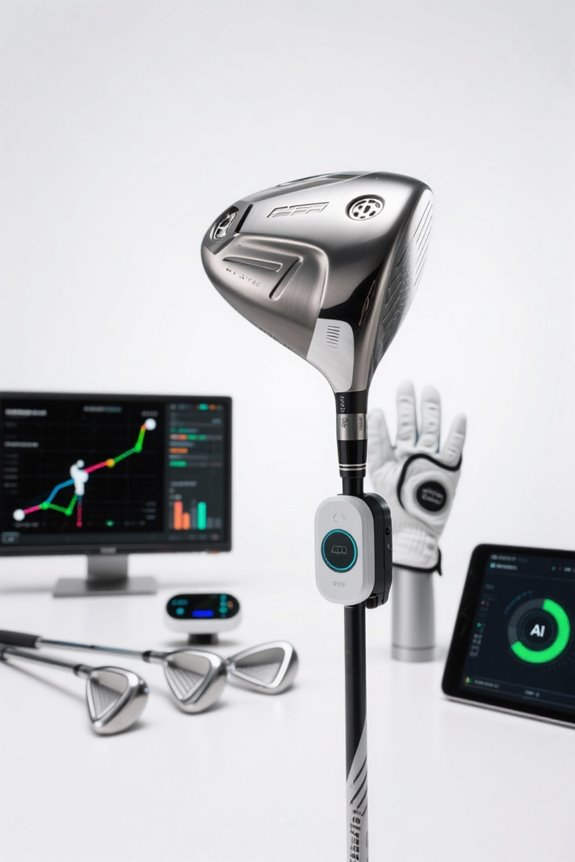
As golf technology continues to evolve, various innovative tools are considerably enhancing swing analysis practices. Key advancements include:
- AI Algorithms: Advanced AI algorithms analyze numerous swing factors, offering instant feedback that accelerates learning.
- Motion Capture: Motion capture technology tracks body movements during swings, providing a detailed analysis of mechanics.
- Wearable Devices: These devices enrich swing analysis by collecting physiological data and connecting to mobile apps for real-time tracking.
- Video Feedback: Side-by-side video comparisons allow golfers to visually assess their swings while on-screen tools enable precise annotations.
The combination of these technologies not only improves coach-student communication but also democratizes access to professional-grade feedback. With golf’s growing participation, embracing these tools may lead to significant performance insights for players at any level. Additionally, incorporating backyard golf cages can further enhance practice opportunities, allowing golfers to refine their skills conveniently at home.
The Impact on Performance Improvement

The advancements in swing analysis technologies have paved the way for a deeper understanding of golfer performance improvement. Biomechanical swing reports provide valuable insights into swing mechanics and performance metrics. Key benefits include:
- Quantified Feedback: Reports help golfers adjust swing mechanics closer to professional benchmarks, improving metrics like clubhead speed.
- Targeted Training: Biomechanical analysis identifies specific strengths and weaknesses, enabling customized training programs focused on power and control.
- Progress Tracking: Establishing a baseline profile allows golfers to measure improvements objectively over time.
Studies indicate an 11% performance difference between professionals and recreational players. This gap highlights the significance of refined swing mechanics. By incorporating biomechanical insights, golfers can enhance consistency and achieve measurable gains, creating a more engaging experience for enthusiasts at all skill levels. Additionally, advanced tracking technology allows for precise measurements that can further aid in optimizing performance.
Injury Prevention Through Biomechanical Insights

Understanding how biomechanics can prevent injuries in golf is essential for players at all levels. Biomechanical insights reveal critical information about swing mechanics, informing strategies to reduce common injury patterns. Key data includes:
- Lower back injuries affect 15% to 50% of golfers.
- Wrist injuries range from 13% to 36% due to improper swing mechanics. Additionally, swing technique improvement can significantly reduce the risk of injuries by promoting proper form and mechanics.
Recognizing Limitations of Biomechanical Reports

While biomechanical reports can offer valuable insights into golf swing mechanics, their limitations must be recognized to avoid misconceptions. Key challenges include:
- Inconsistency in Methodologies: Different studies may yield varied results, limiting broad applicability.
- Measurement Challenges: Current assessments are often narrow, capturing only specific swing moments, which may omit dynamic changes.
- Individual Variability: Mobility and strength differences among golfers can influence results. Many studies focus too narrowly on select demographics, neglecting broader populations.
- Risk of Misapplication: Without personalized analysis, data can be misinterpreted, leading to flawed recommendations that may pose a danger of injury.
Understanding these limitations is essential for golfers and coaches seeking effective, safe paths to improving their game. Context is important for meaningful progress. Additionally, accurate data tracking is critical for refining golf skills and ensuring the effectiveness of any recommendations made from biomechanical analyses.
Evaluating Return on Investment for Golfers
Evaluating the return on investment (ROI) for golfers who utilize biomechanical swing reports involves analyzing both financial and performance metrics.
- Financial Costs: Prices for biomechanical analysis can range from several hundred to thousands of dollars.
- Performance Gains: Studies suggest that optimizing swing biomechanics can improve clubhead speed and accuracy, benefiting overall scores.
- Swing Enhancements: Data-driven insights allow golfers to target specific areas for improvement.
- Motivation Boost: Clear metrics provide motivation as golfers track tangible progress.
- Injury Prevention: Addressing flaws can reduce injury risks, extending playing careers.
- Technology Integration: Utilizing tools like portable swing analyzers can enhance training effectiveness and provide immediate feedback.
While the economic justification is complex, measurable performance enhancements can translate into real benefits for dedicated golfers, fostering their journey toward mastery on the course.
Practical Applications for Different Skill Levels
For golfers, the benefits of biomechanical swing reports can differ greatly based on skill level.
Beginner Techniques
- Biomechanical reports help beginners grasp fundamental swing mechanics, promoting safe movement patterns.
- Key metrics focus on pelvis stability and torso rotation, aiming for swing consistency.
- Common faults, such as excessive spine flexion, are identified for tailored corrective drills.
Intermediate Applications
- Intermediate players utilize feedback to optimize kinematic sequences for improved accuracy.
- Reports highlight issues like overcompensations, promoting specific drills to address them.
Advanced Insights
- Advanced golfers benefit from detailed analyses that target marginal gains.
- Custom strategies guarantee more efficient swings and injury prevention, similar to how high-density acoustic panels reduce background noise in soundproofing environments.
Frequently Asked Questions
How Do I Choose the Right Biomechanical Analysis Tool for My Needs?
To choose the right biomechanical analysis tool, one must prioritize data accuracy, assess swing mechanics relevance, and guarantee compatibility with existing devices. Balancing these factors fosters a supportive environment for improvement and shared progress.
Can Biomechanical Analysis Replace Traditional Golf Coaching?
Biomechanical analysis serves as a telescope, offering precise swing metrics that enhance coaching effectiveness. Yet, it cannot fully replace traditional coaching’s holistic support, which intertwines psychological guidance and strategy, fostering a thorough learning environment.
What Are the Ongoing Costs of Using Wearable Devices?
Ongoing costs of wearable devices include subscription fees ranging from $5 to $30 monthly and potential wearable maintenance expenses. Users often weigh these financial commitments against the benefits of extensive health tracking and insights provided.
How Often Should I Update My Biomechanical Swing Report?
Updating biomechanical swing reports every 3 to 6 months guarantees effective progress tracking and enhanced swing performance. Regular assessments accommodate evolving skills, helping golfers maintain momentum and address technique inefficiencies in a supportive learning environment.
Are There Alternative Methods for Swing Analysis Without Technology?
There are various alternative methods for swing analysis without technology, including video analysis for visual review, coaching drills for skill improvement, feedback sessions with peers or coaches, and using visual aids like alignment sticks to enhance practice.