As an Amazon Associate, we earn from qualifying purchases. Some links on this site are affiliate links at no extra cost to you. Our recommendations are based on thorough research and editorial judgment.


What Is The Best Way To Set Up A Home Golf Practice Area?

To set up a home golf practice area, start by evaluating available space. Ideal dimensions include a minimum 12 feet wide and 18-20 feet deep, with a ceiling height of 9-10 feet. Safety is essential; designate practice zones and use nets for containment. Choose durable equipment like swing trainers and putting aids. Opt for interlocking rubber mats for flooring protection. Finally, consider incorporating technology such as simulators for feedback. Further details can enhance your setup effectively.
Key Takeaways
- Measure your available space to ensure it meets the minimum dimensions for indoor or outdoor golf practice setups.
- Invest in quality flooring options like synthetic turf or rubber mats that provide safety and realism during practice.
- Incorporate safety measures such as nets, barriers, and clear walkways to protect users and prevent accidents.
- Use essential training aids like putting aids and swing trainers for effective skill development and performance improvement.
- Integrate technology, such as simulators and launch monitors, to enhance practice sessions and track progress over time.
Assessing Space Availability for Your Home Practice Area
You may be interested


Evaluating space availability is an essential first step in creating an effective home golf practice area. Homeowners must utilize measurement tools to ascertain space dimensions accurately. Consider the following aspects:
- Ceiling Height: Aim for 9-10 feet for comfortable swings.
- Width: A minimum of 9-12 feet, ideally 15 feet, accommodates swings and equipment.
- Depth: Ranges from 14-20 feet, depending on setup type.
When reviewing space, include buffer zones for safety, ensuring distance from tee to impact screen is adequate. For outdoor spaces, a backyard is perfect for full swing practice, while smaller indoor options like garages are suited for putting and chipping. Always avoid hazards, ensuring a clear, unobstructed area for safe practice. Additionally, consider using high accuracy measurement tools to ensure precise dimensioning of your practice area.
Prioritizing Safety in Your Practice Setup

Creating a safe practice environment is fundamental once space availability has been assessed. To guarantee swing safety in home golf practice, consider implementing the following measures:
- Designated Practice Zones: Establish areas at least 6 feet apart, restricting practice to one golfer per zone.
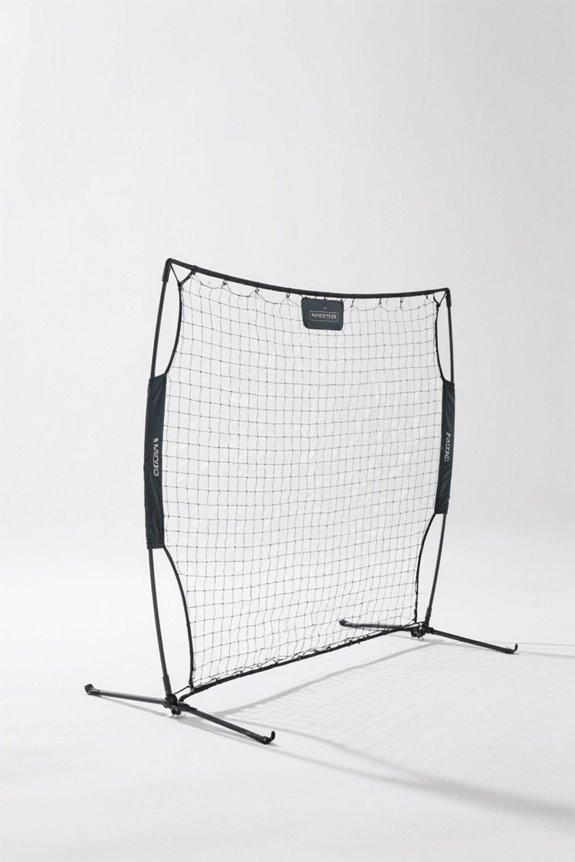
- Physical Barriers: Use quality golf nets and durable mats to contain balls and prevent injuries.
- Height Restrictions: Enforce a rule to limit swings to below knee height in tight spaces.
- Clear Walkways: Maintain clear paths to prevent accidents.
- Behavior Protocols: Train users on safety rules and emergency protocols.
Regular inspection of equipment is essential for maintaining safety standards. Additionally, utilizing multi-target setups can enhance practice sessions while promoting safety. These steps promote an inclusive atmosphere where all golfers feel secure and confident during practice sessions.
Choosing the Right Surface for Outdoor Practices

Choosing the right surface for outdoor golf practice is essential for maximizing performance and enjoyment. Golfers should consider various turf materials to enhance their training experience, such as:
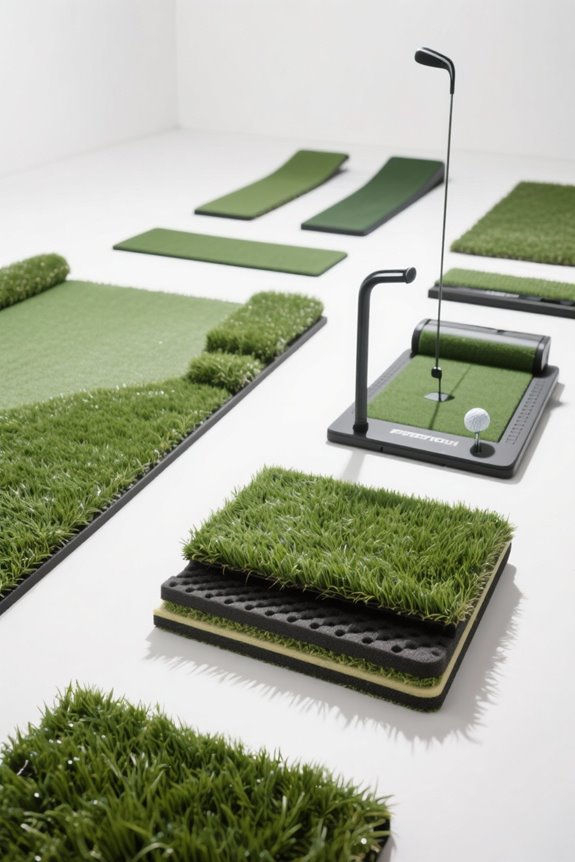
- Artificial Turf: Mimics grass softness and flexibility, with pile heights of 1/2 to 3/4 inch for realistic ball behavior.
- Foam Mats: Lightweight and portable but may lack durability compared to turf and rubber options.
- Rubber Mats: Provide excellent shock absorption and durability features for prolonged use outdoors.
Additionally, durable surfaces offer weather resistance, reducing maintenance needs. Practicing on different surface textures, including fairway or rough simulations, allows for greater practice versatility. Customization options, such as replaceable hitting inserts and various tee positions, can further tailor the experience to individual preferences. The best mats also feature high-density synthetic turf that ensures a realistic, long-lasting surface, making them ideal for serious golfers.
Recommended Products

GOLF TRAINING: Train on fresh, natural-looking, and soft feeling artificial grass carpet all year long. Consistent surface friction, cushion, and feel in our luxurious lifelike emerald and lime green fairway will enhance your long and short game, improving your overall golf skills.

Quality and Comfortable Material--Made of the highest quality UV resistant polyethylene yarns, resistant synthetic material high temperature, superior resilience & durability. Rubber backed with drainage hole, easy to clean and can be dry quickly.

Quality and Comfortable Material--Made of the highest quality UV resistant polyethylene yarns, resistant synthetic material high temperature, superior resilience & durability. Rubber backed with drainage hole, easy to clean and can be dry quickly.
Indoor Practice Space: What You Need to Consider

When crafting an indoor golf practice area, several key factors must be considered to optimize both space usage and practice efficiency. The following guidelines will help guarantee a successful setup:
- Indoor Dimensions: Aim for a minimum of 12 feet wide, 18-20 feet deep, and 9-10 feet in ceiling height. This allows ample space for full driver swings.
- Ceiling Height: A height of at least 9 feet is essential; taller players or those with aggressive swings should consider 10 feet or more.
- Tee Positioning: For ambidextrous use, a width of 14 feet is recommended to avoid wall interference during swings. Additionally, ensure your setup accommodates minimum ceiling height to facilitate a smoother practice experience.
Recommended Products

PREMIUM QUALITY: Made of the highest quality UV resistant polyethylene yarns, resistant synthetic material high temperature, superior resilience & durability. Rubber back with drainage holes ensure water go through and dry quickly.
Quality and Comfortable Material--Made of the highest quality UV resistant polyethylene yarns, resistant synthetic material high temperature, superior resilience & durability. Rubber backed with drainage hole, easy to clean and can be dry quickly.
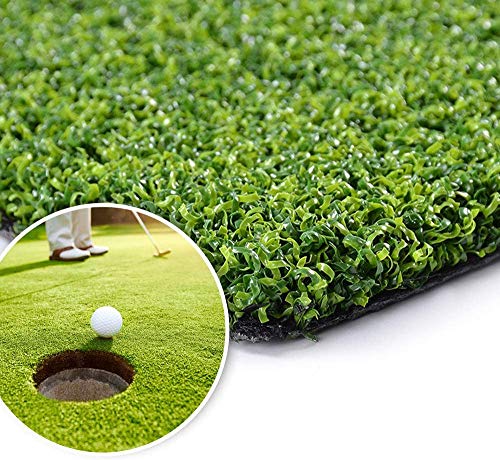
Quality and Comfortable Material--Made of the highest quality UV resistant polyethylene yarns, resistant synthetic material high temperature, superior resilience & durability. Rubber backed with drainage hole, easy to clean and can be dry quickly.
Essential Equipment for Effective Golf Practice

A well-equipped home golf practice area enhances performance and skill development. For effective practice, golfers should consider essential equipment, including:
- Putting Aids: Tools like the Putting Arc MS-3D help develop consistent strokes by guiding the putter’s path.
- Chipping Tools: A Divot Board visualizes the correct divot, making it easier to refine ball striking during short game practice.
- Swing Trainers: Devices like the DST Compressor reinforce proper impact positions, while the Orange Whip fosters a smooth swing rhythm.
- Alignment Devices: Alignment mirrors and inexpensive DIY tools encourage proper positioning and visual feedback for improved accuracy.
Incorporating these aids allows golfers to target specific skills, making practice productive and engaged. Additionally, investing in durable training devices ensures longevity and effectiveness in your practice routine.
Recommended Products

SKYTRAK ST MAX Launch Monitor – Delivers tour-level accuracy with dual Doppler radar, photometric cameras, and GOLFTEC Speed Training to help you build speed and distance - plus dual ports so you can charge and play without interruption.

All-In-One Golf Simulator Studio: Comes complete with the SkyTrak ST MAX launch monitor, durable enclosure, impact screen, steel frame, premium 5×5 hitting mat, and ZW350ST short-throw projector — everything to build your indoor golf setup quickly.

Enhance Your Training with 3-Camera Precision: Equipped with a sophisticated 3-camera system, Premium Golf Launch Monitor and Simulator Approach R50 captures detailed ball and club metrics that reveal insights like ball speed, launch angle, and face-to-path alignment. This data allows golfers to finetune every aspect of their swing with precise feedback, making it an ideal tool for dedicated players looking to improve both indoors and outdoors with consistent accuracy.
Creating a Layout for Optimal Practice
Creating an ideal layout for a home golf practice area is essential for maximizing skill development and enjoyment. Golf enthusiasts should consider the following elements for effective layout zones and practice activities:
- Prioritize Activities: Designate areas for putting, chipping, and full swings.
- Safety Measures: Implement netting systems and guarantee ample safety buffers.
- Target Variability: Include multiple targets at different distances to improve focus.
- Surface Quality: Utilize consistent materials to replicate course conditions effectively.
- Accessibility: Guarantee smooth shifts between practice areas for efficient training sessions.
- Environmental Consideration: Optimize layout for natural light and minimize noise. Additionally, incorporating a launch monitor can provide real-time feedback on your performance to further enhance your training experience.
Space Requirements for Full Swings vs. Short Game
Understanding the space requirements for full swings versus short game practice is essential for designing an effective home golf area.
Full Swing Space:
- Ceiling Height: Aim for 10 feet, with 9 feet as a minimum.
- Room Dimensions: Depth of 15 feet is essential; 18-22 feet is ideal.
- Width: At least 10-12 feet; 14-16.5 feet is preferable.
Short Game Space:
- Ceiling Requirements: 8-foot ceilings suffice for chipping and putting.
- Floor Space: A compact area of 6-10 feet in length is sufficient.
- Portable Equipment: Utilize nets and mats that require less storage and setup space.
Establishing clear distinctions between these spaces optimizes performance, fostering a fulfilling at-home practice experience. Additionally, considering sound absorption efficiency is crucial if you’re setting up your area in a location where noise reduction is necessary to enhance your practice experience.
Selecting High-Quality Hitting Mats and Turf
When selecting high-quality hitting mats and turf, it is vital to take into account the factors that contribute to both performance and longevity. Key considerations include:
- Turf Quality: Look for high-density nylon and polyester blends that provide a realistic texture. Dense layers of 1.5-2 inches closely mimic natural grass, enhancing practice quality.
- Mat Durability: Opt for mats with thick rubber or foam backing to guarantee durability. This prevents movement during swings and reduces wear from impact.
- Cushioning: Select options with foam padding under the turf for shock absorption, protecting joints and extending usability.
- Stability Features: Choose weighted mats with adhesive backing to maintain position and prevent curling. This fosters confident swing practice, bolstering overall skill development. Additionally, investing in weather-resistant materials can significantly increase the lifespan of your hitting pads for outdoor use.
Recommended Products

Materials: Our faux grass is made of high quality synthetic material, Constructed of the highest quality polyethylene and poly polypropylene yarn, to ensure an extremely High-Density artificial grass.

REALISTIC FAIRWAY SIMULATION: With 110 ounces of nylon, this mat enables golfers to achieve that coveted Down-and-Through motion, replicating the experience of a genuine fairway. Dense nylon fibers, coupled with the 5/8” closed cell foam pad, deliver authentic feedback on all your shots, whether they're fat, thin, or pure.

Environment Friendly: High-density grass height about 1.38inch in length, looks and feels like realistic grass; Our artificial grass is non-toxic and lead free, making it an excellent surface for pets and kids to play on. 4 tone patterns are soft, lush and looks just like natural grass, providing you with year-round green and turf enjoyment.
Flooring Protection Strategies for Indoor Areas
A well-designed home golf practice area must account for ideal flooring protection to preserve the underlying surfaces from wear and damage. Effective strategies include:
- Adhesive Solutions: Use double-sided carpet tape along mat edges for stability; Velcro can also secure mats effectively.
- Impact-Absorbing Underlayments: Interlocking rubber gym tiles and closed-cell foam panels absorb shock, reducing strain on joints.
- Protective Floor Coverings: Heavy-duty vinyl gym covers provide a tough shield against stains and tearing and are ADA-compliant.
- Low-Profile Solutions: Modular tiles and turf mats minimize tripping hazards while offering flexibility in layout.
- Surface Barriers: Felt pads prevent scratches on delicate floors, while non-slip barriers guarantee stability and cushioning.
Incorporating high-density synthetic turf can further enhance the practice experience by providing a realistic feel during swings. These durable materials enrich safety and comfort, enhancing the overall practice experience.
Incorporating Safety Measures Into Your Setup
Incorporating safety measures into a home golf practice area is essential for preventing injuries and ensuring a productive training environment. To achieve this and foster a sense of belonging among users, consider the following strategies:
- Set designated safe practice zones, with hitting areas at least six feet apart.
- Use visible safety signage to inform users about rules and guidelines.
- Employ high-quality nets and sturdy barriers to contain errant shots.
- Maintain proper spacing with clear “no swinging” areas.
Additionally, monitoring compliance through instructor presence helps enforce these rules. Providing safety briefings and ongoing education instills a culture of safety. By prioritizing these measures, practitioners can enjoy a secure and effective practice experience, making their home golf setup a welcoming space for all. Furthermore, selecting nets made from durable materials ensures they withstand frequent use and provide adequate safety during practice sessions.
Enhancing Your Practice With Technology
The integration of technology into a home golf practice area can markedly enhance training effectiveness. Smart technology, including advanced golf simulators, offers immersive experiences with high-resolution screens and extensive virtual course libraries. These systems track performance metrics like ball trajectory and speed, providing precise analysis.
- Launch monitors and swing analyzers capture detailed data, aiding swing improvement and visual understanding.
- Indoor training aids deliver immediate feedback, helping golfers maintain consistency.
- Integrated putting and short game technology simulates realistic conditions to boost skills.
Connecting these tools with software for performance tracking enables long-term data analysis, identifies trends, and supports targeted improvements. Embracing technology not only enhances practice sessions but also fosters a shared passion among golf enthusiasts.
Recommended Products
All-In-One Golf Simulator Studio: Comes complete with the SkyTrak ST MAX launch monitor, durable enclosure, impact screen, steel frame, premium 5×5 hitting mat, and ZW350ST short-throw projector — everything to build your indoor golf setup quickly.

[Built-In Display & 8-Hour Battery – Train Anywhere] View key data instantly on MINI’s display—no PC needed. Use iPad for 3D visuals outdoors or PC for full simulation indoors. Seeing your data clearly, even outdoors, builds confidence and motivates focused practice.

Fine-tune your form with this premium launch monitor and simulator that utilizes a 3-camera system for precision metrics
Organizing Your Practice Space and Accessories
Creating an efficient home golf practice area requires thoughtful organization and careful planning. Key aspects include:
- Space Selection: Choose a spacious and safe location, free from fragile items and hazards.
- Accessibility Features: Guarantee convenient access to equipment to encourage regular practice.
- Practice Organization: Utilize durable golf mats and strategically place nets for realistic experiences.
- Storage Solutions: Opt for vertical racks, labeled bins, and organized zones for clubs, balls, and training aids.
- Pathways: Maintain clear movement areas to avoid congestion and promote focus.
Understanding Lighting Needs for Indoor Practice
Proper lighting plays a pivotal role in optimizing the indoor golf practice experience. To achieve the best results, consider these essential factors:
- Illuminance Levels: Aim for 500 to 750 lux for clear visibility. Specific zones like teeing areas need 50-100 lux while landing zones require 20-30 lux.
- Lighting Types: Use neutral to cool white LEDs (4000-5000 Kelvin) for natural light mimicking.
- Glare Reduction: Incorporate anti-glare features, ensuring minimal reflections on screens and mats. Flicker-free lighting is vital for long sessions.
- Placement: Overhead lighting prevents shadows and supports even illumination, promoting clearer sight lines.
Tips for Maintaining Your Home Golf Practice Area
- Inspect components regularly for signs of damage.
- Clean nets to maintain visibility and material integrity.
- Store equipment in cool, dry places to extend lifespan.
Turf Care: Promote healthy turf by:
- Rotating hitting spots evenly across practice mats to prevent concentrated wear.
- Quickly repairing ball marks on greens to maintain smoothness.
- Raking practice bunkers after each session to guarantee quality.
Frequently Asked Questions
What Is the Best Location for Outdoor Practice Areas?
A sanctuary for golfers, the ideal outdoor practice area basks in sunlight exposure, whispers through minimized noise considerations, and welcomes communal spirit. Such a space fosters practice, enhancing skills while nurturing connection with peers and nature alike.
How Do I Choose Between Full Swing or Short Game Focus?
Choosing between full swing or short game focus hinges on one’s specific goals. Prioritizing swing analysis enhances distance, while targeting shot accuracy improves scoring; striking a balance fosters belonging within a community of passionate golfers working for improvement.
Can I Use a Putting Mat Outdoors?
Absolutely, outdoor putting mats can thrive! Crafted from resilient materials, they promise durability against elements while offering golf enthusiasts the chance to emulate the great outdoors—just avoid placing them where water meets a soggy end.
What Type of Chipping Net Is Best for Home Use?
An ideal chipping net for home use features durable polyester or nylon materials. For an effective setup, consider size, portability, protective side netting, and multiple target zones to enhance practice sessions and foster community engagement among golfers.
How Often Should I Replace Practice Equipment?
The frequency of replacing practice equipment hinges on their lifespan and wear indicators. Typically, nets and mats last 2 to 5 years, but visible damage or diminished performance can signal the need for timely replacement.