As an Amazon Associate, we earn from qualifying purchases. Some links on this site are affiliate links at no extra cost to you. Our recommendations are based on thorough research and editorial judgment.


What Data Points Should You Track With Your Launch Monitor?

Golfers should track essential data points using a launch monitor to enhance their performance. Key metrics include:
- Carry Distance
- Total Distance
- Ball Speed
- Apex Height
- Spin Rate
- Launch Angle
- Shot Dispersion
- Impact Location
You may be interested


Each data point provides insights into swing mechanics and shot accuracy. For instance, monitoring ball speed can correlate with increased carry. Understanding these metrics allows golfers to make informed adjustments for improved performance. More insights await.
Key Takeaways
- Ball Speed: Monitor the speed of the ball post-impact, as it significantly influences carry and total distance.
- Clubhead Speed: Track the velocity of the clubhead at impact to assess swing effectiveness and optimize performance.
- Launch Angle: Measure the angle at which the ball leaves the clubface for better distance and trajectory control.
- Spin Rate: Keep an eye on RPMs for backspin and sidespin to improve shot accuracy and stopping power on greens.
- Carry Distance: Record how far the ball travels before landing to enhance club selection and strategy for approach shots.
Carry Distance
Understanding carry distance is essential for golfers aiming to improve their performance on the course. Carry distance measures how far a golf ball travels in the air before landing at the same height as the strike point. This metric is particularly vital for approach shots, influencing club selection and course strategy.
Key factors include:
- Carry accuracy: Determines if hazards like water or bunkers can be safely cleared.
- Distance variability: Helps players understand their potential shot range under different conditions.
Launch monitors, both radar and camera-based, provide precise measurements. PGA Tour drivers average about 282 yards of carry, demonstrating elite benchmarks to aspire to. By tracking carry statistics, golfers can enhance their skills, promote safety, and refine their overall game strategy. Additionally, understanding club size specifications is crucial for selecting the right driver, as it directly impacts performance and swing mechanics.
Recommended Products

SKYTRAK ST MAX Launch Monitor – Delivers tour-level accuracy with dual Doppler radar, photometric cameras, and GOLFTEC Speed Training to help you build speed and distance - plus dual ports so you can charge and play without interruption.

Precision Tracking Technology: Fine-tune your form with this premium launch monitor and simulator that utilizes a 3-camera system for precision metrics
Fine-tune your form with this premium launch monitor and simulator that utilizes a 3-camera system for precision metrics
Total Distance

Total distance is a crucial metric for golfers as it encompasses the entire journey of the ball from the moment of impact to where it ultimately comes to rest. Effective shots depend on both carry and roll distances, making total distance tracking essential.
Key components include:
- Carry Distance: How far the ball travels in the air.
- Roll Distance: How far the ball rolls post-landing.
Many factors influence total distance, including:
- Launch angle
- Spin rate
- Environmental conditions
Understanding total distance helps golfers select the right clubs and improves overall performance. Accurate measurement allows for adjustments in swing mechanics, enhancing effectiveness on the course. By focusing on total distance, golfers can better strategize their play and optimize their shots. Additionally, incorporating body movement techniques can further maximize distance and accuracy during play.
Ball Speed

Ball speed serves as a key indicator of performance in golf, representing how quickly the ball travels immediately after impact with the club.
- Typical ranges are 120-180 mph for males and 95-155 mph for females.
- Higher ball speed correlates with increased carry and total distance.
- Quality of contact is vital; centered hits enhance ball speed optimization.
- Devices utilizing radar or high-speed cameras guarantee accurate ball speed analysis.
A strong relationship exists between ball speed and smash factor. Higher smash factors indicate better energy transfer, resulting in more effective ball speed.
Tracking ball speed is important for players aiming to refine their swing. By analyzing this data, golfers can make informed adjustments, leading to enhanced performance and greater consistency on the course. Additionally, advanced tracking technology enhances the accuracy of ball speed measurements, providing golfers with reliable data for improvement.
Recommended Products

All-In-One Golf Simulator Studio: Comes complete with the SkyTrak ST MAX launch monitor, durable enclosure, impact screen, steel frame, premium 5×5 hitting mat, and ZW350ST short-throw projector — everything to build your indoor golf setup quickly.

Enhance Your Training with 3-Camera Precision: Equipped with a sophisticated 3-camera system, Premium Golf Launch Monitor and Simulator Approach R50 captures detailed ball and club metrics that reveal insights like ball speed, launch angle, and face-to-path alignment. This data allows golfers to finetune every aspect of their swing with precise feedback, making it an ideal tool for dedicated players looking to improve both indoors and outdoors with consistent accuracy.

[Built-In Display & 8-Hour Battery – Train Anywhere] View key data instantly on MINI’s display—no PC needed. Use iPad for 3D visuals outdoors or PC for full simulation indoors. Seeing your data clearly, even outdoors, builds confidence and motivates focused practice.
Apex Height

Apex height plays a significant role in determining the effectiveness of a golfer’s shot. This maximum vertical point reached during flight affects trajectory and landing behavior. Key factors influencing apex height include:
- Launch Angle: Higher launch angles generally result in higher apexes.
- Spin Rate: This helps sustain the ball at its peak.
- Ball Speed: More energy propels the ball upward.
- Environmental Factors: Wind and altitude can alter apex performance.
Typical apex height measurements vary; drivers average 80-120 feet, while irons fall between 60-100 feet. Apex height optimization is essential for improving carry distance and shot precision. By adjusting launch conditions, golfers can enhance their game and respond better to course challenges, leading to more consistent performance. Additionally, using a launch monitor allows golfers to track core metrics like launch angle and spin rate, which are crucial for fine-tuning apex height.
Flight Time

Flight time is a critical metric in golf performance that measures how long a golf ball remains in the air after being struck. Accurate flight time analysis is essential for understanding a golfer’s performance. Key points include:
- Flight time is recorded in seconds, evaluating ball trajectory and overall shot execution.
- Longer flight times are typically linked to greater carry distances.
- Launch monitors, like the FlightScope X3, offer precise data by tracking the ball’s entire flight.
- Analyzing flight time helps golfers adjust for wind, spin, and launch angle.
- Ensuring flight time optimization can greatly enhance club fitting and player performance. Additionally, tools like the Rapsodo MLM2PRO can provide real-time feedback to help improve flight time analysis.
Clubhead Speed
Understanding clubhead speed is essential for any golfer aiming to enhance their performance on the course. This measurement reflects the velocity of the clubhead at impact, a critical factor for shot power and distance.
- Measurement Methods:
- Radar-based monitors use Doppler radar.
- Camera-based systems capture frame-by-frame images.
- Typical Ranges:
- Professional golfers exceed 120 MPH.
- Amateurs range from 90-100 MPH.
- Usage of Clubhead Speed Data:
- Progress Tracking: Allows golfers to track swing speed development.
- Equipment Adjustments: Helps in fine-tuning club selection.
- Performance Insights: Identifies necessary clubhead speed adjustments to improve swing efficiency. Additionally, tracking clubhead speed can help golfers recognize specific swing issues that may affect their overall performance.
Ultimately, consistent clubhead speed measurement aids in understanding overall swing dynamics and enhancing golf performance.
Recommended Products

BUNDLE INCLUDES: FlightScope Mevo Gen2 Golf Launch Monitor and Simulator, Signature Series Power Bundle, and Signature Gift Wrap

FLIGHTSCOPE PORTABLE LAUNCH MONITOR AND SIMULATOR: The FlightScope Mevo Gen2 launch monitor and simulator that uses patented FlightScope Fusion Tracking technology to provide golfers with accurate data using 3D Doppler tracking radar technology and synchronized high speed image processing for the most accurate and consistent data from every shot - indoors and outdoors with GPS overview and Shot Tracer.

Measures » Carry/Total Distance » Smash Factor » Launch Angle » Swing Speed » Apex (Max Height) » Ball Speed
Smash Factor
Smash factor serves as an essential metric in evaluating how effectively a golfer transfers energy from the clubhead to the golf ball. It is calculated by dividing ball speed by clubhead speed, yielding a unitless ratio that reflects contact quality. Typical smash factor values for drivers range from 1.45 to 1.50, with higher numbers indicating better energy transfer.
Key points include:
- A high smash factor correlates with increased carry distance.
- Values below expected ranges usually indicate off-center strikes or poor clubface orientation.
- Regular measurement helps diagnose swing issues and improve efficiency metrics.
- Implementing swing training aids can further enhance your ability to achieve optimal smash factor by improving swing mechanics.
Understanding smash factor allows golfers to focus on making quality strikes, enhancing overall performance, and fostering a sense of belonging within their golfing community.
Angle of Attack
Angle of Attack (AoA) is an essential measurement in golf that influences various aspects of shot performance.
- It indicates the vertical angle of the clubhead at impact, expressed in degrees.
- Positive AoA values are crucial for drivers, ideally around +3.0° to +5.0°, enhancing distance and reducing spin.
- Conversely, negative AoA of -2.0° to -5.0° aids irons in achieving proper ball interaction.
- Using AoA optimization strategies, golfers can tailor their approach depending on the club type.
Advanced launch monitors, like Foresight Sports, capture club-specific approaches to AoA.
- Tracking this metric fine-tunes swing mechanics, identifying issues such as excessive downward angles.
- This data ultimately enhances consistency, precision, and overall performance on the course. Additionally, utilizing golf swing apps like the MOXI SwingMotion Analyzer can provide valuable insights into your AoA and help you refine your swing.
Recommended Products

BUNDLE INCLUDES: Full Swing KIT Golf Launch Monitor, Signature Series Power Bundle, and Signature Gift Wrap

[Real-Time Tracking with Dimple & Club Optix] High-speed cameras and infrared sensors provide near-zero latency. Dimple Optix reads any dimple pattern. Club Optix delivers real-time visuals of your club at impact.

GOLFTEC Speed Training Exclusive to ST MAX - The only launch monitor with built-in GOLFTEC Speed Training — giving you guided drills, personalized swing insights, and a proven path to more distance. Used by over 10 million lessons worldwide, GOLFTEC's methodology is now built directly into your practice.
Dynamic Loft
Dynamic Loft represents a critical measurement in golf, affecting how the ball launches and travels through the air.
- Defined as the angle of the clubface at impact, it differs from static loft, changing with swing mechanics.
- Dynamic loft adjustments can maximize carry distance by controlling launch conditions, as it influences approximately 85% of launch angle.
- Factors such as shaft lean and hand position considerably influence mechanics at impact.
- Remarkably, excessive dynamic loft can result in high trajectories and reduced distance, while insufficient loft leads to low shots with excessive roll.
- Understanding and analyzing dynamic loft allows golfers to tailor their approaches, enhancing shot control and overall performance on the course. Additionally, utilizing advanced tracking tech can further enhance your understanding of dynamic loft and its effects on your game.
Spin Rate
While many aspects of a golfer’s game require attention, spin rate stands out as an essential metric for optimizing performance. This measurement, expressed in revolutions per minute (RPM), directly influences ball flight characteristics, including distance and accuracy. Key points about spin rate include:
- Backspin effects: Essential for lift, a perfect balance enhances stopping power on greens.
- Ideal spin rate varies: Approximately 1,000 RPM per club number helps guide expectations.
- Sidespin reduction: Minimizing sidespin promotes straighter shots, yielding more consistent success. Additionally, tracking accurate scoring can help correlate spin rate with overall game improvement and performance analysis.
Recommended Products

Tour-Level Accuracy Anywhere You Practice: The SKYTRAK ST+ Launch Monitor combines dual Doppler radar with an advanced photometric camera to deliver precise ball and club data indoors or outdoors, so every swing is measured with confidence and consistency.

BUNDLE INCLUDES: Garmin Approach R10 Golf Simulator, The Net Return Pro 8' Wide x 7'6" Tall Golf Net, The Net Return Side Barriers for Golf Net, and The Net Return duffle bag
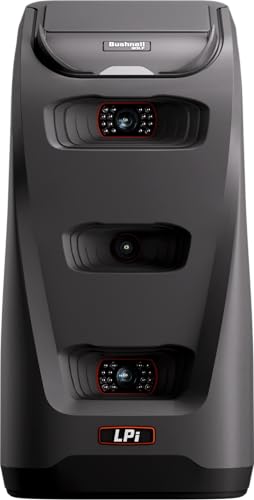
Camera-Based Measurement: The Launch Pro i features a proprietary three-camera imaging system with infrared that measures performance at impact for Tour-level accuracy—eliminating the guesswork common with radar-based launch monitors that rely on algorithms.
Launch Angle
Understanding launch angle is essential for golfers who aspire to enhance their game. This vertical angle, measured in degrees, greatly impacts shot distance and trajectory.
- Launch Angle Importance: A prime launch angle can increase carry and maximize distance.
- Launch Angle Optimization: Each club has distinct ideal launch angles, typically 10-13 degrees for drivers. Adjustments to this angle can result in additional yardage, often 5 yards, with minor tweaks.
Crucially, launch angle interacts with factors like angle of attack and club loft. Correctly measuring and adjusting launch angle using launch monitors can reveal swings that are either too steep or shallow. This data leads to better performance and shot consistency, creating a pathway to improved golfing outcomes for all enthusiasts.
Shot Dispersion
Shot dispersion serves as a key metric for golfers seeking improvement in accuracy and consistency. This measure indicates the spread of ball landings around a target zone, revealing both lateral and longitudinal variations. Understanding shot dispersion helps golfers identify miss tendencies, such as consistently pushing shots to the right or coming up short.
Key insights include:
- Width: Indicates the range of shots left and right of the target.
- Depth: Shows carry distance variation.
- Group Size: Reflects overall shot precision.
Tracking these metrics over 20-30 shots per club can highlight outlier shots, revealing execution anomalies. Armed with this data, golfers can refine their practice and course strategies, leading to better performance and improved confidence on the course.
Impact Location
Impact location serves as a pivotal element in achieving consistent and accurate golf shots.
- The precise point on the clubface where the ball contacts is critical.
- Center strikes yield ideal energy transfer, enhancing distance and control.
- Mis-hits toward the heel or toe can reduce ball speed by up to 15%.
- Tracking impact location facilitates effective impact analysis, promoting improved impact consistency.
Key insights:
- Measurement Tools: Launch monitors quantify impact location, helping to identify swing flaws.
- Visualization: Devices often display impact on a graphic clubface.
- Correction Strategies: Understanding impact location enables targeted practice adjustments.
Frequently Asked Questions
How Does Club Path Affect Shot Shape and Accuracy?
Club path analysis notably influences shot shape dynamics, where deviations directly affect ball curvature and launch direction. Understanding these relationships improves accuracy, enabling golfers to optimize their swings for more consistent and precise shot outcomes.
What Role Does Face Angle Play in Initial Ball Direction?
Like a compass guiding a traveler, face angle primarily influences initial trajectory, dictating approximately 87% of a driver’s launch direction. Understanding this relationship fosters accuracy, uniting golfers in their pursuit of exemplary performance.
How Can Spin Axis Impact Ball Flight and Control?
Spin axis greatly impacts spin dynamics and ball trajectory, influencing curvature during flight. By mastering spin axis control, golfers enhance shot accuracy, adapt to course conditions, and achieve greater consistency, fostering a sense of belonging within their golfing community.
Why Is Low Point Important for Iron Contact?
The low point in a golf swing is the heartbeat of iron contact, essential for impact factors. Proper low point guarantees contact consistency, transforming shot quality and elevating performance through precise turf interaction and desired ball flight.
What Is the Significance of Vertical Swing Plane in My Swing?
The significance of vertical swing plane in swing mechanics lies in its influence on angle of attack and contact precision, essential for performance analysis. A stable plane enhances consistency, ultimately fostering connection and belonging within the golfing community.


