As an Amazon Associate, we earn from qualifying purchases. Some links on this site are affiliate links at no extra cost to you. Our recommendations are based on thorough research and editorial judgment.


Top 5 Launch Monitor Features Every Golfer Should Know

Top launch monitor features include:
- Accuracy: Aim for a <5% margin of error in carry distance.
- Key Performance Metrics: Focus on ball speed, launch angle, and smash factor for shot effectiveness.
- Practical Applications: Use real-time feedback to identify strengths and weaknesses.
- Price Points: Entry-level monitors start under $500, while premium models exceed $2,500.
- Technology: Look for Bluetooth compatibility and dual radar systems for enhanced features. Additional insights await those intrigued by advanced applications.
Key Takeaways
- Accuracy in measurements, particularly in ball speed and launch angle, is crucial for effective performance analysis and improvement.
- Real-time feedback from monitors allows golfers to make immediate adjustments during practice sessions.
- Data reliability, ensured by regular calibration, helps maintain trustworthy performance metrics over time.
- Integration with simulation platforms enhances the practice experience and provides a more engaging analysis of performance.
- Key metrics like spin rate, smash factor, and club path are essential for understanding ball flight dynamics and optimizing shots.
Accuracy and Data Reliability: Understanding Metrics
You may be interested


When golfers consider launch monitors, understanding accuracy and data reliability is vital for improving their game. Several factors impact these metrics:
- Technology Types: Radar-based monitors excel in ball speed and distance but can falter in club data accuracy. Camera systems, when correctly calibrated, offer dependable data, while photometric sensors require ideal lighting for best results.
- Environmental Influences: Calibration is important, as it corrects sensor drift. Lighting affects camera and photometric systems, while weather minimally impacts radar.
- Accuracy Benchmarks: Carry distance typically maintains a 5% margin of error compared to outdoor measurements. Additionally, selecting a monitor with advanced tracking technology can significantly enhance performance insights.
Golfers should choose monitors wisely, considering how these factors align with their training environment to guarantee peak performance and data reliability.
Recommended Products

SKYTRAK ST MAX Launch Monitor – Delivers tour-level accuracy with dual Doppler radar, photometric cameras, and GOLFTEC Speed Training to help you build speed and distance - plus dual ports so you can charge and play without interruption.

Enhance Your Training with 3-Camera Precision: Equipped with a sophisticated 3-camera system, Premium Golf Launch Monitor and Simulator Approach R50 captures detailed ball and club metrics that reveal insights like ball speed, launch angle, and face-to-path alignment. This data allows golfers to finetune every aspect of their swing with precise feedback, making it an ideal tool for dedicated players looking to improve both indoors and outdoors with consistent accuracy.

[Built-In Display & 8-Hour Battery – Train Anywhere] View key data instantly on MINI’s display—no PC needed. Use iPad for 3D visuals outdoors or PC for full simulation indoors. Seeing your data clearly, even outdoors, builds confidence and motivates focused practice.
Key Performance Indicators Measured by Launch Monitors

Understanding the key performance indicators (KPIs) measured by launch monitors provides golfers with critical insights into their game. These KPIs include:
- Ball Speed: Indicates the velocity of the ball post-impact, directly relating to shot distance. Higher speeds usually yield longer shots.
- Launch Angle: Defines the angle at which the ball departs from the clubface, impacting ball trajectory and distance.
- Spin Rate: Measures the ball’s revolutions post-impact, influencing lift and control on greens.
- Smash Factor: Represents energy transfer efficiency, with higher values suggesting better contact quality.
- Club Path and Face Angle: Determine initial ball flight direction and curvature, essential for shot shaping.
These metrics, when comprehended, can greatly improve golfers’ performance and game strategy. Additionally, utilizing advanced mobile launch monitors enhances the ability to analyze these KPIs in real-time, leading to more informed practice sessions.
Recommended Products

BUNDLE INCLUDES: Full Swing KIT Golf Launch Monitor, and Signature Series Power Bundle

GOLFTEC Speed Training Exclusive to ST MAX - The only launch monitor with built-in GOLFTEC Speed Training — giving you guided drills, personalized swing insights, and a proven path to more distance. Used by over 10 million lessons worldwide, GOLFTEC's methodology is now built directly into your practice.
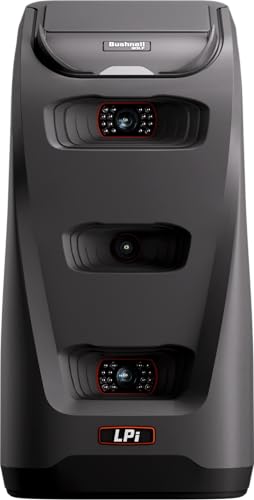
Camera-Based Measurement: The Launch Pro i features a proprietary three-camera imaging system with infrared that measures performance at impact for Tour-level accuracy—eliminating the guesswork common with radar-based launch monitors that rely on algorithms.
Practical Applications for Golf Improvement

Practical applications of launch monitors greatly enhance golfers’ ability to improve their skills effectively. These devices facilitate essential performance tracking and skill analysis that can drive tangible results.
- Baseline Measurement: Establish consistent data for effective practice comparisons.
- Focused Sessions: Identify strengths and weaknesses in shot parameters like spin rate and launch angle.
- Real-Time Feedback: Enable immediate adjustments during practice, promoting faster skill development.
- Long-Term Tracking: Record performance data over time to monitor progress and set measurable goals.
- Wedge and Short Game Control: Analyze distance bands and trajectory for more accurate approach shots. Additionally, advanced technology in launch monitors allows for precise metrics, enhancing the overall training experience.
Recommended Products

Precision Tracking Technology: Fine-tune your form with this premium launch monitor and simulator that utilizes a 3-camera system for precision metrics
Fine-tune your form with this premium launch monitor and simulator that utilizes a 3-camera system for precision metrics

BUNDLE INCLUDES: Full Swing KIT Golf Launch Monitor, Signature Series Power Bundle, and Signature Gift Wrap
Types of Launch Monitors and Their Price Points

The variety of launch monitors available caters to golfers of all skill levels and budgets, making these tools accessible for improving performance.
Types and Price Points:
- Entry-Level (<$500): Basic models like GolfJoy Waver, suitable for casual use.
- Mid-Range ($500-$1,000): Features like simulation compatibility, with models such as Garmin Approach R10.
- Premium ($1,000-$2,500): Advanced options offering dual camera setups, e.g., FlightScope Mevo Gen2.
- High-End ($2,500+): Professional systems using sophisticated radar and camera technology, like Trackman 4.
Price comparisons highlight that user reviews can guide choices, ensuring golfers select equipment that aligns with their goals. Each type offers distinct benefits, enhancing play and fostering community through shared improvement experiences. Additionally, higher-end models often provide advanced tracking technology that significantly enhances the accuracy and detail of performance metrics.
Recommended Products

All-In-One Golf Simulator Studio: Comes complete with the SkyTrak ST MAX launch monitor, durable enclosure, impact screen, steel frame, premium 5×5 hitting mat, and ZW350ST short-throw projector — everything to build your indoor golf setup quickly.

BUNDLE INCLUDES: Garmin Approach R10 Golf Simulator, The Net Return Home 7' Wide x 7' Golf Net, and The Net Return duffle bag
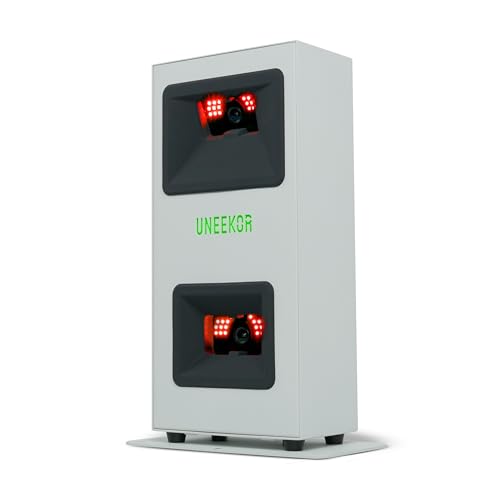
Real-Time Tracking with Dimple Optix – High-speed cameras and infrared sensors provide near-zero latency for real immersion. Dimple Optix reads any dimple pattern, requiring no ball stickers, meaning you can use any golf ball of your choice.
Integration and Technological Features to Enhance Use

Integration of technology into golf launch monitors greatly enhances user experience and performance analysis. Key features include:
- Software Compatibility: Many launch monitors integrate seamlessly with popular golf simulation platforms like E6 Connect and Awesome Golf, expanding the user’s playing options.
- User Interface: High-definition dashboards provide real-time data overlays during gameplay, displaying metrics such as ball speed and launch angle for instant feedback.
- Connectivity: Bluetooth and Wi-Fi facilitate quick setup and data transfer, ensuring an engaging virtual experience.
- Intelligent Features: Advanced systems offer automatic updates and voice assistant controls for a hands-free experience, enriching the immersive environment. Furthermore, the integration of dual Doppler radar technology enhances the accuracy of swing metrics and overall performance analysis.
Recommended Products

Pro-Grade Accuracy with Prometrics Engine: The SC4 Pro golf launch monitor and golf shot tracker delivers precise ball and club head data, tracking from swing to impact to ball flight, offering unmatched real-time accuracy for both indoor and outdoor practice.

This Bundle Contains: 1 Garmin Approach R10, Portable Golf Launch Monitor, Take Your Game Home, Indoors or to The Driving Range, Up to 10 Hours Battery Life + 1 Signature Series Gift Wrap Bundle + 1 Signature Series Microfiber Golf Towel + 1 Signature Series 5000mAh Portable Power Bank with Wall Charger and Car Plug Adapter

Wind Speed + Direction: The X3+ LINK displays real-time wind speed and direction when connected to the mobile app, to show how wind will affect your shot, helping you choose the right distance and club.
Frequently Asked Questions
Can Launch Monitors Work in Low-Light Conditions?
Launch monitors can indeed function in low-light conditions, with varying low light performance. Indoor setups typically benefit from infrared technology, while outdoor environments require careful lighting considerations to guarantee accurate ball and club data capture.
How Do I Choose the Right Launch Monitor for My Skill Level?
Choosing the right launch monitor involves considering price range and user reviews. Beginners may prefer budget-friendly models, while advanced players should seek higher-end monitors, ensuring the chosen device aligns with their skill level and performance needs.
Will Using a Launch Monitor Improve My Golf Game?
Using a launch monitor can considerably enhance a golfer’s game by providing precise swing analysis and promoting shot consistency. The insights gained foster a deeper connection with personal performance, cultivating a sense of belonging within the golfing community.
Can I Use Two Launch Monitors Simultaneously for Cross-Comparison?
Yes, utilizing dual monitoring facilitates accuracy comparison, enabling golfers to validate measurements effectively. Careful setup guarantees peak performance, allowing simultaneous data capture from both devices while enhancing confidence in analytical insights and performance improvements.
How Often Should I Recalibrate My Launch Monitor?
Recalibrating a launch monitor regularly is essential for maintaining measurement accuracy. Calibration frequency should increase with device movement and environmental changes; consistent calibration guarantees reliable feedback, fostering a supportive community focused on improvement and skill development.


