As an Amazon Associate, we earn from qualifying purchases. Some links on this site are affiliate links at no extra cost to you. Our recommendations are based on thorough research and editorial judgment.


Are Smartphone-Based Swing Analyzers Accurate Enough?

Smartphone-based swing analyzers can offer valuable insights, but their accuracy has limitations. Key findings include:
- Sensor drift can cause errors of 30–60 cm.
- Smartphone measurements achieve 3–5% accuracy compared to professional systems.
- Swing speed readings can vary by 2 mph under different conditions.
You may be interested


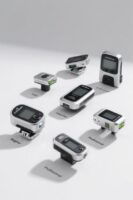
While these analyzers excel at swing mechanics analysis, they struggle with ball flight metrics. Understanding these factors can empower users to make informed adjustments to their game. More details follow.
Key Takeaways
- Smartphone analyzers achieve swing speed accuracy within 3–5%, comparable to professional systems but not infallible in varying conditions.
- Environmental factors like poor lighting and uneven terrain can compromise measurement accuracy.
- Smartphone systems excel at analyzing swing mechanics but are less reliable for measuring ball flight metrics.
- Accuracy in important metrics like joint angles is maintained below 5°, making these devices suitable for most amateur analysis.
- Real-time feedback from apps enhances training effectiveness, despite inherent limitations compared to high-end launch monitors.
Accuracy Limitations of Smartphone-Based Swing Analyzers
Smartphone-based swing analyzers have gained popularity among golf enthusiasts, but they come with notable accuracy limitations. Key issues affecting their performance include:
- Sensor Noise: Inertial Measurement Units (IMUs) can introduce drift error of 30–60 cm. This is influenced considerably by how and where the sensors are attached, with club-mounted sensors generally yielding more reliable data.
- Lighting Effects: Poor lighting can degrade camera measurements, leading to inaccurate assessments of swing characteristics.
- Environmental Challenges: Factors like uneven terrain and changing weather can further compromise data quality.
While smartphone analyzers offer impressive approximations—within 3–5% of professional systems—they may not always deliver the precise feedback needed for advanced golfers, particularly regarding detailed parameters like spin rate and clubface angle. Additionally, users should consider the impact of real-time feedback on their training effectiveness, as immediate data can enhance performance adjustments.
Recommended Products

Pro-Grade Accuracy with Prometrics Engine: The SC4 Pro golf launch monitor and golf shot tracker delivers precise ball and club head data, tracking from swing to impact to ball flight, offering unmatched real-time accuracy for both indoor and outdoor practice.

Measures: Swing Speed, Ball Speed, Carry/Total Distance, Smash Factor, Launch Angle, Apex, Spin (Spin Numbers Available in My Swing Caddie App)

Advanced Doppler Radar Technology: Equipped with high-precision Doppler radar sensors for real-time, accurate tracking of both ball and club performance.
Biomechanical Metrics and Their Validation

In exploring biomechanical metrics related to golf swings, it becomes evident that wearable sensors play an essential role in collecting relevant data. These sensors track movements with impressive accuracy, delivering critical insights. Key findings include:
- Accuracy of Measurement: Single wrist sensor systems record wrist trajectories with under 6.5 cm error and joint angles below 5°.
- Validation Techniques: Comparisons with lab-based 3D motion capture demonstrate that wearable devices achieve near-laboratory accuracy.
- Kinematic Insights: Biomechanical metrics such as swing plane, swing duration, and rotational angles provide valuable information on performance.
Additionally, the integration of swing recording accessories can enhance the effectiveness of these sensors by providing stable and adjustable recording setups. Testing across various skill levels guarantees reliability, affirming that these tools offer relevant insights for golfers seeking improvement, thereby bridging the gap between fieldwork and laboratory data.
Correlation Between Swing Metrics and Player Proficiency

Understanding the link between swing metrics and player proficiency provides golfers with actionable insights into their performance. Key observations include:
- Swing Consistency: Proficient golfers display low variability in forward tilt angle, indicating strong stability during swings.
- Biomechanical Factors: Variability in spine angles lessens as skill increases, making posture stability a crucial proficiency indicator.
- Joint Positioning: High-level players show greater consistency in body joint positioning and timing, further establishing their skill level.
- Timing Accuracy: More proficient golfers maintain reliable timing across key swing phases, such as address and impact, reflecting better motor control.
These findings highlight that swing metrics are not just numbers; they can directly influence a golfer’s performance trajectory, underscoring the importance of data-driven training approaches. Additionally, leveraging advanced metrics from golf stats trackers can provide deeper insights into swing performance.
Data Fidelity Compared to Golf Simulators and Launch Monitors
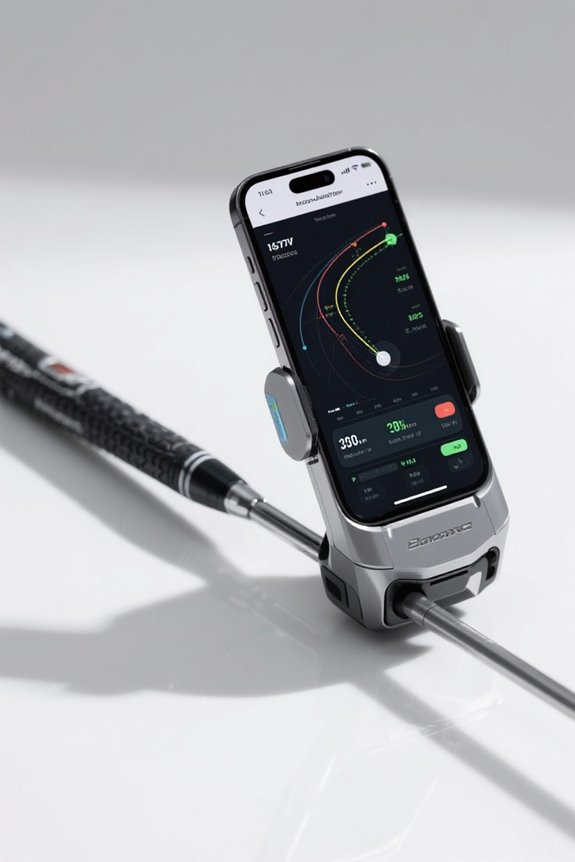
While smartphone-based swing analyzers provide valuable insights, their data fidelity compared to traditional golf simulators and launch monitors presents both advantages and limitations.
- Leading apps measure swing speed with 3–5% accuracy of professional systems.
- Tests show differences as small as 2 mph in swing speed readings.
- Accuracy relies on external conditions like lighting and player steadiness.
Smartphone systems excel in swing mechanics, tracking speed, tempo, and rotation. However, they falter in capturing detailed ball flight metrics such as launch angle and spin rate.
- High-end launch monitors offer exceptional measurement precision, remaining the gold standard.
- Smartphone analyzers are best for practice and incremental improvement, supporting users in refining their swing without the complexities of studio setups. Additionally, advanced tracking technology enhances the accuracy of professional launch monitors, providing a comprehensive analysis that smartphone apps cannot match.
Recommended Products

SKYTRAK ST MAX Launch Monitor – Delivers tour-level accuracy with dual Doppler radar, photometric cameras, and GOLFTEC Speed Training to help you build speed and distance - plus dual ports so you can charge and play without interruption.

Enhance Your Training with 3-Camera Precision: Equipped with a sophisticated 3-camera system, Premium Golf Launch Monitor and Simulator Approach R50 captures detailed ball and club metrics that reveal insights like ball speed, launch angle, and face-to-path alignment. This data allows golfers to finetune every aspect of their swing with precise feedback, making it an ideal tool for dedicated players looking to improve both indoors and outdoors with consistent accuracy.
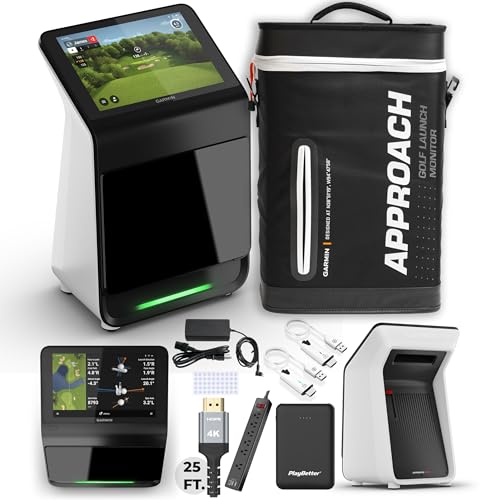
Play Year-Round' The Garmin Approach R50 Premium Golf Launch Monitor and Simulator lets you play on 43,000+ virtual courses from home or the range.
Real-Time Feedback and Practical Utility

Smartphone-based swing analyzers are increasingly favored for their real-time feedback capabilities, making them practical tools for golfers looking to improve their performance. These devices offer immediate analysis post-swing, allowing for real-time adjustments.
- Speed and Responsiveness: Apps like 18Birdies and SwingVision generate metrics within seconds.
- Practical Use: Designed for quick setup, these analyzers can be used anywhere.
- Effective Feedback Mechanisms: Features include slow-motion replays and coaching tips, enhancing users’ understanding of their swings.
With user-friendly interfaces, real-time feedback is accessible for all skill levels. Ultimately, the blend of convenience and instant insight fosters a continuous improvement cycle, enabling golfers to effectively address swing mechanics and enhance overall performance. Additionally, many of these analyzers can integrate with advanced metrics that provide deeper insights into swing performance.
Recommended Products

Advanced Golf Launch Monitor – The Rapsodo MLM2PRO golf launch monitor delivers pro-level accuracy, measuring 13 core golf metrics, including spin rate, spin axis, and swing speed, making it a golf training aid
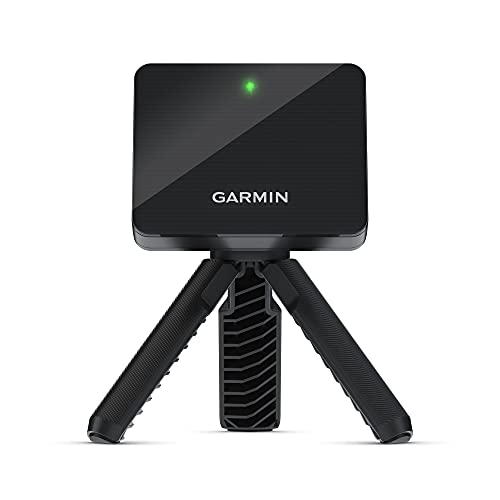
Work to improve your game at home, indoors or on the driving range with a portable launch monitor .Waterproof : IPX7.Control Method:Application,VoiceWater Resistant: Yes.Club Head speed accuracy : plus/- 3 mph, Ball speed accuracy : plus/- 1 mph, Launch angle accuracy : plus/- 1 degree, Launch direction accuracy : plus/- 1 degree.

MAKE EVERY SWING COUNT: With Blast's natural motion capture technology, there is no need for sensor calibration - just swing! The Blast sensor provides real-time feedback that's sent automatically to the Blast Baseball smart phone app.
Overall Assessment of Accuracy for Performance Enhancement
Accuracy serves as a cornerstone for the effectiveness of smartphone-based swing analyzers in enhancing golfer performance.
- Quantitative metrics reveal a mean error of 5.3 cm in joint position estimates.
- Swing event detection accuracy can reach 94%, providing timely feedback.
However, limitations exist. These devices often fail to capture full-body kinematics, resulting in generic coaching advice. User interface design impacts user engagement, making it essential for effective feedback.
- Variability in sensor placement affects reliability.
- Multi-sensor systems outperform smartphone analyzers by correlating detailed biomechanical parameters to performance metrics.
Ultimately, while smartphone swing analyzers offer valuable insights for golfers, accuracy and data richness still lag behind professional systems, calling for ongoing improvements and careful application in performance training. Incorporating advanced technology, such as real-time data analysis, could further enhance their effectiveness.
Recommended Products

FLIGHTSCOPE LAUNCH MONITOR AND SIMULATOR: The FlightScope Mevo+ is a launch monitor and simulator that uses patented FlightScope Fusion Tracking technology to provide golfers with accurate golf performance data. Fusion Tracking technology is an innovative combination of 3D Doppler GPS tracking radar technology and synchronized high speed image processing that helps provide users with the most accurate and consistent data for every shot - indoors and outdoors.

BUNDLE INCLUDES: Garmin Approach R10 Golf Simulator, The Net Return Pro 8' Wide x 7'6" Tall Golf Net, and The Net Return duffle bag

The compact design allows you to easy move from home to the driving range, Garmin Approach R10 is the portable Golf launch monitor that brings the course to you. Work on improving your game anywhere and any time of year. Garmin Approach R10 Golf Launch Monitor is easy to move from inside your home to the backyard and even to the driving range. Play 150,000+ predesigned courses, or create your own. The TGC 2019 golf simulator software (not included) is compatible with Approach R10.
Frequently Asked Questions
Can Smartphone Swing Analyzers Be Used for Professional Coaching?
Smartphone swing analyzers can enhance professional coaching by providing instant metrics and facilitating remote coaching sessions, though they should supplement, not replace, the nuanced professional feedback that fosters individualized improvement and deeper understanding of swing mechanics.
How Do Weather Conditions Affect Smartphone Swing Analyzer Accuracy?
Weather conditions greatly impact smartphone swing analyzer accuracy, where temperature variations can alter sensor performance and humidity effects may introduce moisture interference. These factors necessitate careful monitoring to guarantee reliable and consistent swing data under varying conditions.
Are There Specific Brands Known for Better Accuracy in Swing Analyzers?
Blast Golf and HackMotion lead in accuracy comparison among brands, with superior reputations built on reliable data. These analyzers provide golfers community-driven insights, fostering improvement while ensuring users feel equipped to elevate their swing performance effectively.
What Are the Best Practices for Using Smartphone Swing Analyzers Effectively?
Best practices for effective usage of smartphone swing analyzers include secure device placement, consistent calibration, controlled recording environments, and regular data review to enhance performance while fostering a supportive learning environment for improvement and community engagement.
Can Smartphone Swing Analyzers Track Other Sports Beyond Golf?
Smartphone swing analyzers can indeed track sports beyond golf, mimicking a chameleon adapting its colors. They effectively measure tennis swings and baseball mechanics, offering athletes a deeper connection to their performance through advanced technology and immediate feedback.


