As an Amazon Associate, we earn from qualifying purchases. Some links on this site are affiliate links at no extra cost to you. Our recommendations are based on thorough research and editorial judgment.


Is Wearable Golf Technology Worth The Investment?

Wearable golf technology can enhance performance, making it a sound investment for dedicated players. Research indicates that users may reduce their handicap by nearly six strokes in the first year. Key benefits include automatic shot logging, real-time feedback on swing mechanics, and accurate course navigation. However, costs can be steep, with premium devices over USD 300. Despite challenges like data accuracy and high expenses, understanding user experiences helps in making informed decisions about these technologies. More insights await below.
Key Takeaways
- Wearable golf technology can reduce an average handicap by nearly six strokes in the first year, enhancing game performance significantly.
- Real-time feedback from devices helps identify and address individual weaknesses, leading to better scoring outcomes.
- Premium wearable devices offer advanced features like swing analysis and detailed tracking, justifying higher costs for serious golfers focused on improvement.
- The global demand for personalized golf wearables is rising, indicating a growing market that enhances value for investments made.
- Potential challenges include data accuracy and high costs, but the benefits often outweigh these concerns for dedicated players.
Overview of Wearable Golf Technology
You may be interested


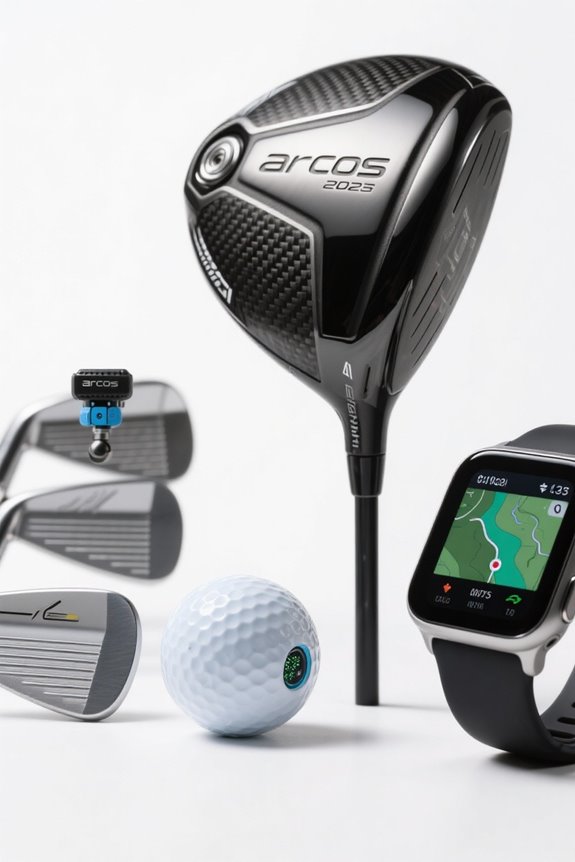
Wearable golf technology represents a significant advancement in how golfers enhance their performance and game strategy. This innovative gear offers various tools designed to augment the playing experience:
- Golf GPS Watches: Provide real-time yardage and course layouts, assisting with club selection.
- Swing Analyzers: Measure swing speed and path, delivering data-driven feedback.
- Smart Gloves: Track grip pressure and hand placement for improved consistency.
- Shot Trackers: Automatically record shot distances and accuracy.
- Golf Fitness Trackers: Monitor physical metrics, supporting endurance on the course.
Additionally, real-time analytics facilitate golf course mapping, which enhances strategic planning. These wearables not only offer data but also foster a sense of community among golfers seeking to refine their skills and share insights. Such technology can transform a player’s approach to the game, enriching both performance and enjoyment. Furthermore, the integration of automatic ball return systems in practice mats complements the use of wearable technology by providing immediate feedback and enhancing practice efficiency.
Benefits of Enhanced Performance Tracking

Enhanced performance tracking through wearable technology offers golfers numerous advantages that can lead to significant improvements in their game.
- Golfers utilizing wearables typically see an average handicap reduction of nearly six strokes in their first year.
- These devices automatically log shots and provide precise performance metrics for round-by-round assessments.
- Continuous feedback, including 3D visualizations, helps identify weaknesses affecting scoring.
- Real-time biomechanical feedback facilitates immediate swing adjustments, reducing the risk of forming bad habits.
- Additionally, GPS-equipped wearables guarantee accurate course navigation and informed shot decisions.
- Collectively, these user experiences create a thorough toolkit for growth, empowering golfers to make data-driven decisions and achieve consistent results.
- Many wearables now integrate advanced tracking technology, similar to high-end launch monitors, for even more precise data.
Investing in wearable golf technology fosters enhanced tracking, guiding players toward their goals of improved performance.
The Role of Wearables in Skill Development

In the domain of golf, skill development can be considerably enhanced through the integration of advanced technology. Wearable devices play a vital role by enabling effective skill assessment and adaptive learning. Here are some key contributions:
- Biomechanics Feedback: Devices such as K-Motion provide real-time insights into swing mechanics, fostering immediate corrections and improving consistency.
- Smart Equipment: Smart clubs analyze swing data, promoting controlled shots and personalizing drills tailored to individual needs.
- Virtual Training: Golf simulators offer immersive practice environments, utilizing sensors to fine-tune technique under various conditions.
- AI-Driven Insights: Collecting and analyzing data allows for targeted improvement plans, enhancing overall performance. Additionally, devices like the Rapsodo MLM2PRO provide comprehensive swing analysis with real-time data, further optimizing training sessions.
This technology empowers golfers to evolve continuously, making every practice session more productive and tailored to their unique journeys.
Types of Wearable Golf Devices

Golfers today are increasingly utilizing a variety of innovative devices designed to enhance performance on the course. Key categories include:
- Swing Analyzers: Attachable devices that capture swing metrics like speed and impact position, integrating with apps for detailed feedback and progress tracking.
- Smart Gloves: Equipped with sensors for grip pressure and hand movement, these gloves offer real-time feedback to improve swing control.
- Shot Trackers: Small sensors placed on clubs or balls that automatically log stats, enabling detailed analysis of shot performance and trends.
- Golf Fitness Trackers: These monitors track physical activity, heart rate, and calories burned during play, helping golfers identify fitness factors affecting their game. Additionally, using golf stats trackers can provide comprehensive tracking to further support golfers in honing their skills and improving overall performance.
Key Features to Look For in Wearables

When selecting wearable golf technology, several key features can greatly enhance the experience and effectiveness on the course.
Feature Evaluation:
- Display and User Interface: Look for AMOLED screens and responsive touch controls for easy navigation.
- Golf Course Data and Mapping: Access to over 40,000 maps worldwide is vital for global usability, and PlaysLike distance adjusts for elevation change.
- Shot Tracking and Swing Analysis: Automatic shot tracking and club sensors provide invaluable insights for performance improvement.
- Smart and Health Features: Devices with health monitoring, music storage, and payment integration enhance daily usability through tech integration.
- Battery Life and Durability: Prioritize robust construction and long battery life, ensuring reliability during extended use. Additionally, many models offer up to 30 hours of battery life, which is crucial for uninterrupted play.
These features collectively facilitate informed decisions for a satisfying golfing journey.
Wearable Technology and Game Strategy
Wearable technology has emerged as a powerful tool for refining game strategies and enhancing on-course performance. The wearable impact on player performance is significant. For instance, wearables have helped golfers reduce their handicap by nearly six strokes within a year.
Key benefits include:
- Real-Time Analytics: Players receive immediate feedback on swing mechanics, allowing for strategic adaptation during rounds.
- Shot Tracking: Detailed metrics pinpoint weaknesses, guiding tailored practice plans.
- GPS Navigation: Accurate yardages enhance shot planning and club selection.
- Data Storage: Historical performance review allows for ongoing strategy refinement.
With AI-driven insights, players receive tailored recommendations for ideal shot strategies. Wearable technology supports a community where golfers can improve, learn, and share strategies for the game they love. Additionally, many of these devices utilize advanced GPS technology to ensure precise yardage calculations, further assisting players in their game.
Environmental Considerations in Wearable Tech
As the demand for sustainable practices in various industries increases, the golf sector is responding by embracing environmentally friendly innovations in wearable technology. Key advancements include:
- The use of recycled and biodegradable materials in device construction, aiming to reduce environmental impact and electronic waste on golf courses.
- Integration of solar-powered sensors, prolonging device life while conserving energy.
- Development of energy-efficient chipsets, minimizing battery waste through longer usage periods.
- Implementation of eco-conscious charging technology to reduce disposable battery reliance.
- Additionally, golf gloves with eco-friendly materials are being developed to further support sustainability in the sport.
These sustainable practices highlight a commitment to ecological responsibility, aligning golf technology with modern environmentally aware values. Participants in this evolving community can feel confident that their choices support the preservation of the sport and its natural surroundings, enhancing both their experience and environmental stewardship.
Cost vs. Value: Analyzing Investment
Evaluating the cost versus value of wearable golf technology involves examining several key factors that can greatly influence a player’s investment decision.
- Cost Considerations: Premium GPS devices often exceed USD 300, posing challenges, especially for casual players. High production costs drive retail prices, while import duties further complicate affordability in developing regions.
- Value Analysis: Serious golfers may justify higher costs through performance gains. Advanced features, such as swing analyzers and virtual caddies, enhance skill development. Casual players, however, may find lesser returns on infrequent use. Additionally, many users (85%) favor sensors designed specifically for their types of clubs, maximizing the effectiveness of their tracking and data.
Investment justification relies on effective cost value analysis, balancing upfront costs against anticipated long-term benefits. Overall, the decision hinges on user commitment to growth and access to features that enhance the golfing experience.
Market Trends in Golf Wearable Devices
The landscape of golf is being reshaped by innovative technologies, particularly in the domain of wearable devices. The global golf equipment market is projected to grow from $29.03 billion in 2026 to $30.41 billion in 2026. This growth is considerably influenced by several wearable trends:
- Increased demand for personalized golf wearables enhances market value.
- Advancements in sensor technology and AI deliver real-time data on swing speed and accuracy.
- Innovative designs, such as smartwatches and swing sensors, foster a connected golfing experience.
These factors not only drive market growth but also transform the sport. Technology enhances player engagement and attracts younger demographics, making golf a more inclusive and dynamic experience for all participants. Furthermore, the integration of portable Doppler radar technology has significantly improved the accuracy of swing analysis and training feedback.
Adoption Rates Among Different Golf Demographics
Adoption rates of wearable golf technology vary markedly among different demographics, reflecting distinct preferences and needs.
- Amateur Golfers: Increasing interest, especially among youth and college players. They seek swing analysis and performance improvement. Devices like GPS watches are common.
- Professional Golfers: Elite players prioritize precise metrics and advanced features. They rapidly adopt innovations, with many using augmented reality for strategic navigation.
- Women Golfers: Comprising 25% of players, women show growing engagement but face limited product options tailored to their needs.
- Youth Adoption: Youth, making up 12% of players, drive significant growth. Tech exposure supports learning and growth in junior academies.
- Regional Trends: North America leads in demand, while Western Europe emphasizes eco-friendly options. These trends highlight the complexity of technology adoption across golf demographics. Furthermore, the emphasis on golf performance improvement through innovative tools like golf brush tees showcases the growing intersection of technology and traditional golfing practices.
The Importance of Real-Time Feedback
Real-time feedback substantially enhances a golfer’s performance and learning experience.
- Wearable golf technology provides real time insights that enable immediate corrections.
- For example, devices like the BAL.ON Smart Kit analyze swing mechanics by tracking swing speed and angle in an instant.
- This data helps identify flaws, improving consistency and technique.
- On-course tools, such as GPS-enabled watches, assist in making strategic shot selections, offering instant distance calculations to hazards and greens.
- In addition, real-time heart rate monitoring can guide physical pacing and focus during play.
- Altogether, these immediate insights accelerate skill development, ensuring golfers receive tailored recommendations and adaptive practice plans, ultimately driving meaningful improvement in their game.
Challenges Facing Wearable Golf Technology
As wearable golf technology gains popularity, several challenges hinder its widespread acceptance among golfers and coaches.
- Data Accuracy and Sensor Limitations: Variance in sensor quality impacts reliability. Movement artifacts may also distort performance metrics, complicating swing analysis.
- Legal and Privacy Issues: Sensitive biometric data collected by wearables raises data privacy concerns, requiring compliance with regulations like HIPAA.
- Data Overload: The large volume of data generated demands expertise to analyze. Misinterpretation can lead to flawed training decisions.
- Integration Difficulties: User experience suffers from complex setups and interoperability issues across devices.
- Cost Concerns: High costs of advanced technology can be prohibitive, leading to concerns about return on investment.
These hurdles require careful consideration before adopting wearable solutions in golf.
Insights From Current Users and Reviews
Current users of wearable golf technology provide valuable insights into the benefits and challenges of these devices. User experiences reveal the following key points:
- The Garmin Approach S70 is frequently praised for its advanced GPS features and health tracking functionality.
- Many user testimonials highlight the S50 for its balance of premium performance and daily wear comfort.
- Features like shot tracking and course mapping enhance gameplay, aiding in better decision-making.
- Integrating fitness tracking also justifies the investment, as users benefit beyond golf.
- Users report score improvements, with 85% feeling more confident on the course.
- Convenient battery life (8-15 hours) supports practicality during rounds.
Innovations Shaping the Future of Golf Wearables
Innovations in golf wearable technology promise to transform the game for players at all skill levels. Key advancements include:
- Sensor Advancements: High-precision sensors in clubs measure swing speed, angles, and impact points, providing immediate feedback.
- AR Integration: Augmented reality glasses overlay course hazards and ideal angles directly into players’ views, enhancing strategy.
- AI-Powered Coaching: Algorithms analyze performance data for personalized recommendations, while robotic caddies assist with club selection and strategies.
- Smart Golf Balls: These feature miniaturized sensors tracking shot metrics, allowing in-depth performance analysis.
Such innovations enhance training efficiency, enabling golfers to recognize strengths and weaknesses. As technology evolves, it fosters a sense of community among golfers, making everyone feel included in this cutting-edge experience.
Comparing Wearable Tech to Traditional Golf Aids
Wearable golf technology is rapidly changing how players train and improve, offering distinct advantages over traditional aids.
- Accuracy and Data Precision: Wearables provide real-time insights into swing mechanics that traditional aids often lack. For example, launch monitors are costly and stationary, while wearables are portable and offer 3D analysis.
- Ease of Use: With a simple setup, wearables deliver instant feedback, unlike traditional aids that can complicate training. Wearables sync with smartphones, ensuring golfers receive immediate data.
- Cost and Accessibility: Wearable devices range from affordable to mid-range prices, providing accessible solutions for countless golfers versus high-end traditional options that are considerably pricier.
- Performance Improvement: Objective feedback from wearables fosters faster improvement compared to the subjective methods tied to traditional aids.
Thus, the decision rests on balancing wearable advantages against traditional limitations.
Frequently Asked Questions
How Does Weather Impact the Effectiveness of Wearable Golf Technology?
Weather markedly impacts wearable golf technology’s effectiveness, as humidity effects can cause moisture interference while temperature sensitivity alters sensor performance. These environmental factors challenge data accuracy, affecting wearers’ ability to optimize their game effectively.
Can Wearables Improve Golf Performance for Beginners?
Wearables can notably enhance golf performance for beginners. For instance, a new player utilizing performance tracking tools receives tailored beginner tips, allowing them to identify weaknesses and improve their skills while enjoying a supportive golf community.
What Brands Offer the Most Reliable Wearable Golf Devices?
Garmin, Bushnell, and Voice Caddie stand out in brand comparisons for reliable wearable golf devices, each offering unique device features like advanced GPS, shot tracking, and performance analysis, appealing to those seeking community-driven golfing excellence.
Are There Insurance Options for Damaged Wearable Golf Technology?
Coverage options for damaged wearable golf technology include specialized policies safeguarding against accidents, theft, and defects. Warranty details often extend protections, appealing to users seeking reliable reassurance as they invest in innovative golfing gadgets.
How Often Do Wearables Require Updates or Maintenance?
Wearable golf devices generally require software updates every few weeks to months, while maintenance costs revolve around regular cleaning and calibration. This consistent care guarantees peak performance, fostering a strong sense of community among passionate golf enthusiasts.