As an Amazon Associate, we earn from qualifying purchases. Some links on this site are affiliate links at no extra cost to you. Our recommendations are based on thorough research and editorial judgment.

How To Build A Complete Golf Training Setup On A Budget?

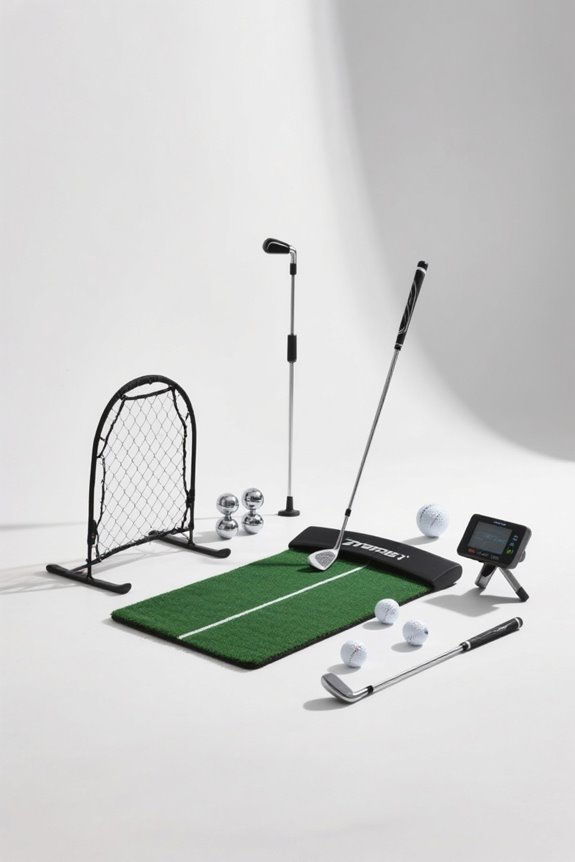
To build a complete golf training setup on a budget, focus on essential training aids. Use alignment sticks for proper setup and impact tape to visualize strike patterns. Incorporate affordable swing tempo tools to enhance sequencing. Optimize putting practice with gate drills and putting mirrors. Implement compact nets for indoor training and consider multi-purpose furniture for storage. Track progress with launch monitors and video analysis for ongoing improvement. More effective tips and strategies can be explored beyond this overview.
Key Takeaways
- Prioritize essential training aids like alignment sticks and impact tape to maximize skill development without overspending.
- Utilize compact hitting nets and foldable mats for adaptable practice spaces, making efficient use of limited areas.
- Implement free or low-cost technology like video analysis apps to assess swing technique and track progress regularly.
- Engage in community resources, such as local clubs or online forums, to access shared tools and training tips cost-effectively.
- Focus on merging multiple training elements, allowing you to enhance various skills while maintaining a budget-friendly setup.
Identifying Essential Training Aids
You may be interested


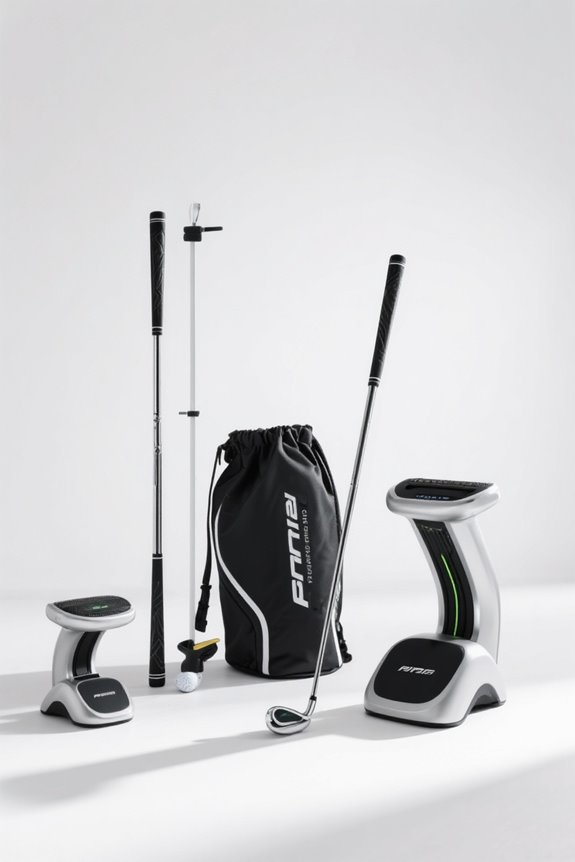
Identifying essential training aids is fundamental for golfers seeking to enhance their game within budget constraints. Effective alignment aids improve aim and body positioning, making them essential for consistent ball striking.
Consider the following tools:
- Alignment sticks help golfers establish proper setup.
- Putting mirrors enhance the alignment of eyes and putter face.
- Impact tape reveals clubface strike patterns for diagnosing mishits.
- Divot boards visualize foot placement and weight distribution.
Swing path trainers support golfers in mastering their motion:
- The Tour Striker Smart Ball promotes connected arm and body movement.
- Swing plane trainers provide guidance to guarantee correct swing paths. Additionally, incorporating instant feedback mechanisms can significantly enhance training efficiency by allowing golfers to make real-time adjustments to their swings.
Affordable Swing Tempo Tools
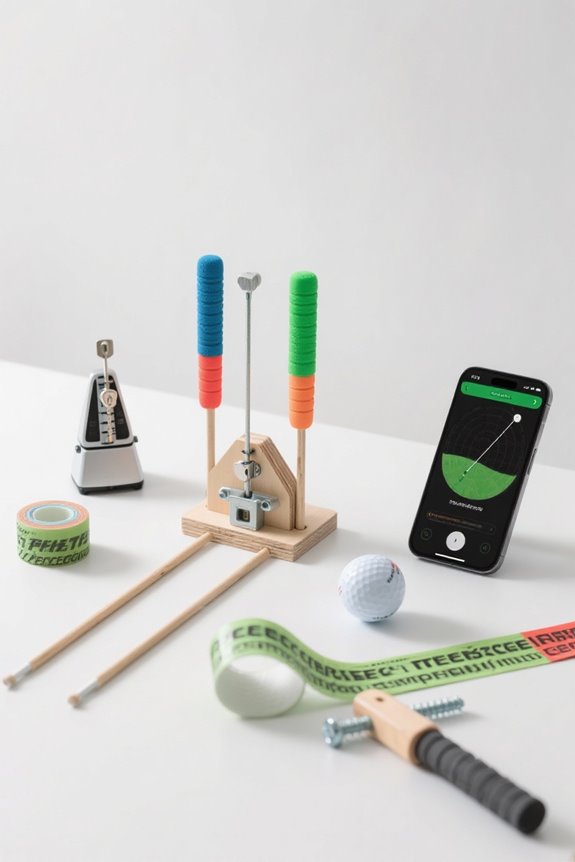
Improvement in golf swing tempo can remarkably impact a player’s performance. Affordable swing tempo tools can help golfers build consistency and refine their skills. Here are some effective options:
- SKLZ Golf Tempo and Swing Trainers: This durable tool enhances swing sequencing using a weighted shaft. Ideal for pre-round warmups, it promotes rhythm between backswing and downswing.
- SKLZ Tempo & Grip Trainer: This compact device aligns grip and tempo, facilitating proper muscle memory through its weighted design.
- G-Rip Grip Trainer: An affordable option, it attaches to your existing clubs to guarantee grip consistency, improving swing reliability.
- Tour Striker Smart Ball: This aids in arm-body connection, promoting synchronized movement for improved accuracy and distance.
Integrating these swing rhythm devices can meaningfully elevate your performance without breaking the bank. Additionally, using tools like the GreenHaven Golf Training Wrist Hinge Aid can further enhance your swing technique and power development.
Optimizing Your Putting Practice

Optimizing putting practice entails a mix of essential training aids and structured routine development.
Key components include:
- Putting Drills: Utilize gate drills with alignment sticks to enhance accuracy.
- Alignment Techniques: Incorporate putting mirrors to check eye position and putter face alignment, improving consistency by up to 50%.
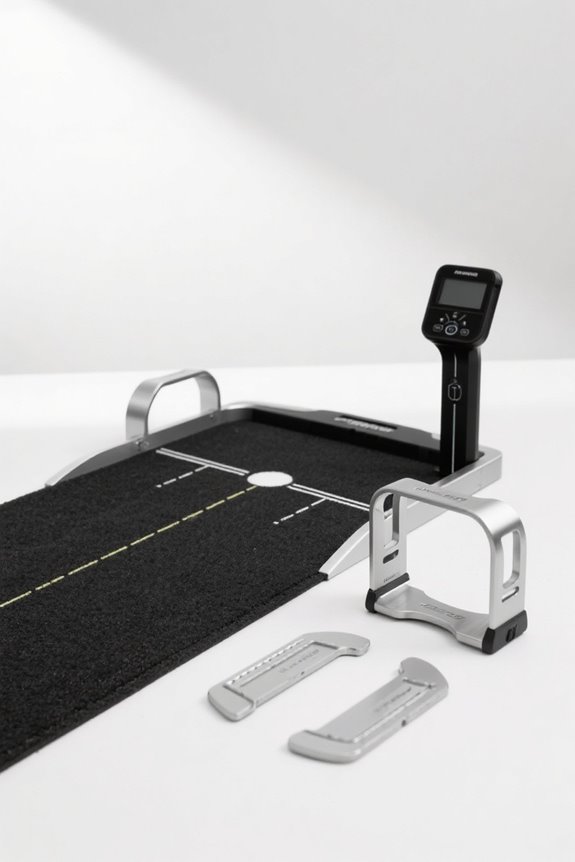
- Distance Control: Engage with putting mats that have distance markers for indoor practice, refining putt length control effectively.
- Tempo Training: Use metronome apps to maintain rhythm and prevent rushed strokes. Additionally, practicing with golf putting trainers can significantly enhance your skills over time.
Reinforcing Grip and Fundamentals

Reinforcing grip and fundamentals is essential for golfers aiming to enhance their performance. Proper grip adjustments directly influence ball flight and shot consistency. Key practices include:
- Hand Placement: Grip the club primarily with fingers. For a neutral grip, align the “V”s towards your right shoulder.
- Grip Strength: A strong grip (hands rotated away) might promote a draw, while a weak grip (hands toward target) often leads to slices.
- Pressure Techniques: Maintain a grip pressure of 4 or 5—too tight restricts fluidity, too loose decreases control. Additionally, golf grip selection significantly impacts overall performance and comfort, making it important to choose grips that suit your hand size and playing style.
Space-Saving Solutions for Indoor Practice

Creating an efficient indoor golf practice area can be both rewarding and challenging, especially when space is limited. Consider these space-saving solutions to enhance practice without sacrificing functionality:
- Use Compact Equipment: Invest in compact nets that fit well in smaller areas, allowing practice without excess room.
- Retractable Screens: These stow away when not in use, creating versatility for home gyms or entertainment spaces.
- Space-Saving Furniture: Choose multi-purpose furniture with built-in storage for golf accessories, making the area organized and practical.
- Flexible Mats: Foldable hitting mats and putting greens can be easily set up and stored, optimizing space use.
- Protective Wall Padding: Installing gym mats around impact zones enhances safety in confined spaces. Additionally, using durable construction in your practice nets ensures they withstand high-speed impacts during training.
Implementing these solutions creates an inviting indoor space for avid golfers.
Incorporating Muscle Memory Techniques
Incorporating effective muscle memory techniques can dramatically enhance a golfer’s performance, particularly in a home practice environment. Key components include:
- Muscle Memory Drills: Repeated practice swings with correct form strengthen neural pathways, crucial for a consistent swing.
- Slow-Motion Swings: This method improves muscle activation and sequencing.
- Visualization Techniques: Imagining the swing helps prime the brain’s pathways, reducing conscious interference during actual swings.
- Kinesthetic Training: Using tactile feedback, like hitting a towel, sharpens the muscle connection and swing precision.
These strategies encourage a deeper understanding of the golf swing, fostering a sense of belonging to a community that values improvement. Regular practice, emphasizing correct technique, is essential for developing reliable muscle memory that translates to performance on the course. Additionally, utilizing a golf simulator screen can enhance your practice environment by providing visual clarity and projection to improve the overall experience.
Building a Comprehensive Routine
Building a thorough routine is essential for golfers aiming to improve their game efficiently. A detailed routine can be achieved through the following methods:
- Practice Segmentation: Divide practice sessions into focused blocks; allocate time for putting, chipping, full swings, and short games. For example, consider a 20/20/20 method to guarantee balance across skills.
- Skill Integration: Incorporate a mix of technique and competitive drills within sessions. For instance, adding pressure situations, like “10 up-and-downs in a row,” can improve mental resilience.
- Dynamic Preparation: Start with 10 minutes of dynamic stretching and posture checks.
- Tracking Progress: Set clear goals for each segment and maintain a practice journal to monitor improvements. Regular assessment of your child’s performance with their junior golf driver can also help identify areas for growth and necessary adjustments.
Combining Training Devices for Efficiency
Combining various training devices can enhance efficiency in a golfer’s practice regimen. By integrating multiple aids, golfers can address different aspects of their game concurrently.
- Compatibility of Training Aids:
- Speed training tools, like overspeed swing sticks, boost swing velocity.
- Pairing these with launch monitors provides measurable feedback on improvements.
- Accuracy drills using putting aids develop precision, complementing full swing training.
- Effective Combination:
- Utilize multi-target practice nets to save time by merging speed and accuracy training in one session.
- Stagger training focus to avoid cognitive overload, allowing for clearer skill development. Incorporating real-time feedback tools can further enhance the effectiveness of these training devices.
This strategic blend enables a thorough training experience while adhering to budget constraints, fostering a sense of belonging in the golfing community.
Tracking Progress and Adjustments
Tracking progress is essential for golfers seeking to enhance their skills effectively. Utilizing various progress metrics allows golfers to stay on track and make necessary adjustments. Here are some key methods for effective tracking:
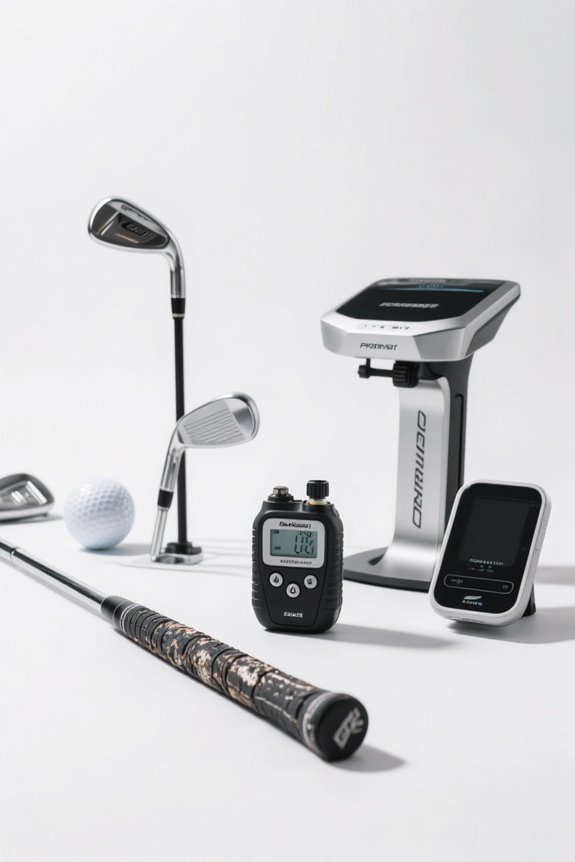
- Swing Speed Measurement: Monitor metrics like club and ball speed to gauge improvements.
- Launch Monitors: Use tools like TrackMan to capture critical data on launch angle and spin rate.
- Strength and Flexibility Benchmarks: Periodically assess physical attributes that influence swing efficiency.
- Video Analysis: Apply high-speed cameras for frame-by-frame reviews of swings.
- AI-Driven Insights: Engage with platforms like Accel Golf for personalized drills.
Additionally, integrating tools like golf impact tape can provide visual feedback, helping to refine your swing mechanics. Incorporating these adjustment techniques fosters continuous improvement, driving engagement and skill development on the golf course.
Frequently Asked Questions
What Should I Prioritize First in My Training Setup?
Building essentials should prioritize foundational swing mechanics and alignment tools, guiding the golfer’s journey like a lighthouse in fog. Thoughtful equipment selection yields a path to improvement, fostering growth and connection within a vibrant golfing community.
How Often Should I Practice With These Aids?
Practicing with aids should occur three times weekly, maximizing practice frequency for ideal aid effectiveness. Short, focused sessions enhance skill retention, helping players feel connected to their progress while avoiding burnout and fostering consistent improvement.
Can I Use These Aids Outdoors as Well?
“Every cloud has a silver lining.” Portable aids and outdoor equipment can thrive in various environments, offering golfers versatile practice options. With proper choices, outdoor use enhances training while fostering camaraderie among enthusiasts.
Are There Any Online Resources for Additional Drills?
Numerous online resources offer video drills and tutorials, enhancing golf skills. Platforms like Me And My Golf and CoachTube provide valuable insights, while YouTube channels deliver engaging content, fostering a sense of community among golf enthusiasts.
How Do I Know if I’m Progressing With My Training?
To gauge progress, one can track performance metrics like club speed and shot dispersion. For instance, analyzing swing data recorded over months reveals consistent improvement, fostering a sense of belonging within the golfing community through shared achievements.