As an Amazon Associate, we earn from qualifying purchases. Some links on this site are affiliate links at no extra cost to you. Our recommendations are based on thorough research and editorial judgment.


How Do Weighted Training Clubs Improve Swing Speed?

Weighted training clubs improve swing speed by enhancing muscle activation and refining swing mechanics. They help develop neuromuscular coordination, where strength and speed combine effectively. Statistical evidence shows that overspeed training with lighter clubs can yield an average swing speed increase of 3 mph within 6-8 weeks. Additionally, these clubs promote better torso-pelvic separation and muscle memory. However, caution is needed to avoid injury. Further insights reveal how to maximize training effectiveness and performance enhancements.
Key Takeaways
- Weighted training clubs enhance swing speed by improving muscle activation in the forearms, wrists, and shoulders, thus increasing neuromuscular coordination.
- Heavier clubs promote strength while lighter clubs aid in overspeed training, contributing to increased clubhead speed.
- Training with weighted clubs allows for superior torso-pelvic separation, enhancing timing and coordination during swings.
- Consistent use of weighted clubs helps reinforce muscle memory, leading to better swing mechanics and increased performance.
- Gradual introduction to heavier clubs supports effective adaptation, ensuring improved swing speed without compromising technique or risking injury.
Understanding the Mechanics of Weighted Clubs
You may be interested


Understanding the mechanics of weighted clubs is essential for golfers aiming to enhance their swing performance. The swing weight, which affects swing mechanics, measures how heavy a club feels. Key points include:
- Lighter Swing Weights: Enable faster swing speeds due to ease of movement.
- Heavier Swing Weights: Offer increased control, enhancing accuracy.
Adjustments to club length and grip weight alter swing weight, impacting both swing speed and muscle engagement. Using weighted clubs increases muscular demands, building strength in golf-specific muscles and improving endurance. However, caution is needed, as excessive weight can lead to injury. Shifting back to regular clubs often feels lighter, promoting a favorable environment for speed gains. Consistent practice with weighted clubs provides golfers a sense of belonging in their pursuit of excellence and effectiveness on the course. Additionally, weighted swing trainers are effective tools not just for experienced players but also for golfers of all skill levels.
The Importance of Neuromuscular Coordination
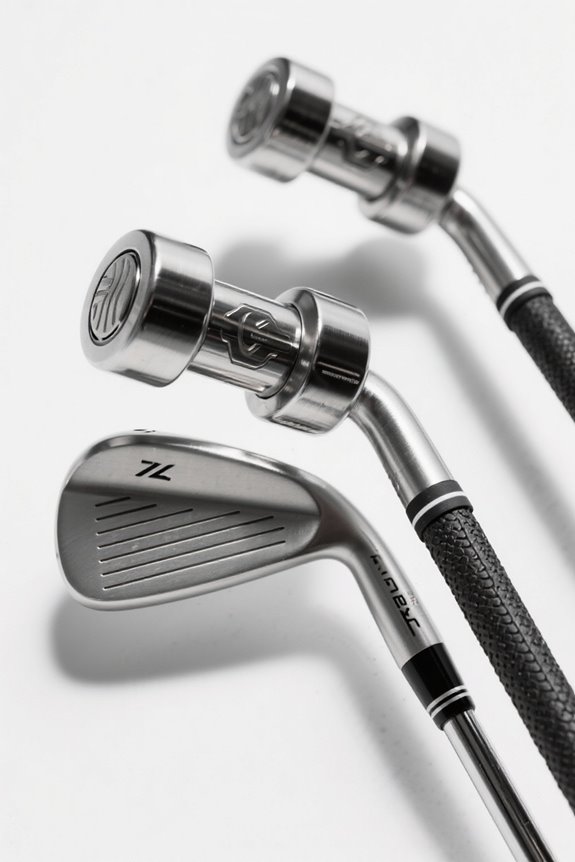
Neuromuscular coordination plays a significant role in achieving ideal swing mechanics and enhancing clubhead speed in golf. By improving neuromuscular efficiency, golfers can maximize force generation quickly, essential for explosive power. Key points include:
- Power results from strength and speed, requiring coordinated muscle activity.
- Proper sequencing of muscle activation supports optimized swing mechanics.
- Training with weighted clubs enhances rapid force production and power output.
- A strong core stabilizes the body, improving control and force transfer during swings.
- Four weeks of targeted neuromuscular training can increase functional movement scores, linking improved coordination to better performance. Additionally, using swing training aids can further enhance muscle memory and consistency in your swing.
Benefits of Lighter-Than-Normal Clubs

When golfers utilize lighter-than-normal clubs, they can experience a range of benefits that greatly enhance their performance. Key advantages include:
- Enhanced Swing Speed: Lightweight clubs reduce overall mass, allowing faster clubhead acceleration, especially beneficial for players with moderate or slower swing tempos.
- Improved Swing Tempo and Rhythm: Lighter clubs promote fluid swing mechanics, making it easier to maintain consistency and reduce fatigue during play.
- Increased Maneuverability: These clubs offer better control, helping golfers make quick adjustments mid-swing, contributing to precise shot shaping.
- Suitability for All Skill Levels: Particularly beneficial for beginners and seniors, they help develop swing speed without excessive exertion. Additionally, the user interface of lightweight clubs can facilitate easier adjustments, similar to how handheld golf GPS devices enhance navigation on the course.
The Impact of Heavier Clubs on Strength and Power

Heavier golf clubs can profoundly influence a player’s strength and power during their swing. Training with weighted clubs promotes:
- Muscle Activation: Heavier clubs enhance activation in forearms, wrists, and shoulders, leading to strength gains vital for control and stability.
- Increased Strength and Flexibility: Utilizing these clubs builds the necessary strength to manage added load, though it may neglect fast twitch muscle fibers significant for explosive speed.
- Neuromuscular Coordination: Enhanced resistance from heavier clubs improves coordination in executing powerful, controlled swings.
However, reliance on heavy clubs risks reducing swing speed and alters timing. To balance strength with speed, players should complement heavier club training with speed-focused exercises. This approach guarantees a thorough development of both strength and power, maximizing overall performance. Additionally, incorporating golf swing trainers can provide instant feedback, further enhancing your training effectiveness.
Kinematic Sequencing and Swing Efficiency

Kinematic sequencing plays an essential role in achieving swing efficiency, as it dictates how a golfer’s body segments interact to generate speed and power. Key factors include:
- Proximal-to-Distal Sequencing: The sequence starts from the pelvis, progressing through the ribcage, arms, and hands to the clubhead, ensuring each segment achieves peak speed at the right moment.
- Segmental Timing: As one segment decelerates, the next accelerates. This timing optimizes energy transfer, vital for maximizing swing speed.
- Ground Reaction Force: Effective sequencing of forces (horizontal, torque, vertical) during the downswing aids in weight transfer and contributes considerably to kinematic efficiency. Additionally, understanding the impact of weight distribution strategies can enhance a golfer’s ability to optimize their swing dynamics.
OverSpeed Training: Unlocking Performance Potential
Overspeed training represents a powerful strategy for enhancing swing speed and overall golfing performance. This approach involves swinging lighter clubs, which encourages faster motion, effectively “tricking” the nervous system into increased speed. Key benefits include:
- Development of fast-twitch muscle fibers.
- Raised maximum swing speed, resulting in higher on-course swing speeds (approximately 80% of max).
- Increased clubhead speed translating to enhanced driving distance.
Statistical evidence supports these performance gains. For instance, Arccos Golf data shows that 81% of golfers who added 10+ yards off the tee gained strokes. Additionally, studies indicate an average 3 mph club speed gain within 6-8 weeks of overspeed training. This targeted method guarantees athletes can safely improve their swing potential while minimizing injury risks. Furthermore, incorporating swing plane trainers into your routine can enhance the effectiveness of this training by promoting proper mechanics and muscle memory.
Tailoring Training Protocols for Maximum Effectiveness
Tailoring training protocols is essential for maximizing swing speed and overall golfing performance. Training personalization begins with a thorough club weight assessment to match individual player characteristics, including skill level, strength, and endurance.
Factors to take into account include:
- Skill Level: Advanced players benefit from lighter clubs, leading to increased swing speeds.
- Strength Evaluation: Assess physical capacity to prevent fatigue or injury.
- Coordination Patterns: Personalize weight adjustments to enhance body segment timing.
- Recovery Time: Guarantee adequate rest to maintain quality swings and optimize training efficacy. Additionally, incorporating consistent practice with training aids can significantly enhance swing efficiency and muscle memory.
The Physical and Biomechanical Advantages
When golfers engage in weighted club training, they release numerous physical and biomechanical advantages that enhance their performance. These benefits include:
- Enhanced Muscle Activation: Heavier clubs increase resistance, activating upper torso and forearm muscles more effectively.
- Increased Rotational Power: Training raises the X-factor, promoting superior torso-pelvic separation for greater swing power.
- Improved Timing and Coordination: The neuromuscular system adapts, reinforcing muscle memory for optimized swing velocity.
- Greater Clubhead Speed: Sequential acceleration of body segments leads to increased clubhead velocity and ball speed. Additionally, using swing tempo trainers can further refine technique and consistency during practice.
Risks and Limitations of Weighted Training
Weighted training clubs offer numerous benefits for golfers, but they also come with significant risks and limitations that must be carefully considered.
- Injury Risks: Excessive use without proper warm-up can increase strain on muscles, leading to lower back pain and joint issues.
- Technique Adjustments: Improper use can exacerbate faulty swing mechanics, reinforcing inefficient movements.
- Regulatory Restrictions: These clubs are typically prohibited in competitions, limiting their practical application.
- Psychological Effects: Golfers may feel more powerful with weighted clubs, but this confidence might not translate to actual play. Additionally, single-use hand warmers can provide instant warmth, helping to reduce muscle strain during colder weather.
To mitigate these concerns, golfers should incorporate injury prevention strategies and prioritize swing technique adjustments alongside weighted training programs. Balancing these aspects guarantees a safer and more effective training experience.
Integrating Weighted Training With Skill Practice
Integrating weighted training with skill practice can greatly enhance a golfer’s performance on the course. By using lighter clubs for Overspeed Training, players can train their neuromuscular systems to swing faster. This method leads to significant skill retention, allowing golfers to maintain improved swing speeds when returning to regular clubs.
Key considerations include:
- Progressive Training: Start with lighter clubs, gradually moving to heavier options for ideal adaptation.
- Kinematic Sequencing: Be mindful of changes in body sequencing to guarantee balanced swings.
- Performance Evaluation: Regularly assess swing speed improvements to gauge effectiveness.
Additionally, incorporating tools like the GreenHaven Golf Training Wrist Hinge Aid can help correct common swing flaws while enhancing overall swing technique.
Combining weighted training with skill practice will maximize a golfer’s training, ultimately leading to better consistency and performance on the course.
Frequently Asked Questions
How Long Does It Take to See Improvements in Swing Speed?
Improvements in swing speed typically manifest within 3 to 6 weeks of consistent training. Effective programs require a training duration of 8 to 12 weeks to refine swing mechanics and enhance overall performance.
Can Beginners Use Weighted Clubs Effectively?
Yes, beginners can effectively use weighted clubs through tailored training techniques. These clubs offer significant beginner benefits, enhancing strength, flexibility, and coordination, while careful progression in weight minimizes injury risk, promoting a sustainable, enjoyable practice experience.
What Is the Ideal Weight for a Training Club?
Like finding the perfect key for a lock, selecting the ideal weight for a training club, typically 5-10% heavier than standard options, offers significant benefits, promoting strength while maintaining swing mechanics for enhanced performance.
How Often Should I Use Weighted Clubs in Training?
Training frequency for weighted clubs should ideally be 1–2 sessions weekly for beginners and 2–3 for experienced players. Ideal sessions enhance swing mechanics while preventing fatigue, fostering a shared sense of improvement and community among golfers.
Will Weighted Training Hurt My Regular Swing Mechanics?
Weighted training can disrupt normal swing mechanics, potentially altering muscle memory. Studies indicate that improper use may lead to inconsistent swings, highlighting the importance of managing training carefully to maintain desired performance and avoid injury risks.