As an Amazon Associate, we earn from qualifying purchases. Some links on this site are affiliate links at no extra cost to you. Our recommendations are based on thorough research and editorial judgment.


Frequently Asked Questions About Golf Training Aids?

Golf training aids are tools designed to enhance various skills, including swing mechanics and putting accuracy. They improve muscle memory, accuracy, and consistency through physical cues and immediate feedback. Types include swing trainers, putting aids, and grip enhancers. Each addresses specific needs, from power to consistency. Evaluating personal skills will help select the right aid for improvement. These aids offer substantial benefits, contributing to lower scores and better overall performance. More insights await on specific aid types and their uses.
Key Takeaways
- Golf training aids enhance skills by improving swing mechanics, putting strokes, and muscle memory through various tools tailored for different skill levels.
- Swing training aids can include resistance trainers, speed trainers, balance aids, and impact position tools that foster performance advancement.
- Putting aids like alignment tools and gate drills enhance precision and consistency, leading to improved putting success rates and lower stroke counts.
- Grip and handling aids offer comfort, security, and enhanced performance through customized grips, resulting in improved distance and confidence during swings.
- To select the right training aid, assess your skills, focus on specific improvement areas, and choose tools that provide immediate feedback and easily integrate into practice.
What Are Golf Training Aids and How Do They Work?
You may be interested


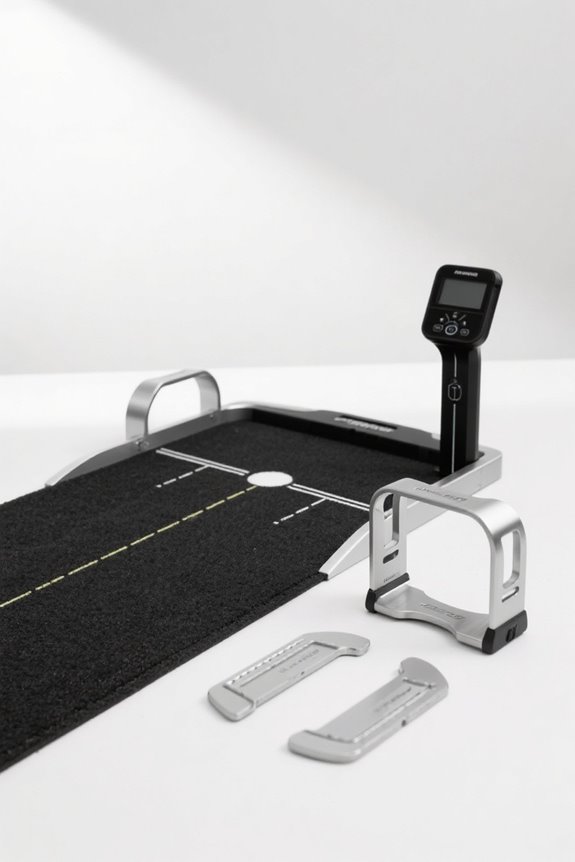
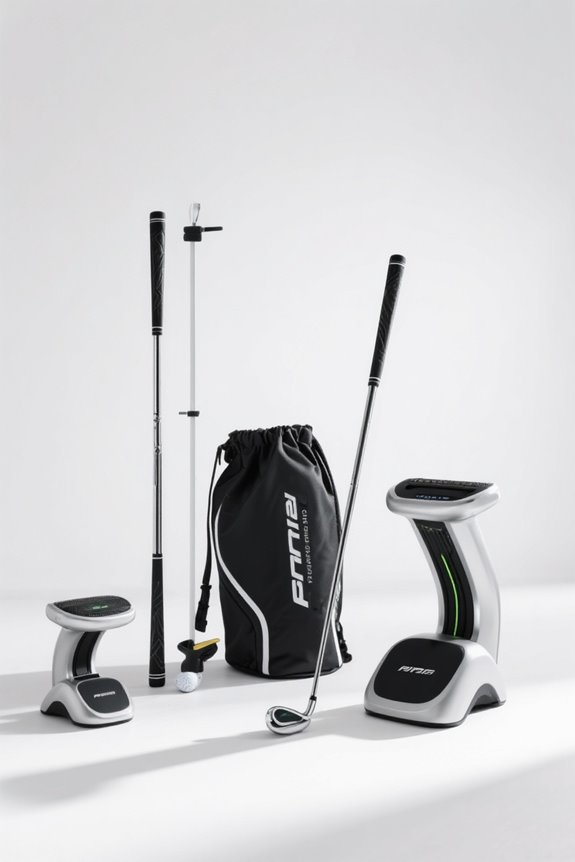
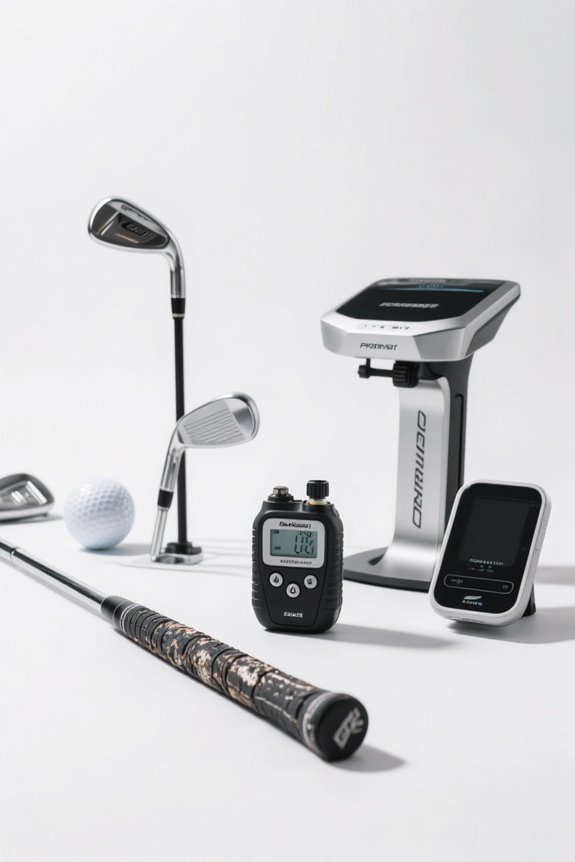
Golf training aids serve as essential tools for players aiming to enhance their skills on the course. These specialized devices help develop key golf fundamentals, focusing on swing mechanics and putting strokes.
- Purpose: They improve muscle memory, accuracy, and consistency.
- Mechanics: Training aids like alignment rods provide physical cues for correct stance and body positioning.
- Feedback: Digital devices, such as launch monitors, analyze swings, offering immediate corrective feedback.
Utilizing these aids effectively can lead to:
- Enhanced swing accuracy,
- Quick identification of faults,
- Improved rhythm and tempo.
Incorporating devices like the SKLZ Golf Grip Trainer can further enhance grip strength and muscle memory, integral for a consistent swing technique. Although they are portable and easy to use, golfers should incorporate them into consistent practice routines. This promotes lasting improvements and better on-course outcomes, fostering a sense of belonging within the golfing community.
What Types of Swing Training Aids Are Available?

Swing training aids are invaluable resources for golfers looking to refine their technique and boost performance. Various categories address key aspects of the swing:
- Resistance trainers like PlaneMate enhance body rotation and club path, helping prevent flaws.
- Speed trainers such as Super Speed Golf focus on increasing swing speed, critical for longer drives.
- Balance aids, including the Orange Whip, improve rhythm and coordination, beneficial in daily practice.
- Impact position tools like the DST Compressor train golfers to maintain proper posture during the strike, improving contact accuracy.
Each aid serves diverse skill levels, from beginners refining basics to seasoned players enhancing power and consistency. Regular use of these aids can lead to over 70% improvement in performance, fostering a stronger connection to the game and overall performance advancement.
How Can Putting Aids Improve My Game?

Improving putting skills can considerably enhance a golfer’s overall performance on the course. Putting aids offer valuable support in refining two critical areas: alignment techniques and stroke consistency.
- Alignment Techniques: Tools with alignment marks can improve putting success by 27% from 2.6 meters for golfers with handicaps of 12 or lower. Visualization aids enhance the precision of the putting line, boosting confidence.
- Stroke Consistency: Gate drills and similar aids guarantee a straight stroke path, enabling repeatability. This consistency minimizes ball direction variability, resulting in better accuracy.
Investing in these aids not only sharpens skills but also contributes to a lower stroke count over time. By developing both alignment and stroke path, golfers can experience lasting improvements on the greens. Additionally, utilizing instant feedback systems can significantly enhance practice effectiveness and user engagement.
What Are the Benefits of Using Grip and Handling Aids?

The benefits of using grip and handling aids are significant for golfers seeking to enhance their performance. These aids provide various advantages:
- Grip comfort: New grips offer a softer feel and increased customization, allowing for optimal hand fit and reducing tension.
- Confidence building: Fresh grips lead to higher security, with 82% of low-handicap players feeling confident during their swings. This assurance allows for better swing decisions.
- Improved distance and control: New grips can increase ball speed averages by 1.3 mph, translating to longer carry distances. Enhanced grip also guarantees more consistent contact, supporting better overall performance.
Regular maintenance of grips encourages a holistic approach to equipment care, resulting in a more positive golfing experience. These factors collectively elevate both technical and psychological aspects of gameplay. Additionally, using grips with moisture-wicking properties can further enhance grip performance in varying weather conditions.
How Do I Choose the Right Training Aid for My Needs?
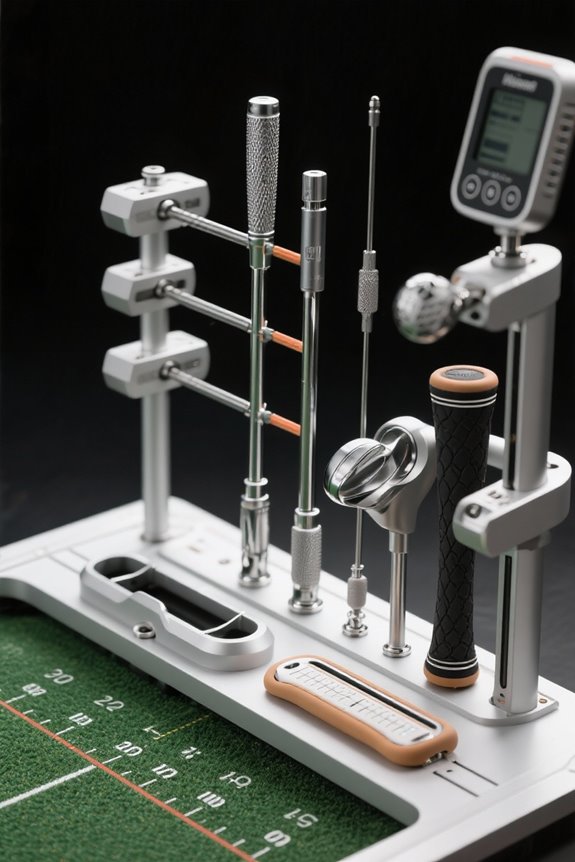
Selecting the right training aid for golf involves careful consideration of personal needs and goals. To start, conduct a skill assessment to pinpoint specific areas for improvement, such as driving distance or swing tempo. Follow these steps for effective goal setting:
- Identify Goals: Determine your focus—power, consistency, or technique.
- Match Complexity: Beginners should choose simple aids, while advanced players may prefer tools that enhance swing mechanics.
- Consider Usability: Guarantee aids integrate seamlessly into routines without frustration.
- Feedback and Tracking: Opt for aids that offer immediate feedback for accelerated learning.
- Budget Carefully: Evaluate cost against potential long-term benefits. Additionally, prioritize durability and user ratings to ensure your training aid effectively supports your practice over time.
Frequently Asked Questions
How Long Does It Take to See Improvements With Training Aids?
Improvements with training aids typically emerge within a few weeks to months. The timeline for progress depends on practice consistency and effectiveness, making regular use of high-quality aids essential for ideal results and skill development.
Can I Use Training Aids Without Professional Coaching?
“Practice makes perfect,” and for many, training aids offer effective techniques for self-guided practice. However, caution is essential, as improper use may reinforce poor habits, limiting benefits without the guidance of professional coaching.
Are There Any Age Restrictions for Using Training Aids?
There are no strict age restrictions for using training aids; however, manufacturers provide age recommendations. Age-appropriate aids offer developmental benefits, ensuring effective skill progression while fostering enjoyment and belonging in the golf community for all ages.
Do Training Aids Work for All Skill Levels?
Training aids work wonders for all skill levels, drastically impacting effectiveness. However, success hinges on matching the tool to a golfer’s unique abilities, ensuring that everyone feels connected and empowered in their pursuit of improvement.
How Often Should I Practice With My Training Aids?
Practicing with training aids 2–3 times per week enhances effectiveness, promoting consistency over intensity. Short, focused sessions reinforce swing improvements, helping golfers connect with their technique and fostering a sense of belonging within the golfing community.