As an Amazon Associate, we earn from qualifying purchases. Some links on this site are affiliate links at no extra cost to you. Our recommendations are based on thorough research and editorial judgment.


Why Do Training Aids Accelerate Golf Improvement?

Training aids enhance golf improvement by offering immediate feedback and facilitating focused practice. They provide auditory, visual, and tactile cues, which accelerate motor learning and muscle memory. Tools like launch monitors and alignment mirrors help correct technical flaws. Targeted practice using aids can lead to a 20% increase in performance consistency. Additionally, technology integration helps personalize training, driving motivation. With these insights, golfers can streamline their progress. Explore further to discover more effective strategies to elevate your game.
Key Takeaways
- Immediate feedback from training aids enables swift corrections, allowing golfers to identify and address flaws in their swing mechanics quickly.
- Consistent use of sensory cues from aids strengthens neural pathways, enhancing muscle memory and promoting automaticity in the golf swing.
- Real-time data from tools like launch monitors allows for targeted practice, helping golfers to isolate and improve specific skill components effectively.
- Feedback from training aids enhances self-efficacy and motivation, fostering a positive learning environment and encouraging golfers to experiment with their techniques.
- Advanced measurement techniques, like Doppler radar, provide precise insights that support data-driven decisions, leading to more focused training and improved performance.
Immediate Feedback Mechanisms
You may be interested


Immediate feedback mechanisms have transformed the way golfers practice and improve their skills on the course. The integration of various training aids facilitates real-time learning through:
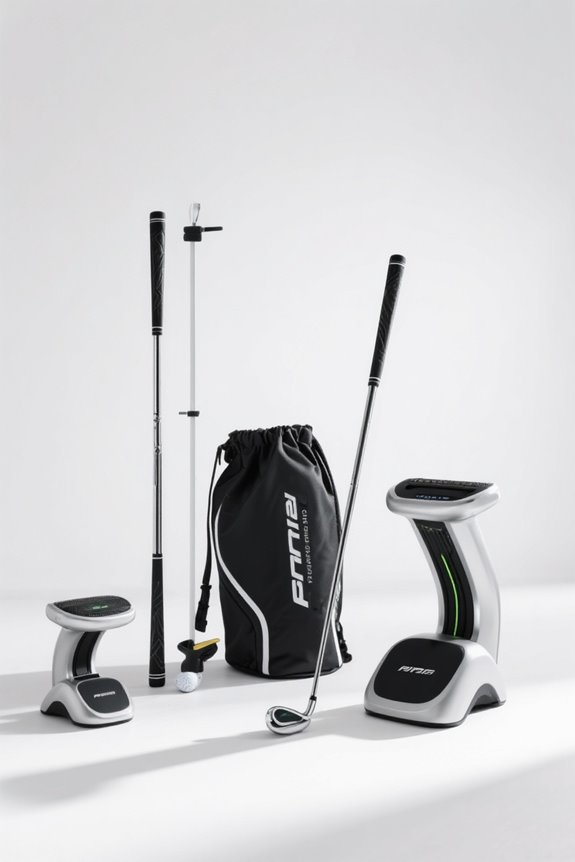
- Auditory Cues: Devices like the Click Stick emit sounds during swings, signaling correct mechanics.
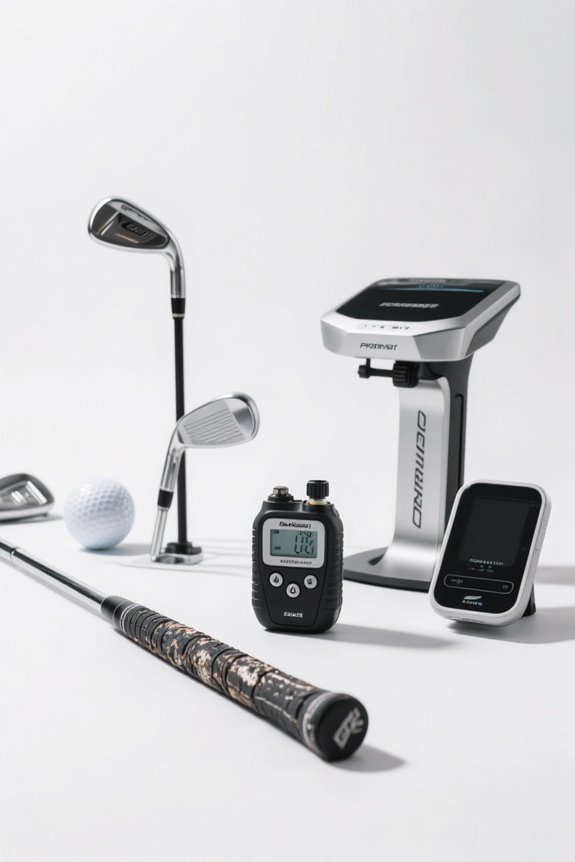
- Visual Feedback: Launch monitors offer data on club speed and ball trajectory, enhancing understanding of performance metrics.
- Tactile Sensation: Tools such as LagMaster provide physical resistance, helping golfers maintain proper lag in their swing.
These immediate responses allow players to make swift corrections, reducing reliance on guesswork. Studies show that instructional tools yielding instant feedback result in faster improvements—players often see enhanced accuracy after just a few practice swings. By democratizing access to data, training aids encourage collective growth within the golfing community. Additionally, the use of multifunctional trainers ensures that golfers can adapt their practice to various conditions, further accelerating improvement.
Enhancing Motor Learning and Muscle Memory
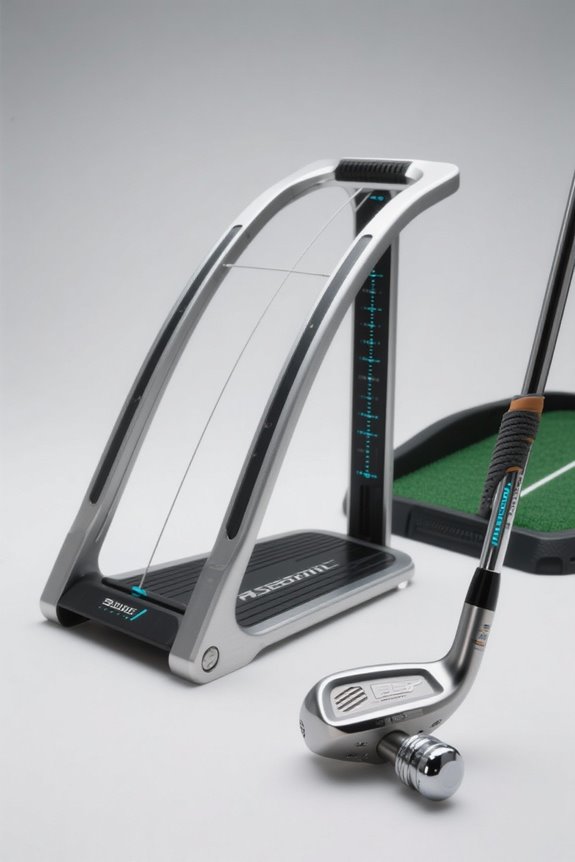
Improving motor learning and muscle memory is essential for golfers aiming to enhance their performance on the course. Training aids play a pivotal role in this process through their capacity to:
- Provide consistent sensory cues, forming neural pathways vital for motor skill retention.
- Enhance synaptic plasticity, which strengthens the neural circuits linked to the golf swing.
- Accelerate muscle memory consolidation by integrating proprioceptive feedback during practice.
Additionally, these aids facilitate implicit learning, allowing golfers to shift from conscious control to automatic execution, thereby improving swings under pressure. Regular use of training aids can reduce cognitive load, enhancing focus on essential movement aspects. Consequently, golfers can enjoy greater performance consistency and seamless integration of their skills on the course. Moreover, utilizing women-specific equipment alongside training aids can further optimize skill development and comfort during practice.
Correcting Fundamental Technical Flaws
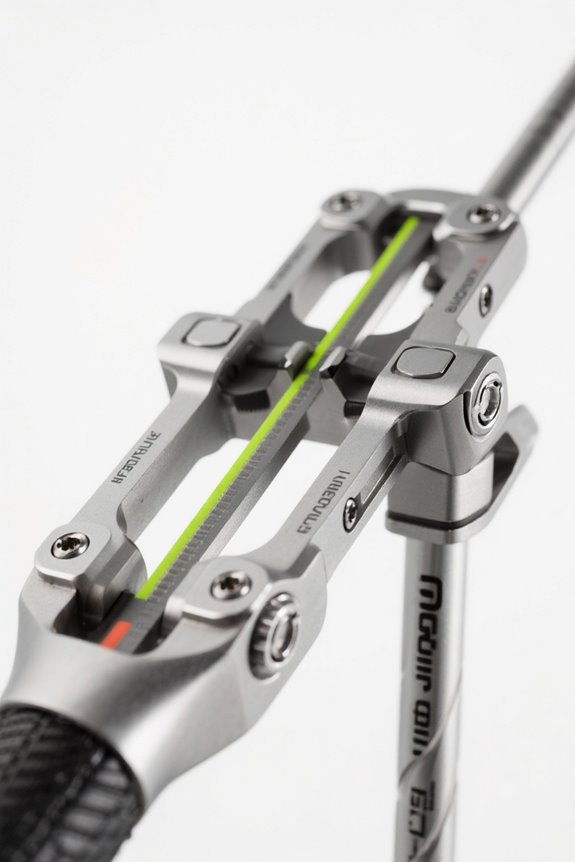
Correcting fundamental technical flaws is essential for golfers seeking to enhance their performance and consistency on the course. Training aids provide valuable support in this process by facilitating targeted technical adjustments. For instance:
- Visual Feedback: Tools like alignment mirrors aid in body alignment, preventing common swing flaws.
- Impact Accuracy: Pressure-sensitive impact boards help golfers correct strike location, enhancing contact consistency.
- Posture Improvement: Posture aids guarantee proper setup, reducing swing-related injuries.
- Swing Path Correction: Weighted trainers promote ideal swing mechanics, correcting early release tendencies.
Additionally, using swing trainers can significantly enhance core strength and rotational power, further contributing to improved performance. Through the use of these aids, golfers can identify and address technical flaws, ultimately leading to more accurate and powerful shots while fostering a sense of community among peers focused on improvement.
Targeted Practice and Consistency
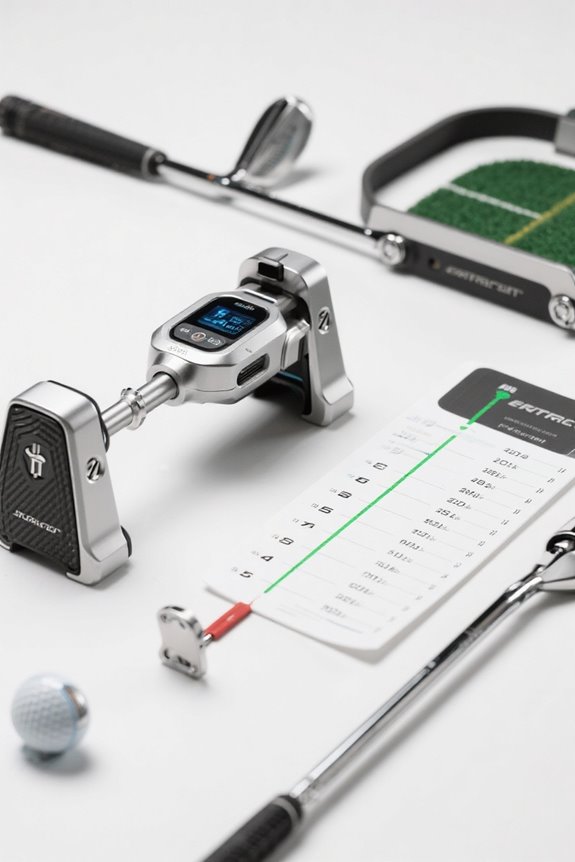
To enhance performance in golf, targeted practice and consistency are key aspects for players at any skill level. Training aids facilitate:
- Targeted Sessions: Players can engage in focused drills that isolate skill components, such as swing tempo or putting mechanics.
- Immediate Feedback: Real-time insights help identify errors quickly, allowing golfers to adjust and refine their technique during practice.
- Repetition: Consistent use of aids reinforces motor patterns, promoting muscle memory. This leads to a more reliable performance on the course.
- Structured Intervals: Short, concentrated practice sessions enhance engagement, keeping motivation high.
Additionally, using devices like golf hitting mats provides crucial swing path feedback, further enhancing the effectiveness of targeted practice.
Together, these elements support deliberate practice, ensuring a golfer’s training is efficient, allowing for measurable improvements in performance.
Psychological and Confidence Benefits
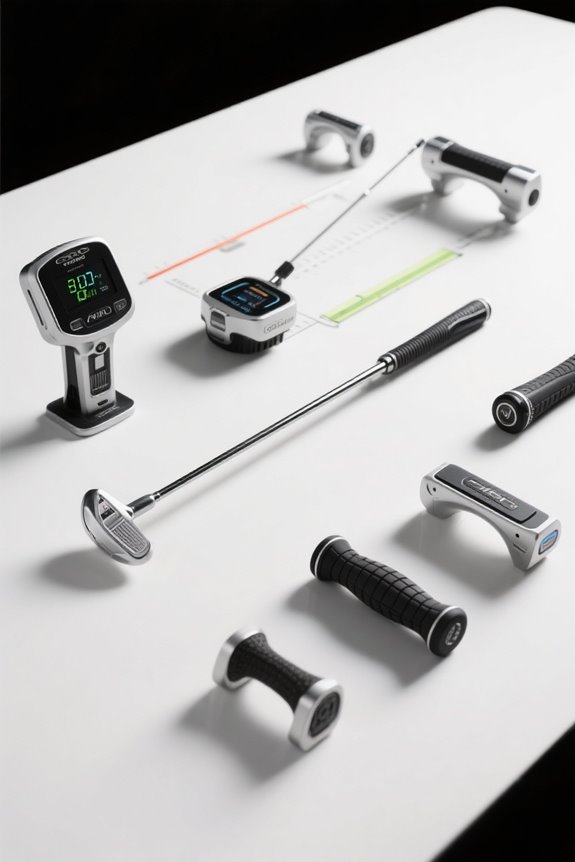
Confidence plays an essential role in a golfer’s performance, influencing both mental resilience and skill execution. Training aids considerably contribute to this confidence boost through various mechanisms:
- Enhanced Self-Efficacy: Measurable feedback allows golfers to track improvements, reinforcing belief in their skills. This progression increases intrinsic motivation.
- Reduced Performance Anxiety: Methods like quiet eye training help control stress, leading to improved shot consistency.
- Trust and Psychological Safety: Effective aids used with guidance encourage experimentation, reducing cognitive load.
- Mastery Experiences: Incremental gains from training provide a sense of accomplishment, fostering resilience against setbacks.
- Social Engagement: Group practice enhances interaction and camaraderie, positively influencing self-esteem.
- Utilizing key training tools like high-resolution strike stickers can further refine technique and boost confidence in execution.
Together, these factors help golfers strengthen emotional control, cultivating a confident and resilient mindset essential for performance.
Market Growth and Tool Diversity
The golf training aids market is experiencing significant growth, driven by various factors that enhance participation and product diversity.
- The global market, valued at USD 865 million to USD 1.5 billion in 2026, demonstrates rapid market expansion.
- Projections indicate growth to USD 1.2 billion to USD 4.6 billion by the early 2030s, with a compound annual growth rate (CAGR) of 5.2% to 6.7%.
This surge reflects rising golf participation and increasing disposable income.
- Product innovation expands offerings, featuring swing trainers, alignment aids, and smart analyzers.
- Importantly, hitting nets captured over 36% of revenue in 2023.
The diverse range of products caters to beginners and professionals alike, fostering a strong sense of belonging within the golf community. Additionally, the integration of real-time coaching feedback in modern training aids significantly enhances golfers’ ability to improve their skills efficiently.
The Importance of Deliberate Practice
Deliberate practice stands as a cornerstone for achieving proficiency in golf, as it emphasizes not just time spent on the course but the quality of that practice.
- Purposeful Improvement: Golfers must focus on specific weaknesses to see real progress.
- Focused Effort: Sessions should be challenging, pushing players beyond their comfort zones.
- Immediate Feedback: Incorporating feedback allows for quick adjustments and corrective measures.
Studies show that deliberate practice accounts for 18-23% of performance gains. Players who engage in this structured approach can accelerate their improvement. Conversely, those who practice mindlessly often reinforce poor habits. Additionally, using golf swing aids can further enhance the effectiveness of deliberate practice by providing instant feedback and promoting muscle memory.
The Role of Technology in Training Aids
As golfers endeavor to refine their skills, the integration of technology in training aids has become essential.
- Sensor Technologies: Devices like swing analyzers deliver real-time feedback, allowing players to monitor metrics such as clubhead speed and launch angle for optimized performance.
- Digital Analysis: 3D swing analysis apps enable golfers to compare their mechanics to professional standards quantitatively.
- Adaptive Training: AI-powered applications tailor drills based on individual swings, addressing unique weaknesses.
- Engagement: Gamification elements in training apps foster competition, enhancing motivation and focused practice.
- Accessibility: Mobile solutions allow practice anywhere, democratizing advanced technology through affordable tools. Additionally, the use of Doppler radar technology enhances measurement precision in swing performance, further assisting golfers in their training.
Selecting Effective Training Tools
Selecting effective training tools can feel overwhelming for many golfers. Understanding personal goals forms the foundation for choosing aids. Key considerations include:
- Skill Level: Beginners thrive with simpler beginner aids focusing on fundamentals, while experienced players often benefit from advanced tools targeting specific weaknesses.
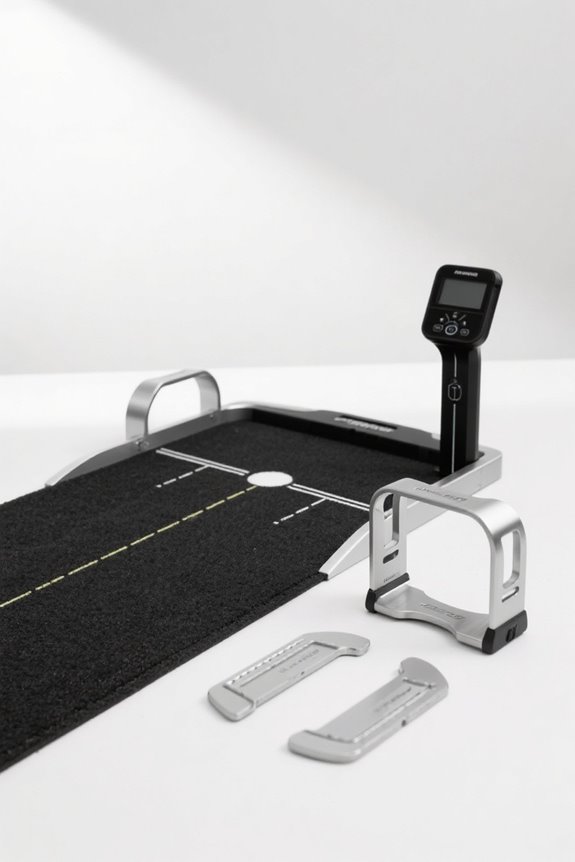
- Usability: Prioritize aids that are easy to set up and portable, ensuring practice can happen anywhere. For instance, putting mats are ideal for indoor use.
- Versatility: Opt for multi-functional aids that can correct several swing faults or assist in both swing and putting practice.
- Cost-effectiveness: Select tools backed by research. For example, launch monitors provide significant feedback, offering precise measurement accuracy that helps golfers identify areas for improvement.
Frequently Asked Questions
How Often Should I Use Training Aids for Best Results?
For best results, users should engage with training aids 3 to 5 days per week, optimizing practice frequency to develop muscle memory while balancing intensity to prevent fatigue and encourage consistent improvement in their golf skills.
Can Training Aids Improve My Short Game Skills?
Of course, training aids can transform one’s short game skills, even if they believe their chipping techniques rival a toddler’s! Engaging in short game drills enhances accuracy, making those greens feel less intimidating and more familiar.
Are There Training Aids Specifically Designed for Beginners?
Yes, numerous beginner tools serve as essential equipment in golf. These aids focus on grip, stance, and swing mechanics, fostering a supportive environment for novices to build skills and confidence while enjoying a sense of community.
What Is the Average Lifespan of Training Aids?
The average lifespan of training aids varies considerably; durable models can last 1 to 5+ years depending on usage and material quality. Training aid durability is often highlighted in training aid comparisons, affecting user satisfaction and effectiveness.
How Do I Know if a Training Aid Is Effective?
Effectiveness of a training aid can be determined through criteria like measurable improvements and user feedback. Extensive training aid reviews provide insights into performance gains, ensuring individuals select tools aligning with their personal golf development goals.